
Classical Facade and Modern Soul. Mistake or the Highest Pilotage?
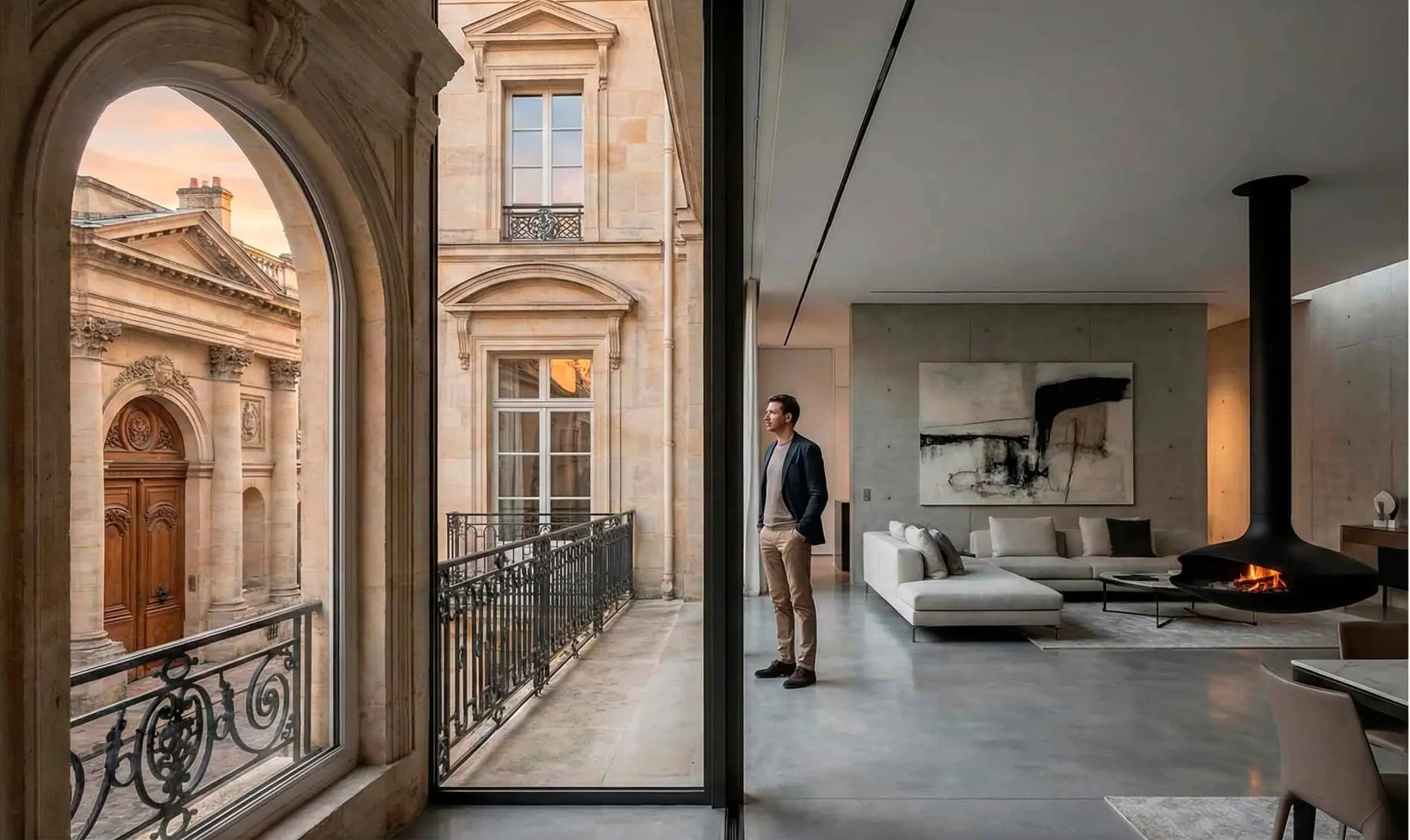
This fear is understandable. We’re accustomed to the idea that form should match content. But in high architecture, different laws apply.
My answer is unambiguous: Combining a classical exterior with an ultra-modern interior is not just permissible. It is, perhaps, the most sophisticated and intellectually refined scenario for luxury real estate today.
And here’s why this contrast works.
The European Code: A Lesson from London and Paris
Let’s look at the capitals of world luxury. Elite districts of London (Belgravia, Kensington) or the “golden triangle” of Paris are dominated by historical classical architecture. Victorian mansions, Haussmann-style buildings.
But step inside any updated residence. You won’t find a 19th-century museum. You’ll find Italian Boffi kitchens, Minotti furniture, a smart home system, and contemporary art. Europeans understood long ago: respecting history on the outside doesn’t mean living in the past inside.
The classical facade is your gift to the city, to neighbors, and to the street’s status. The modern interior is your personal comfort and a reflection of your lifestyle rhythm.
The Psychology of Perception: The Casket Effect
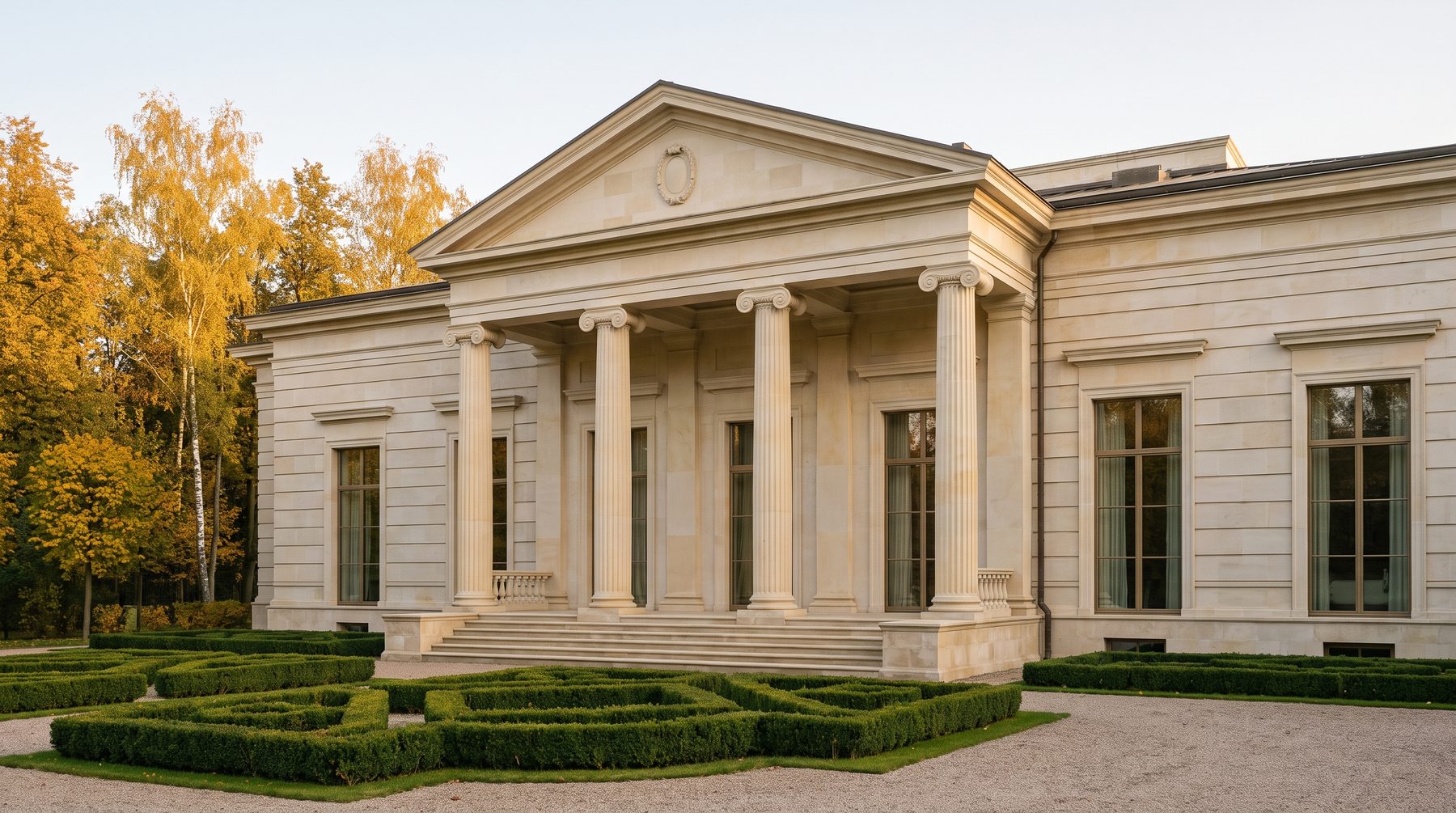
There’s a powerful emotional effect hidden in this contrast. When a guest approaches the house, they see columns, rustication, symmetry, perhaps wrought iron. This sets a tone of solemnity, stability, and tradition.
But when the doors open, they enter a space of light, laconic forms, and technology. This “wow effect” of pattern breaking works flawlessly. It’s like an expensive classical jacket with a bold silk lining featuring a modern print underneath. It’s a detail for the initiated, speaking to the fact that the owner is free from stereotypes.
21st-Century Ergonomics
Let’s be honest: classical interiors in their canonical sense (enfilades, abundance of decor, heavy furniture) often lose to modern style in terms of convenience.
Contemporary style (contemporary, minimalism, soft luxury) is fundamentally about function. It means panoramic windows (where the facade allows), lighting scenarios, hidden storage systems, and ease of cleaning. Living in a house with a classical facade but a modern interior means taking the best of two worlds:
-
Outside: The aesthetics of eternity, the monumentality of stone.
-
Inside: Ergonomics, air, and technology that serve you, not the other way around.
How to “Marry” the Epochs? (Practical Tips)
For there not to be a sense of “schizophrenia” (as if you entered the wrong house), these two worlds must be skillfully connected. Here are my key techniques:
-
Connecting Materials. Use the facade material in the interior. If the house is clad in Jurassic marble, let the same stone appear in the hallway or fireplace area, but in a modern, smooth finish.
-
Scale and Air. A classical facade implies high ceilings and large windows. Modern interiors love these volumes. Don’t subdivide the space with partitions. Keep the “palatial” scale of rooms, filling them with laconic furniture.
-
Ironic Classicism. Keep classical molding or moldings on the walls, but paint them in one color with the walls (for example, a complex gray or white), making them a background rather than an accent. This is a subtle hint at the building’s shell.
-
Doors as a Portal. The front door is the boundary between worlds. On the outside, it can be heavy, carved with classical handles, while its interior side is absolutely smooth and modern.
Summary
A home with a classical facade and modern interior is the choice of a person who values traditions but lives in the future. This is not a compromise; it’s a display of taste. Don’t be afraid of this combination. It’s at the intersection of epochs that true architectural magic is born.
Next step
Discuss your project
An hour at the studio with Oleg Reznikov: your site, your brief and relevant studio projects.