
Why Russian Billionaires Are Returning to Columns: Architectural Renaissance 2026
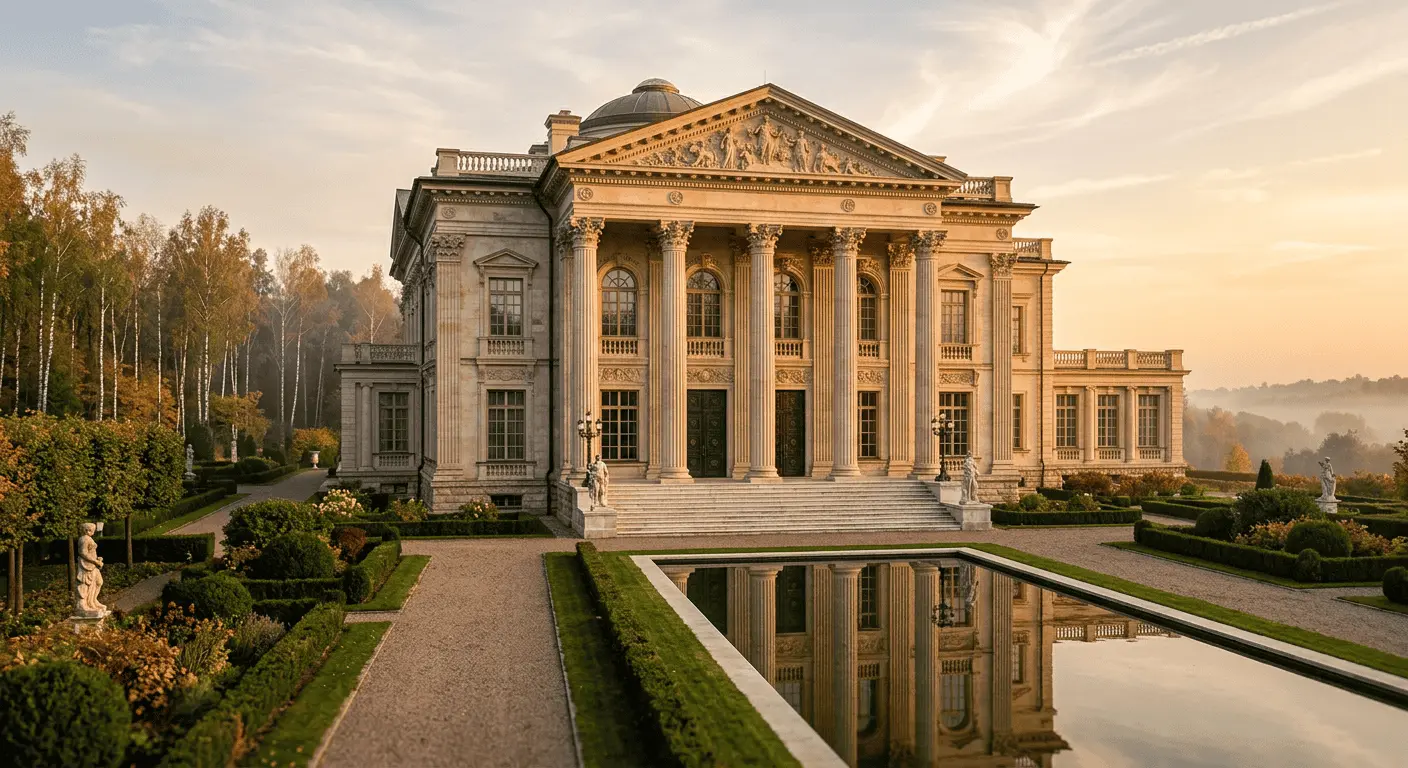
In the last eighteen months something happened in our studio we haven’t seen since mid-2000s. Out of ten inquiries for major private residences—seven are about neoclassicism. Porticos, order, stone facades, symmetry, pilasters. Three years ago the ratio was exactly opposite: everyone wanted “concrete box in the cliff,” “Japanese minimalism on Rublyovka,” and “like Tadao Ando, just with a sauna.”
Something broke. Or rather—returned to place.
If you’re thinking about neoclassicism and a country house in 2026—this is for you. We’ll explain why the country’s most affluent clients are massively moving away from minimalism, how much a “concrete block” actually costs on resale, and most importantly—what mistakes those repeating classicism superficially make. Spoiler: majority.
Minimalism Turned Out to Be the Fashion of the Poor
Sounds harsh. But let’s look at numbers, not Instagram from architecture bureaus.
By our observation and colleague data from premium real estate agencies, properly neoclassical homes in Moscow region in five years have appreciated 35–40%. We’re talking real stone, verified proportions, alive architecture—not “palace” shacks from foam with plastic capitals.
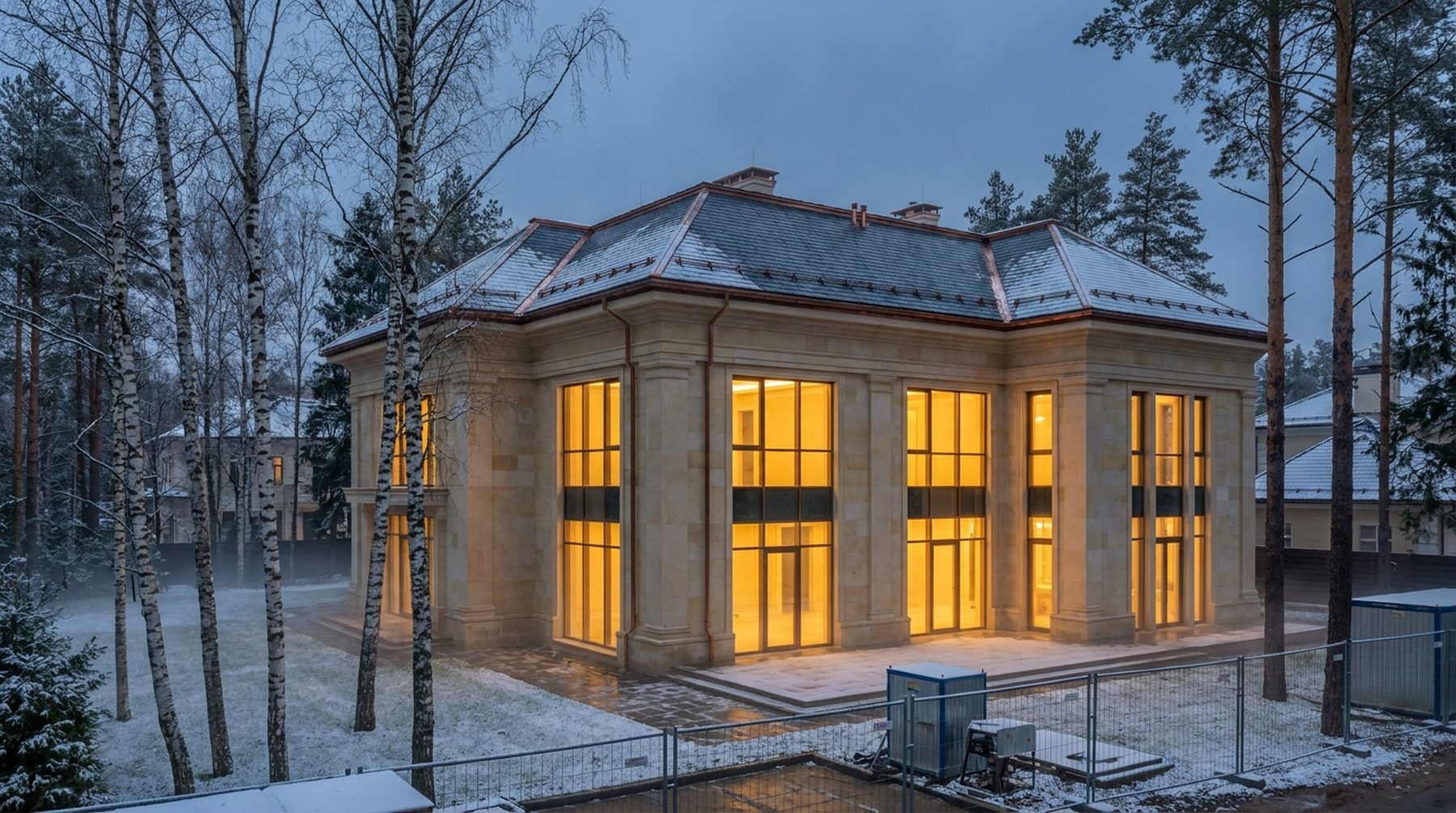
What about “hi-tech boxes” that seemed like progress pinnacle ten years ago? Liquidity drop on secondary—25%. Some objects sit in listings two-three years. Simple reason: buying for 400 million a flat roof, floor-to-ceiling panoramic glazing, and gray fibercement appeals to units. And reselling it five years later when materials age terribly—harder.
Minimalism in private architecture won mass premium competition around 2015. Its main advantage wasn’t aesthetic but economic: it forgave cheap materials. Flat facade from plaster looked “conceptual.” Absence of decor presented as “line purity.” Essentially—build fast, cheap, call it “modern architecture.”
Real elite rarely played this game. Either built classicism immediately, or got bored with minimalism quickly.
Why Columns Return Exactly Now
More interesting than seems. This isn’t nostalgia and not “closure of borders returned everyone to roots.” Several reasons aligned at one point.
First—exhaustion from temporary. When person built 600-million house and in seven years it looked like old iPhone—that’s trauma. Minimalism ages fast. Neoclassicism built in 1910 today costs more than a hundred years ago. It’s math, not taste.
Second—status language changed. 2010s the mark of money was black matte facade and lack of decoration. Now that’s middle-class language, Pinterest-saving for “dream home.” Real status again needs hand work: carved stone, cast bronze, hand joinery. What can’t be ordered on a marketplace.
Third—children. Unexpected but real factor. Clients age 45–55 want house to pass to kids and grandkids. Concrete parallelepiped is strange to inherit—it’s era product. Stone villa with portico—family asset.
And here most miss the point thinking about neoclassicism: it’s not ordered because “want pretty.” It’s ordered because it’s only architecture that’s guaranteed not to go out of fashion. Because it’s already not gone out of fashion two thousand years.
What Is Neoclassicism in 2026 (and What Definitely Isn’t)
Let’s separate concepts immediately. Because “classicism” now sells everything—from genuine Palladian villas to three-story monsters with six columns and a crown-shaped balcony.
Modern neoclassicism—it’s not XVIII century copying. It’s working with order, proportions, symmetry, and stone plasticity in today’s language. Less ornamentation, more geometry. Pure limestone or sandstone instead of plastered brick. Large window openings but in classical rhythm. High ceilings—from 3.6 meters in first light.
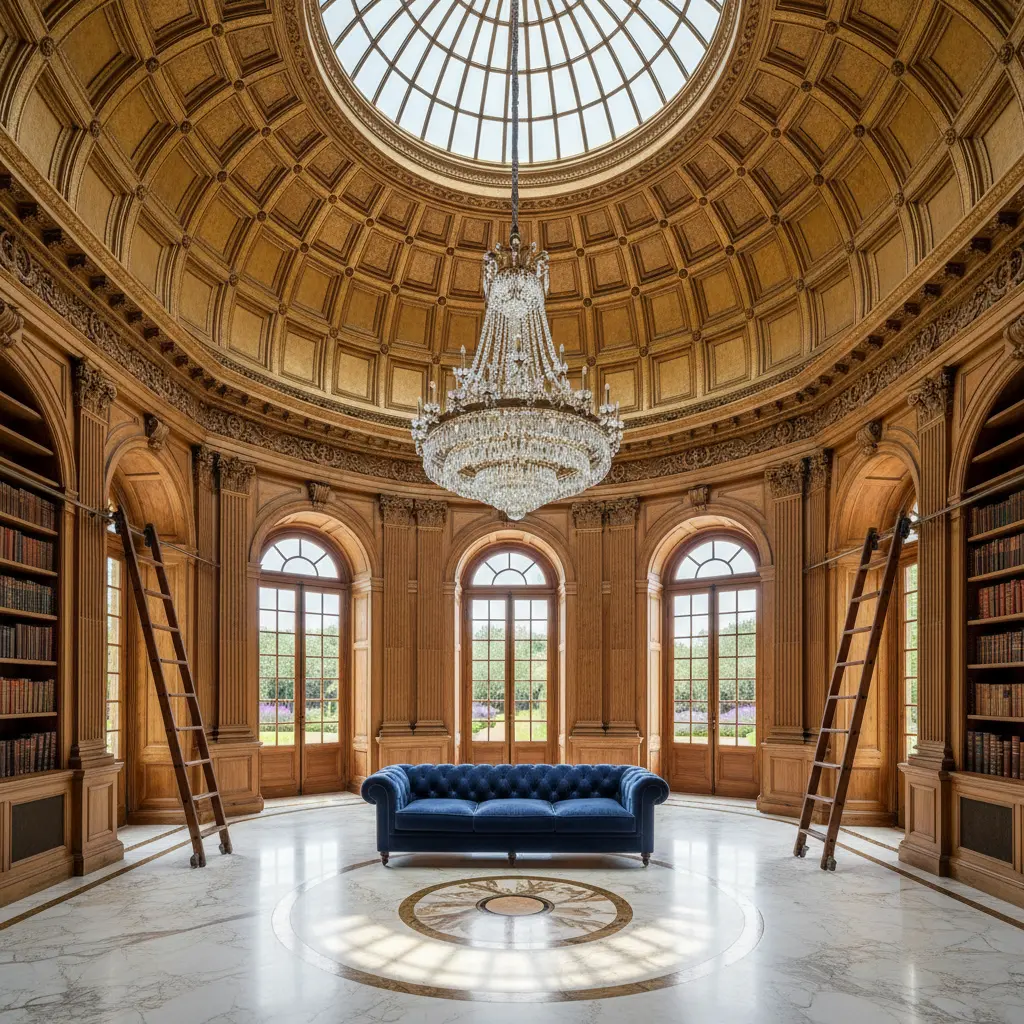
Recent projects at our place look like this: facade from Dagestani dolomite or Indian sandstone, Tuscan or Ionic columns, copper standing seam roof, windows—oak joinery with thin muntins and 44mm double glazing. Inside—marble, oak, plaster cornices, but without Baroque hysteria. Restrained.
This isn’t “cake house.” It’s architecture that in fifty years will look better than today.
How Modern Neoclassicism Differs from “Luzhkov Empirism”
Question we get constantly. Fear of ending up “like neighbor’s 2003.”
Difference is proportions and materials. Luzhkov empirism—thin columns on thick house, concrete balusters, plaster “stone,” excessive decoration wherever there’s space. That’s fear of emptiness.
Real neoclassicism—opposite. It’s about air. Right column always more massive than logic suggests. Cornice extends further. Windows gathered in rhythm, not scattered random. Stone—real, with texture changing in light. Lots of empty wall. Decoration works only where it makes sense.
Five Mistakes That Kill Neoclassical Projects
Last two years we looked at about fifty outside projects clients brought “for revision.” Pattern repeats.
Mistake 1. Wrong Column Thickness. Architect draws columns by feeling—”to look nice.” But order is mathematics. Column diameter sets whole facade proportion. Thin columns on massive house—instantly “nouveau riche castle.” You’ll see from kilometer away.
Mistake 2. Artificial Stone on Facade. Seems you saved 15 million. Fact: after five winters facade starts peeling, seams open, color fades unevenly. Real limestone ages noble. Imitation just ages.
Mistake 3. Plastic Joinery. Understand the temptation—cheap and “thermally same.” But PVC in neoclassicism is instant: visible by muntin thickness, reflections, how it sits in the opening. Wood only. Worst case—aluminum-wood premium systems.
Mistake 4. Symmetry for Symmetry’s Sake. Classicism loves symmetry but doesn’t require it everywhere. When client insists both sides have identical windows even though one is kitchen and other is bedroom—result is facade for facade’s sake, uncomfortable inside. Good classical project is symmetrical outside, logical inside.
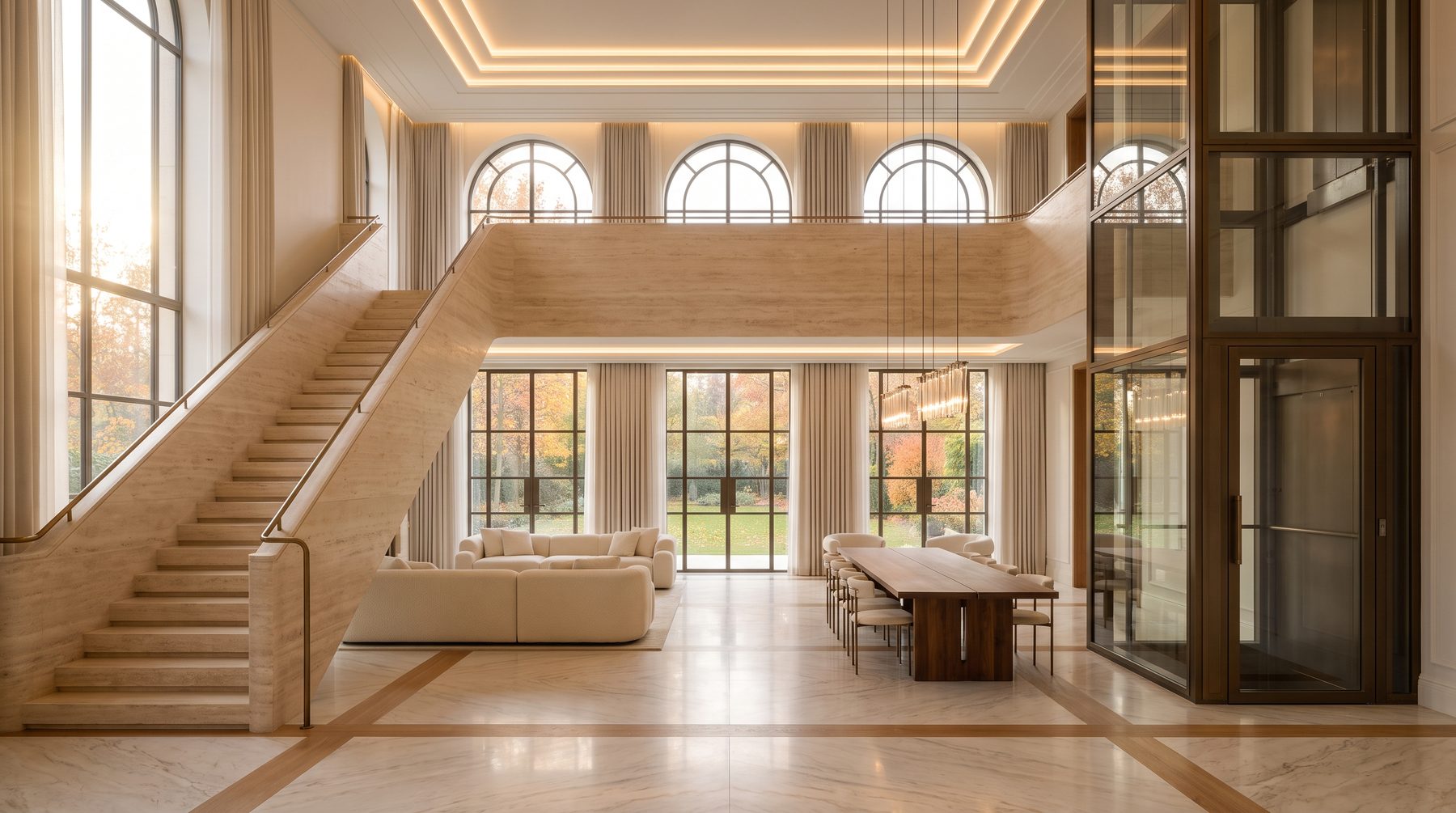
Mistake 5. Interior Not in Exterior Style. Most frequent. Outside—portico with order, inside—”contemporary minimalism with gray microcement.” Architectural schizophrenia. Neoclassical exterior requires neoclassical planning: enfilades, tall doors, symmetric fireplace halls, central stair. Or build modernism from the start.
Our Approach: Why We Don’t Draw “From Albums”
There’s temptation—especially for young bureaus—open Palladio, open Vignola, copy portico and slap on modern house. Done often. Almost always bad.
We work differently. Classicism—not decoration kit, it’s thinking system. Designing neoclassical house, first we solve massing-planning: how person lives, where center is, where axes go, where main light. Only then we lay order language—like grammar onto ready thought.
Recently client came with 80-hectare lot and ready project from another bureau. Classical facade, four-column portico, 1,200 sq.m. Pretty on render. Start digging—behind portico stands door to guest closet. Left symmetrical window—guest bathroom. Right—boiler room. That is, main ceremonial house facade decorates the boiler room. This isn’t architecture. This is set dressing.
We reworked planning. Portico stayed but now behind it—ceremonial vestibule with enfilade to living room. Facade and plan spoke one language. Budget up 8%. House cost, per independent assessor, 30% more.
That’s what working with classicism seriously means.
How Much This Actually Costs and Why It’s Investment
Talk about money will be short and honest.
Correct neoclassicism with real stone, wood joinery, copper roof, quality interior in 2026—from 350 to 600 thousand rubles per square meter finished “turnkey with furniture.” 800-meter house—280–480 million budget. Timeline—24 to 36 months.
Expensive? Yes. Let’s count differently. Equivalent minimalist house costs 200–350 thousand per meter. Difference—conditional 100 million. In 7–10 years neoclassicism resale goes plus to build cost. Minimalism—minus 20–25%. Ultimate “cost of ownership” difference might be zero. Or favor classicism.
Plus there’s thing unmeasurable in money but every client eventually formulates aloud: “I want to come home and be proud what I built.” With concrete box that feeling disappears in three years. With real classical house—never disappears.
What’s Next: 2026 and New Wave
We expect next two-three years will cement the shift. Neoclassicism stops being “one of styles” and becomes standard for upper-segment residences. Minimalism returns where it came from—commercial architecture and mass middle segment.
And opposite side will appear—wave of bad copies. Developers already prepping “neoclassical cottages” with foam columns and Tuscan plaster. Worst that can happen to a style. That’s how in 2000s they killed Russian estate architecture—drowned it in cheap copies.
So if seriously considering neoclassicism for country house 2026—first question not “what project” but “who to work with.” See finished objects live. Touch stone with hands. Walk inside. Talk to people living five-ten years. Render will lie. Stone won’t.
—
We in “Reznikov Studio” believe architecture—not service, not product. It’s commitment to time. House we build today for you must outlive us all and stay beautiful. That’s only criterion worth working by.
Thinking about residence in classical architecture—come to office, we’ll show models, discuss lot, watch references live. Conversation commits to nothing. But worth thinking after.

Author
Read next
Next step
Discuss your project
An hour at the studio with Oleg Reznikov: your site, your brief and relevant studio projects.