
Bronze or brass: metal in the interior that doesn’t go out of style

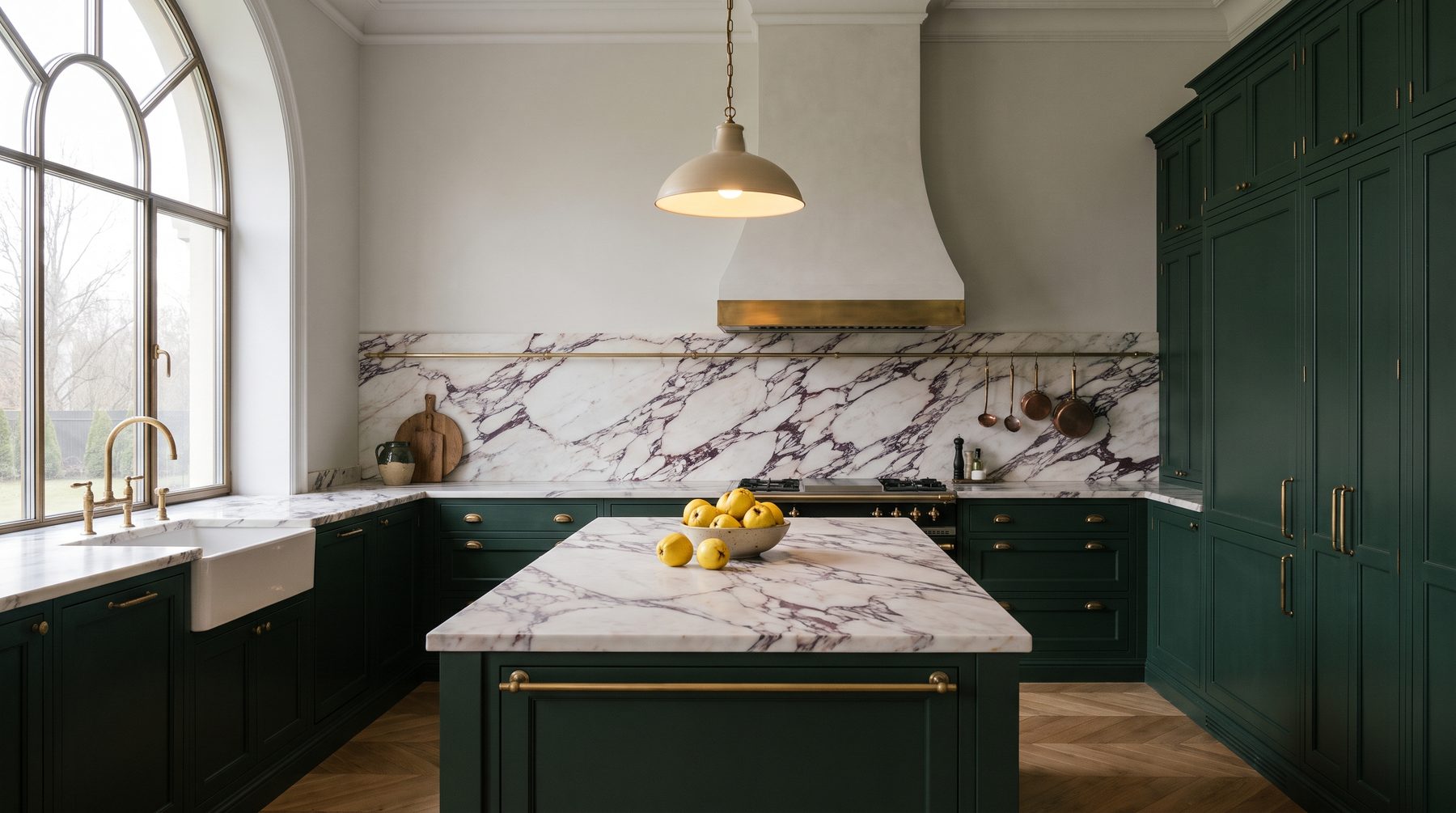
Architecture changes faster than we think. Marble comes and goes in waves, wood shifts from bleached oak to dark walnut and back, concrete is deified then hidden. But one thing in the interior works like jewelry for space and keeps its power for decades — metal. That’s why bronze, brass, luxury interior details cost like small cars per running meter, and that’s why in every serious project we return to the conversation with a client about what their door handle is really made of.
That conversation is almost always uncomfortable. Because on the surface, a brass coating a few microns thick and cast bronze look almost identical at first. The difference shows itself in five years — when one handle becomes a noble artifact with patina, and the second loses its plating down to gray iron underneath. And that’s when you realize: metal in a home isn’t décor. It’s a test of whether you built for a generation or for the next renovation.
In this article, I’ll explain what cast bronze differs from brass plating, why this becomes visible over years, where clients most often go wrong, and how we pick metal at the studio for projects meant to outlive their owners.
Why metal is the most honest detail in a home
You can hide cheap stone behind good lighting. You can mask mediocre wood with varnish. With metal, that doesn’t work. Metal lives next to your hand — you touch it, lean on it, grab it thousands of times a year. A door handle, stair rail, faucet, switch plate, light fixture rim — these are points of physical contact with the home. Any fakery at these spots gets felt by fingers before eyes.
There’s another reason we treat metal like interior jewelry. A bronze detail is the only material in a home that gets more expensive over time. Stone ages, wood dulls, fabrics wear out. But bronze gains patina — that dark-gold depth that no chemistry can fake in a week. After twenty years it looks better than on delivery day. This is a material quality that lives with the home, not just serves it.
Cast bronze versus brass coating: what’s the real difference
Let’s sort the material facts, without marketing.
Bronze is an alloy of copper with tin, sometimes with aluminum or silicon added. It’s dense, heavy, warm to the touch, and has a deep matte-gold color with reddish undertone. When we say “cast bronze,” we mean a piece made entirely of this alloy — uniform throughout its thickness. Break a piece off — inside it’s the same as outside.
Brass is an alloy of copper with zinc. It’s lighter, yellower, cheaper to produce by roughly three to four times. Solid cast brass is a decent material; we work with it constantly. The problem starts where “brass” means not an alloy but brass galvanic plating — 2–8 microns thick on a steel or zinc base. This is the “brass-look hardware” from the mid-market segment.
The difference at start is almost imperceptible. The difference in five years — dramatic.
What happens to plating over 5 years
The thin galvanic layer wears off at contact points: on a handle — where the thumb presses; on a faucet — along the spout edge; on a rail — at mid-span. First a matte spot appears, then bare gray metal, then rust if it’s steel underneath. No polishing fixes this — the layer simply isn’t there anymore.
Cast bronze and cast brass behave exactly opposite. In contact zones they lighten and polish naturally — a human hand works like soft grinding. In untouched areas, dark patina appears. A piece starts to “tell” the home’s story: which rail edge people hold most, which door side they open from. This isn’t wear — it’s material biography.
Bronze as material of the month: why it’s worth more than gold by meaning
Gold is status you see immediately. Bronze is status for those who understand. And that’s the whole difference between new money and a home built for the next generation.
In European architectural tradition, bronze is the material of cathedrals, palaces, banks. Material that Giacometti and Brancusi worked with. It’s the cultural code for “made forever.” When a client chooses cast bronze for the rails of the main stair — he’s not buying metal. He’s buying the right not to redo that rail in ten years or twenty. The home becomes heavier in the right way — it gets an anchor in time.
And one more important point, rarely mentioned. Bronze pairs poorly with plastic, laminate, vinyl composites and imitations. It demands honest materials around it — natural stone, solid wood, plaster, silk. In other words, choosing the right bronze detail automatically raises the quality of the whole interior around it. One bronze element pulls an entire system of decisions.
Where metal works most powerfully
Over practice, I’ve identified zones where the difference between real and fake is sharpest.
Door hardware for main and interior doors. This is the guest’s first touch with the home. A heavy cast handle with solid, muted sound on turning — a sensation you can’t fake. We work with Italian and French casting workshops; average price for a handle — 400 to 1,500 euros per door set.
Stair rails. The most stressed detail in a home. You grab a rail dozens of times daily. Galvanic plating surrenders in two to three years. Cast bronze lives as long as the house stands.
Frames for built-in lights and vents. A detail noticed subconsciously. A thin bronze rim around a recessed light in the ceiling turns an ordinary lamp into jewelry. This difference in price from standard white trim — 80–200 euros per point — transforms ceiling perception.
Plumbing fixtures. Here the mistake costs most. A faucet in daily contact with water, soap, lime. Plating flakes first and fastest.
Baseboard and shadow gap. A bronze insert in the shadow gap between wall and floor — a detail clients thank us for three years after delivery. Because it’s exactly this thin line that makes space feel expensive, subconsciously.
Typical client mistakes
Here’s where most stumble.
Mistake one: mixing real metal and plating in one space. Client puts cast bronze handles on doors — and cheap brass-plated faucet in the same room. In two years the faucet fades, the handles darken nobly, and the discord becomes painful. Metal in a home should be one family — either all cast everywhere, or knowingly plating everywhere with awareness of lifespan.
Mistake two: confusing gold color with gold metal. Today’s market has dozens of “gold-look coatings” — from PVD plating to paint with metal flake. All look identical on a render and in a showroom. None behave like metal in real life. If you hear “gold color” instead of “alloy composition” — that’s a red flag.
Mistake three: polishing bronze. The most painful mistake. Client after two years decides the rail “darkened” and calls a polisher. Patina gets stripped — all the magic vanishes. You don’t polish bronze. You wipe it with soft cloth, maximum with wax. Patina is what you paid for.
Mistake four: saving on bathroom fixtures but splurging on bronze in formal zones. The logic seems reasonable — “nobody sees the bathroom anyway.” But you interact with bathroom metal most intimately. And that’s where bad faucet hardware poisons your home perception more reliably than anything else.
How we pick metal in the studio
Our approach is simple and fairly strict.
First, we divide the project into two zones: physical contact points (handles, rails, faucets, switches) and visual presence points (frames, grilles, edges, decorative elements). In the first category we never use galvanic coating — only casting or solid. In the second we allow quality PVD coatings from proven makers, because there’s no wear there.
Second, we always show the client samples after 5 years of use. We keep a collection at the studio: a cast bronze handle from a real home and a brass-plated handle from the same home. The difference speaks for itself; words aren’t needed.
Third, we work with limited circle of workshops. Cast bronze is a craft done by hand, and casting quality varies greatly between makers. We know five or six names in Europe we’ve worked with for years and don’t experiment.
And fourth — we convince the client to reduce quantity of metal details but raise their quality. Better three genuine bronze accents than thirty brass-plated ones that need replacing simultaneously in five years.
What remains after twenty years
We live in a strange era of interior consumption. Homes are assembled from catalogs, hardware is picked for renovation not for life, and everything is budgeted until the next update. But there are clients who build differently — and for them, “bronze or brass” isn’t about money or style. It’s about how seriously they take their home.
In twenty years almost everything leaves your interior. The color palette changes, fabrics replace, lights update, rugs go. Stone, wood, and metal stay. And it’s by the condition of these three materials that people will see whether you built for a generation or for a season.
A bronze handle, touched tens of thousands of times, is perhaps the most honest object in a home. You can’t buy it ready-made. You can only accumulate it over time.
If you’re now choosing hardware for your home and hesitating between samples — write us. We’ll show you those handles after five years. It’s the best argument I know.

Next step
Discuss your project
An hour at the studio with Oleg Reznikov: your site, your brief and relevant studio projects.