
Interior in a Modern Classical House
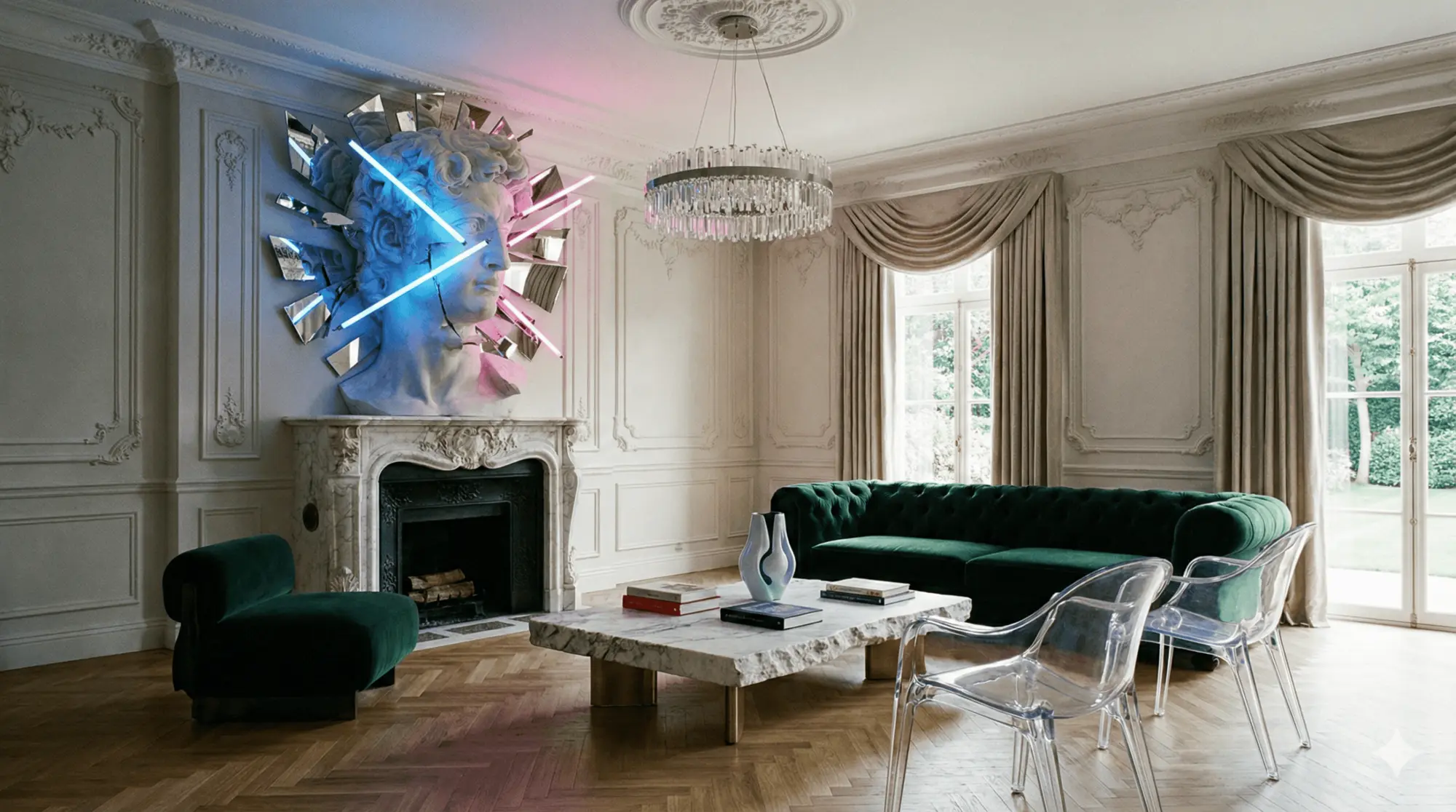
In a modern classical house there’s no place for loud luxury. Here “quiet luxury” reigns: expensive materials, ideal proportions and a sense of air.
Style DNA: Three Main Pillars
To create the right atmosphere, it’s important to adhere to three basic principles:
-
Symmetry and Geometry: This is the foundation of classical style. Paired chairs, identical lamps on both sides of a mirror, center of composition (such as fireplace or sofa) around which the rest of the interior is arranged.
-
Restrained Color Palette: The base is always neutral — white, beige, gray, ivory. Accents are deep and noble: emerald, wine, dark blue, chocolate or golden ochre. No neon or “acidic” colors.
-
Quality Materials: The style doesn’t tolerate imitation. If wood — then solid or quality veneer. If stone — then marble or granite. Plastic is inappropriate here.
Finishing: Creating a “Canvas”
In modern classical style, finishing serves as a background, but a complex and well-developed one.
Walls
The most popular technique is painting with matte paint combined with moldings. Trim shouldn’t be ornate; strict rectangular frames on walls that set the rhythm are sufficient. Also appropriate are wallpapers with delicate, barely noticeable classical pattern (damask, flourishes), but it’s better to use them as accents.
Floor
-
Living Areas: Parquet or engineered wood. Ideal laying pattern — “French herringbone” or classical “deck.”
-
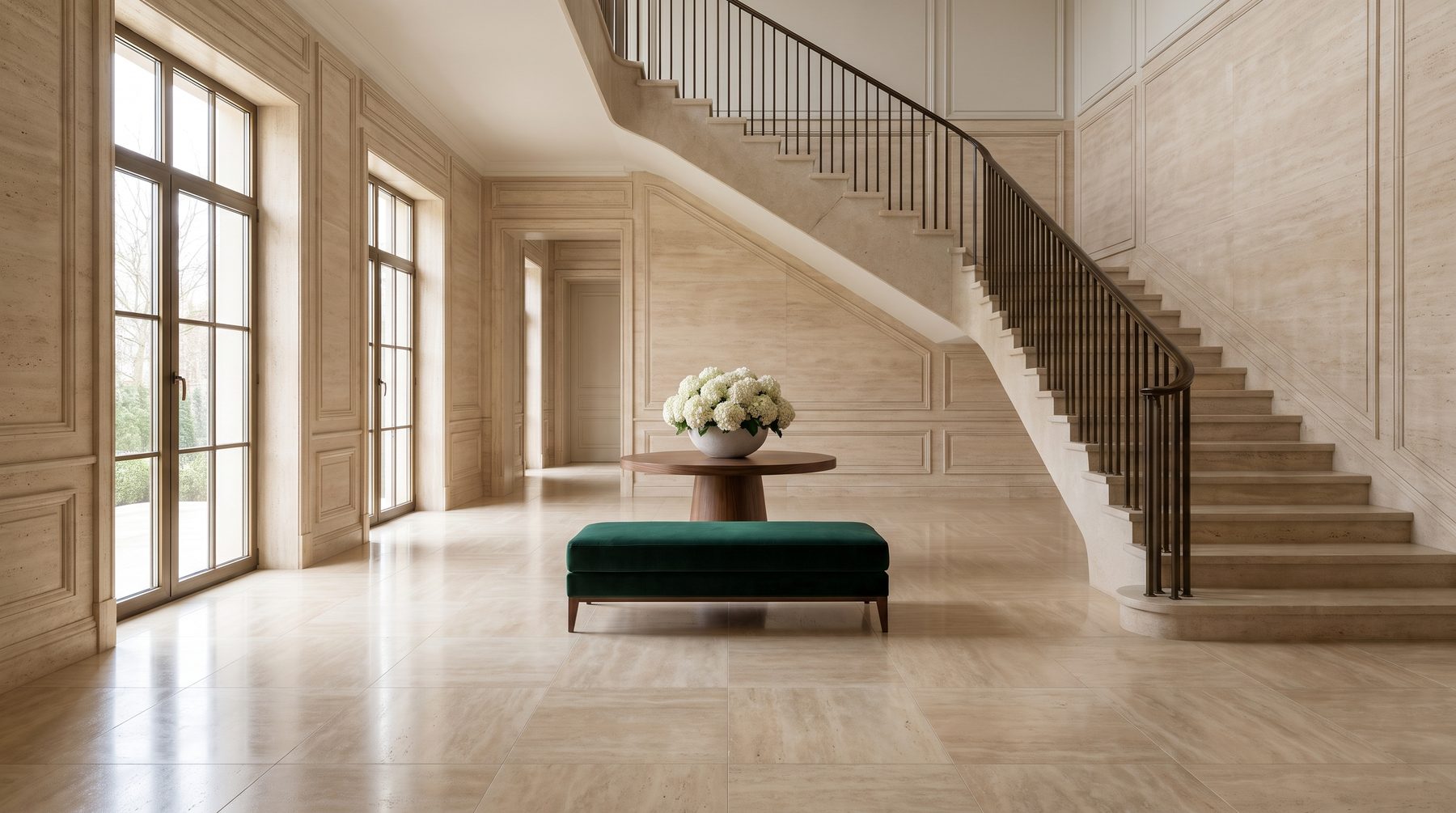
Hall and Kitchen: Natural stone or large-format ceramic tile under marble. Tile should be large-format to minimize grout joints.
Ceiling
It should be perfectly level and white. An essential element is a high ceiling cornice (baseboard). In the center of the room — a ceiling rose for a chandelier, but in modern interpretation it should be laconic, without excessive “swirls.”
Furniture: Tradition and Comfort
Furniture in a modern classical house combines elegance of forms with modern ergonomics.
-
Forms: Smooth lines are welcomed, but without excessive carving. Table and chair legs can be curved (cabriole) or straight, tapering downward.
-
Upholstery: Velvet, velour, dense silk, quality leather. Very popular is the “button tufted” technique (capitonné) on bed headboards and sofa backs.
-
Mix of Eras: Next to a massive classical sofa can stand a light modern glass and metal coffee table. This contrast is what makes classical style “modern.”
Important: Don’t clutter the space. There should be plenty of “air” between furniture pieces.
Lighting and Decor
Lighting in neoclassical style is an art. Multiple light scenarios are always used here.
-
Central Chandelier: Queen of the interior. Often crystal or glass, but in more modern, geometric forms.
-
Local Light: Paired wall sconces, floor lamps with textile shades by armchairs.
-
Textiles: Curtains should be straight, dense, falling to the very floor (or even lying on it). Fabrics — expensive, heavy, with noble draping.
-
Mirrors: Large mirrors in beautiful but not overly massive frames help expand space and add light.
Room Characteristics
Living Room
Heart of the home. If possible, install a fireplace (or quality bioethanol fireplace) — it becomes the axis of symmetry. Around it is arranged the sofa group. A rug on the floor highlights the relaxation zone.
Kitchen
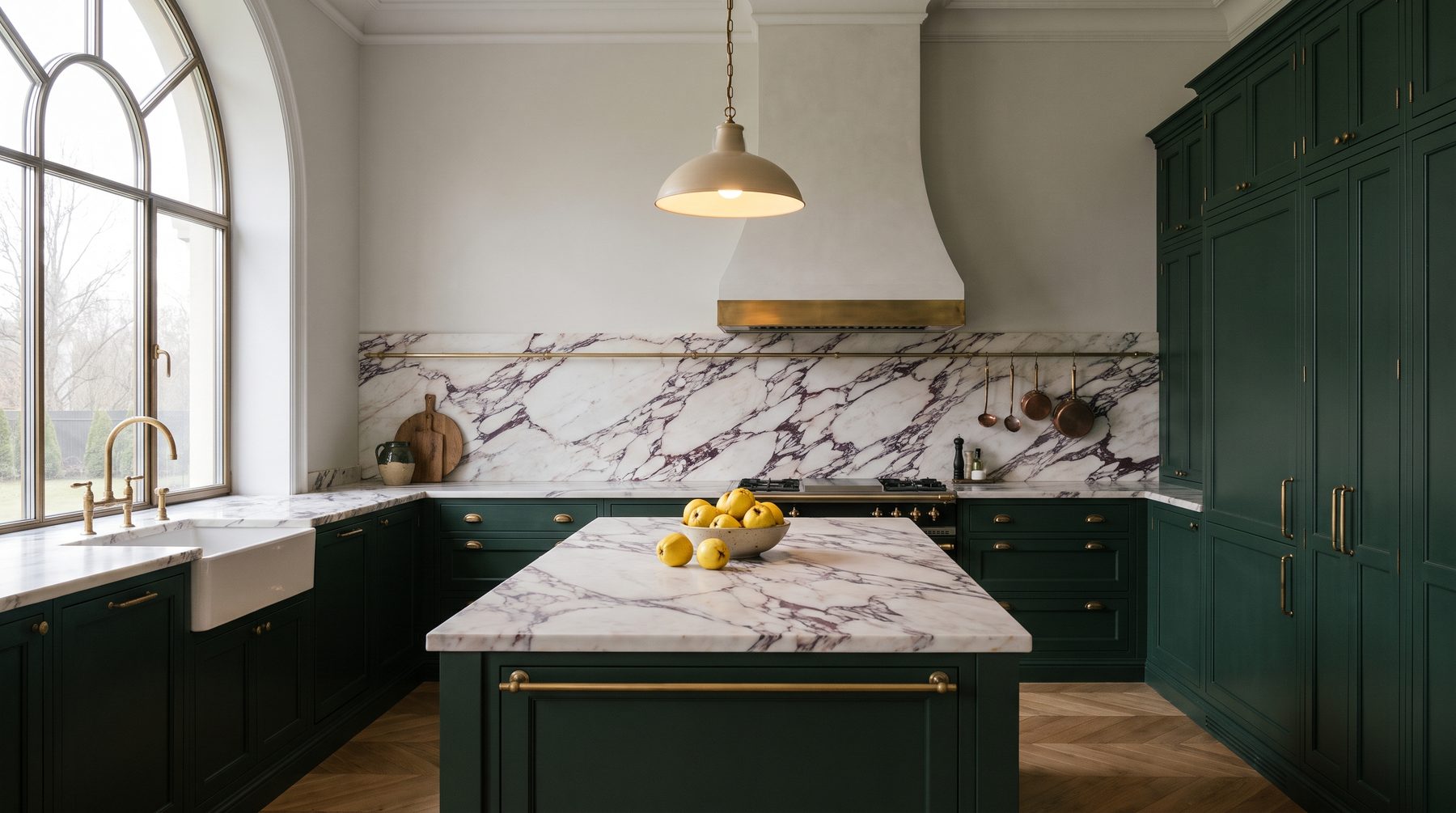
The cabinet is usually chosen with raised panel doors reaching to the ceiling. Appliances — either built-in and hidden behind doors, or stylized as retro. Countertop — stone. A kitchen island often serves as a bar counter and is highlighted with pendant lights.
Bedroom
This is a zone of maximum calm. The main accent is the bed with a high soft headboard. Nightstands must be paired. Color palette here should be maximally pastel and calming.
What to Avoid
To avoid turning a modern house into a museum or parody of a palace, avoid:
-
Excessive Gilding: Gold is acceptable in hardware and details, but it should be matte, “aged” (brass, bronze).
-
Complex Multi-Level Drywall Ceilings: This is a relic of the past.
-
Cheap Reproductions of Paintings: Better one quality abstraction or mirror than a poor copy of a classical painting.
Conclusion
Interior in modern classical style is an investment. It won’t become outdated in 5 or 10 years, unlike ultra-trendy trends. This is a house that exudes breed, calm and confidence.

Next step
Discuss your project
An hour at the studio with Oleg Reznikov: your site, your brief and relevant studio projects.