
Portfolio · A Baroque residence
Sévigné
French Baroque — a house signed by a cartouche in a broken pediment
The client loves French Baroque — its theatrical yet measured luxury. He wanted a house with character and a “signature”: as in the Parisian hôtels particuliers, where a carved cartouche crowns the entrance — the personal mark of the house. We named the project after Madame de Sévigné, whose letters became a model of French elegance: a house that signs itself with a cartouche, as she did with her flourish.
Below is the path from idea to image to house: the broken pediment and cartouche, the mansard and arched windows, limestone and light, the forecourt and parterre.
A Baroque gesture reduced to nobility
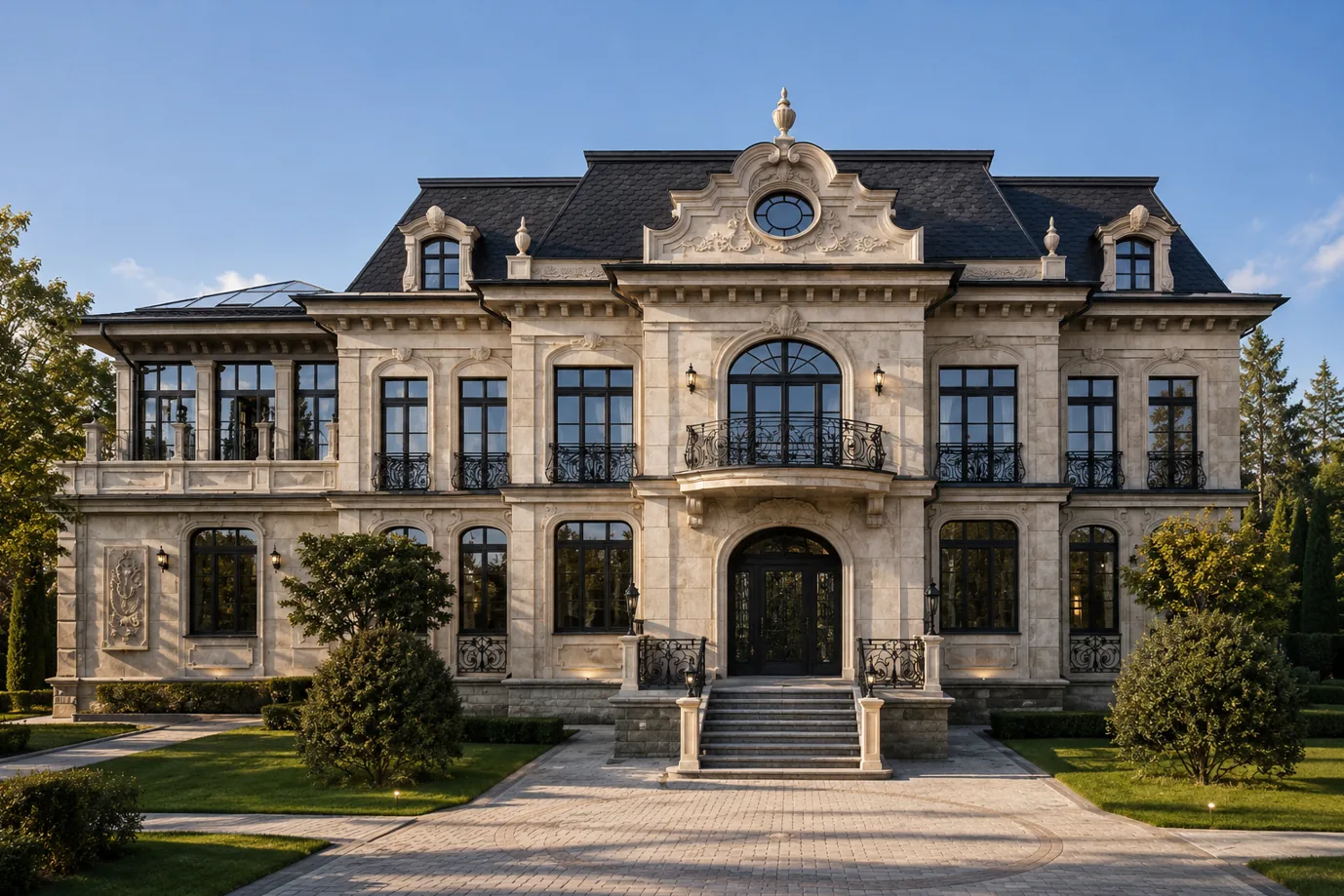
The composition is symmetric and theatrical. The central risalit is crowned by a broken segmental Baroque pediment: two volutes part, and between them a cartouche, a stone urn and a round oculus, like the eye of the house. Above the steep black mansard rise arched lucarnes and urns, the corners are rusticated, and the tall arched windows with their balconettes hold the rhythm of the façade. The Baroque here is not excessive but gathered and noble.

The broken pediment
The pediment is the main accent of the façade: it gathers the gaze and gives the house a Baroque yet restrained character.
Mansard and loggia wing
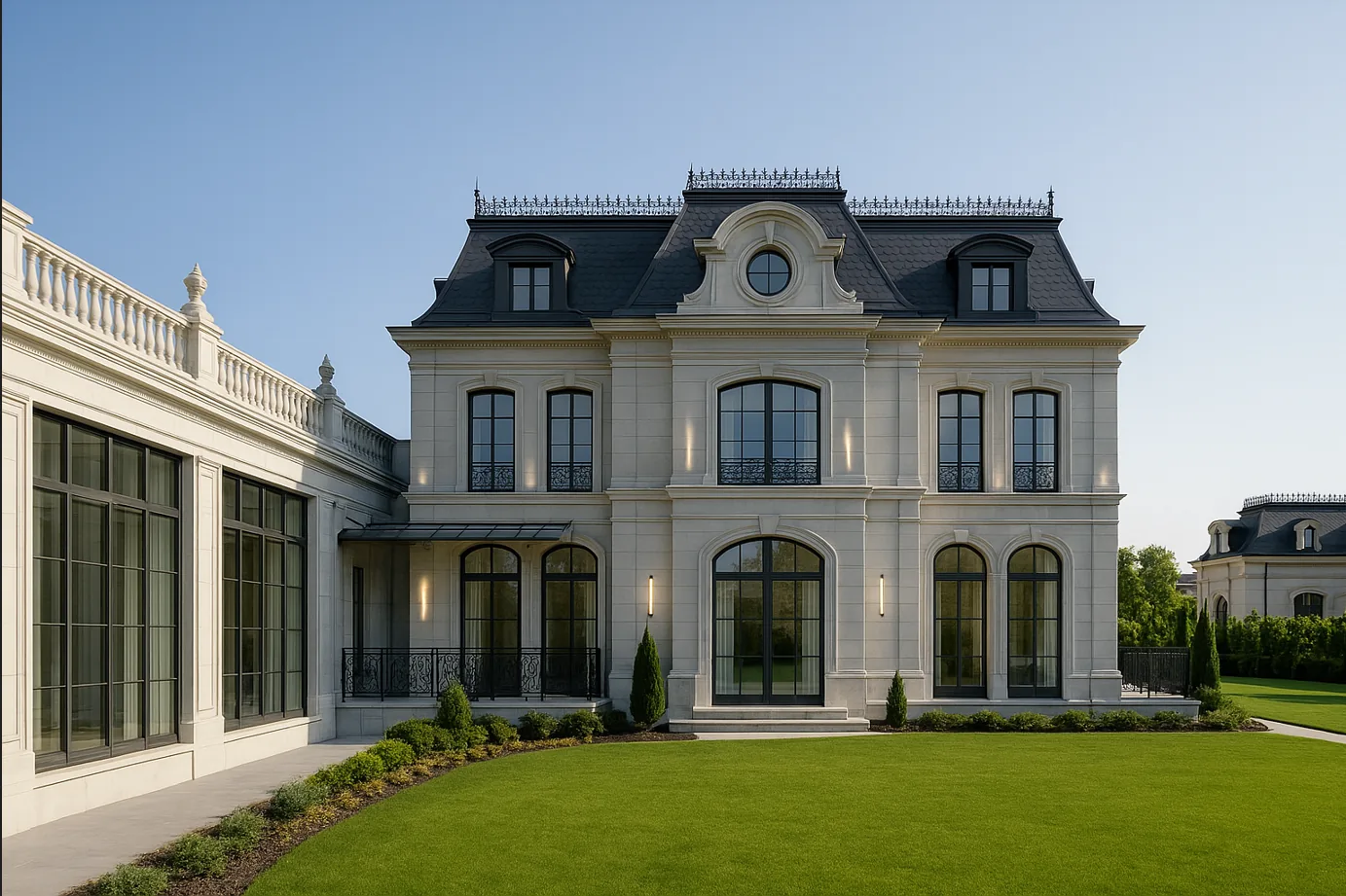
The loggia wing ties the house to the garden and fills the side rooms with light — Baroque, opened to nature.

The cartouche over the entrance — the signature of the house
The heart of the façade is the central entrance. The arched portal is framed with carving; above it, on volute brackets, floats a wrought-iron stone balcony with an openwork grille, and higher rises the broken pediment with its cartouche. It is the ceremonial gesture of the Baroque: the guest passes beneath the “signature” of the house, between wrought-iron lanterns, up a stone stair with volute rails. Here the Baroque works as a theatre of light and shadow.

The Baroque is easy to overplay and hard to keep noble. We gave the house one strong “signature” — the cartouche in the pediment — and removed everything superfluous around it. So the luxury becomes quiet.
Cream limestone and carving
The whole house is of cream limestone: smooth planes, rusticated corners, carved cartouches and surrounds, the keystones of the arches. The stone is chosen for its nobility and for the way it holds light: by day the limestone is warm and calm, in the golden hour it warms, and the carving of the pediment, volutes and cartouches comes alive with light and shadow. The Baroque lives not by the quantity of decor but by the play of light upon it.


Carving is good when you want to touch it. We made the cartouches and volutes by the hands of craftsmen — so that up close the house is no less beautiful than from afar.
A ceremonial approach and a formal garden
The arrival obeys the symmetry of the house. Wrought-iron gates open the view onto a circular paved forecourt; the drive leads exactly to the ceremonial stair and the cartouche over the entrance. From the garden side the house opens to a formal parterre of clipped topiary and conifers. From above the whole idea is clear: the pediment, the mansard, the forecourt and the parterre gathered into one clear French geometry.

Arrival on axis
From the ceremonial side the house is composed and theatrical, and the cartouche in the pediment greets the guest from the gates.
The garden side
The parterre carries the symmetry of the house into the ground: garden and façade speak one language of French geometry.


At dusk the limestone warms and the windows glow
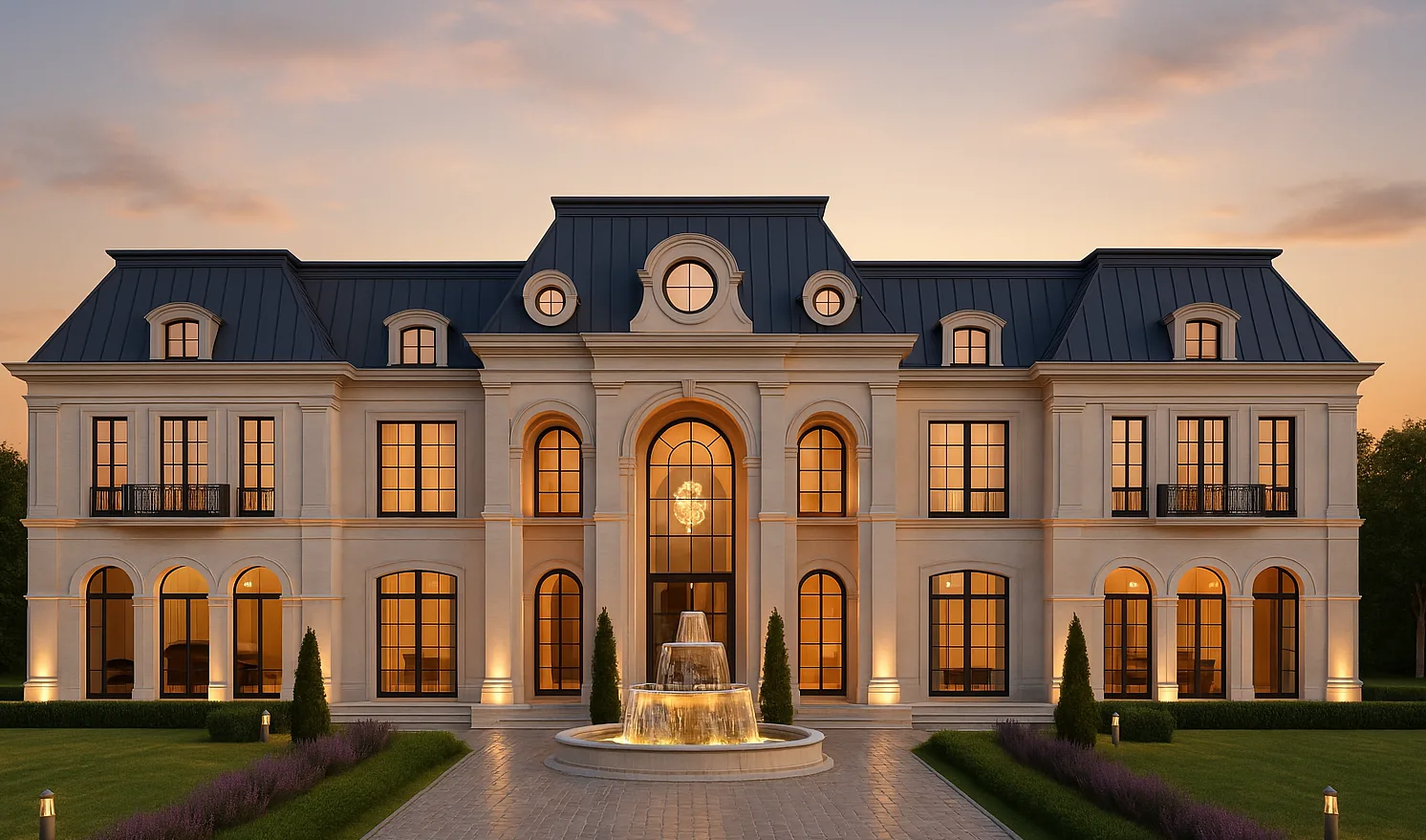
The house is beautiful at any hour. At dusk the tall arched windows and the glazed wing light up warm amber, the cartouche and the pediment read as a silhouette, and the lighting draws the carving and the volutes. In winter, with snow on the mansard and the forecourt, the Baroque house sounds especially solemn and quiet. Light and season turn the façade into a living stage.

A glow at dusk
The lighting follows the architecture: it draws the pediment, volutes and balcony, and the house stays solemn and warm.
Winter and limestone
Snow reduces the garden to lines, and what remains is the essential: the silhouette of the pediment, the cartouche and the warm light in the tall windows.


A good house, like a good letter, is known by its signature. Sévigné is signed with a cartouche — and that flourish is enough for the house to be remembered.
From the studio journal
Space without walls: how enfilade changes the logic of living
Orangery instead of a winter garden: what the 80 million ruble difference buys
Autonomous Estate: When Disconnecting from Networks Costs More Than Connecting
Related studio service: Architectural design
Next step
A home begins with an idea — let’s discuss yours
We create houses with character — from French classicism to Baroque and contemporary architecture. A full cycle: architecture, hands-on construction supervision, interiors and a formal garden — down to the carved cartouche in the broken pediment.