
Onyx with Backlighting and Macassar: Rare Materials That Age Interiors
A client recently came to us. Shows photos of their secondary market apartment, bought in 2012—top project back then from a famous bureau. Onyx with backlighting in the living room, macassar panels in the study, semi-precious stone mosaic in the bathroom. Finish cost at the time—like two apartments in the same building.
“Tear it all out,” they say. “Looks like a Sochi casino lobby.”
This is where we start a conversation about rare materials in interiors. Because the paradox we see monthly sounds like this: the more expensive the material, the faster it can age a space. Not physically—aesthetically. And in ten years the most prestigious solutions of the 2000s look like a provincial attempt to show off money.
In this article we’ll go through what’s gotten dated, why, what those materials are replaced with by people who understand that true luxury doesn’t shout.
Why Rare ≠ Timeless
There’s persistent logic: if a material is rare and expensive—it’s automatically a good choice. Logic is false.
Rarity is a supply characteristic, not an aesthetic one. Mammoth ivory is rare. Doesn’t mean you should make a countertop from it. Onyx with backlighting is expensive. Doesn’t mean it’ll beautify your living room.
A material ages for three reasons. First—visual aggression. When pattern is too active, too contrasting, too loud, the eye gets tired in six months. Second—era binding. Any material that became fashionable in a particular decade carries that decade’s fingerprint. Third—scale or context violation. Rare material torn from fitting-scale architecture turns into an appliqué.
Backlit onyx fails all three counts simultaneously.
Materials That Already Scream “2010s”
Let’s go through the list. Without courtesy.
Onyx with Backlighting
Main suspect. Semi-transparent stone with LEDs behind—aesthetic born in Dubaian hotel lobbies in the early tens and migrated to private interiors as a premium symbol. The problem: interior lighting is always an attraction. You adapt to it in a week, then spend next twenty years living with an attraction that stopped working.
We at the studio haven’t done backlit onyx once. Won’t do it.
Macassar and Other “Exotic” Veneers in Full Coverage
Macassar, Palissandro Santos, Zebrano—species with contrast, striped, almost animal-patterned. In 2000s office interiors they glued wall-to-wall, floor to ceiling. Result looked like Fendi Casa 2008 catalog interior. Good if you love that catalog. Bad if you live in it.
These species haven’t died. But they work dosed: countertop inset, one cabinet face, a door detail. Never a whole wall.
Polished Marble with Active Pattern on Entire Wall
Calacatta Viola, Rosso Levanto, Verde Guatemala as “book-matched” across a living room wall. Beautiful idea that on nine of ten objects becomes a tattoo you can’t get rid of. Too much motion. Too much story. The interior stops being background for life and becomes the main character. But the main character in a house should be people.
Chromed Details and Glossy Brass Everywhere
Chrome is back, but different—matte, subtle, pointwise. But glossy gold brass on handles, baseboards, mirror frames, and furniture legs all at once—that’s 2015 antiquarian style. Passed.
Decorative Plaster “Under Silk” and Venetian with Metallic Sheen
Separate genre still sold as “exclusive.” In reality—the very sign of a “for self” renovation done ten years ago. Matte mineral plasters (Marmorino Classico, tadelakt, clay mixes)—entirely different conversation. But shiny “Venetian”—all over.
What Ages Beautifully
Now about materials that in thirty years will look exactly like today. Maybe better.
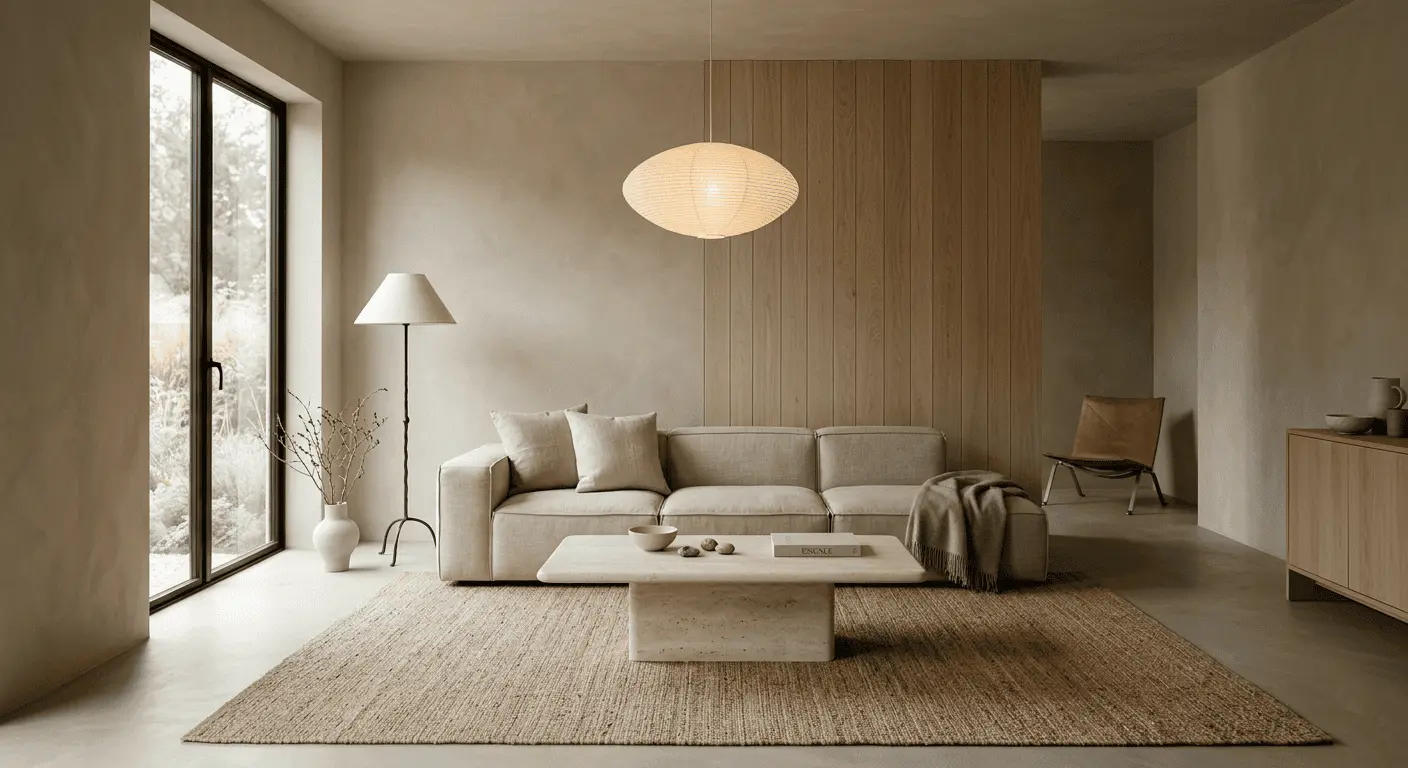
Limestone. The very same that built half of Paris and all of Jerusalem. Soft, warm, with barely traceable pattern. It ages with the house, not against it. A wine stain on limestone isn’t catastrophe, it’s patina.
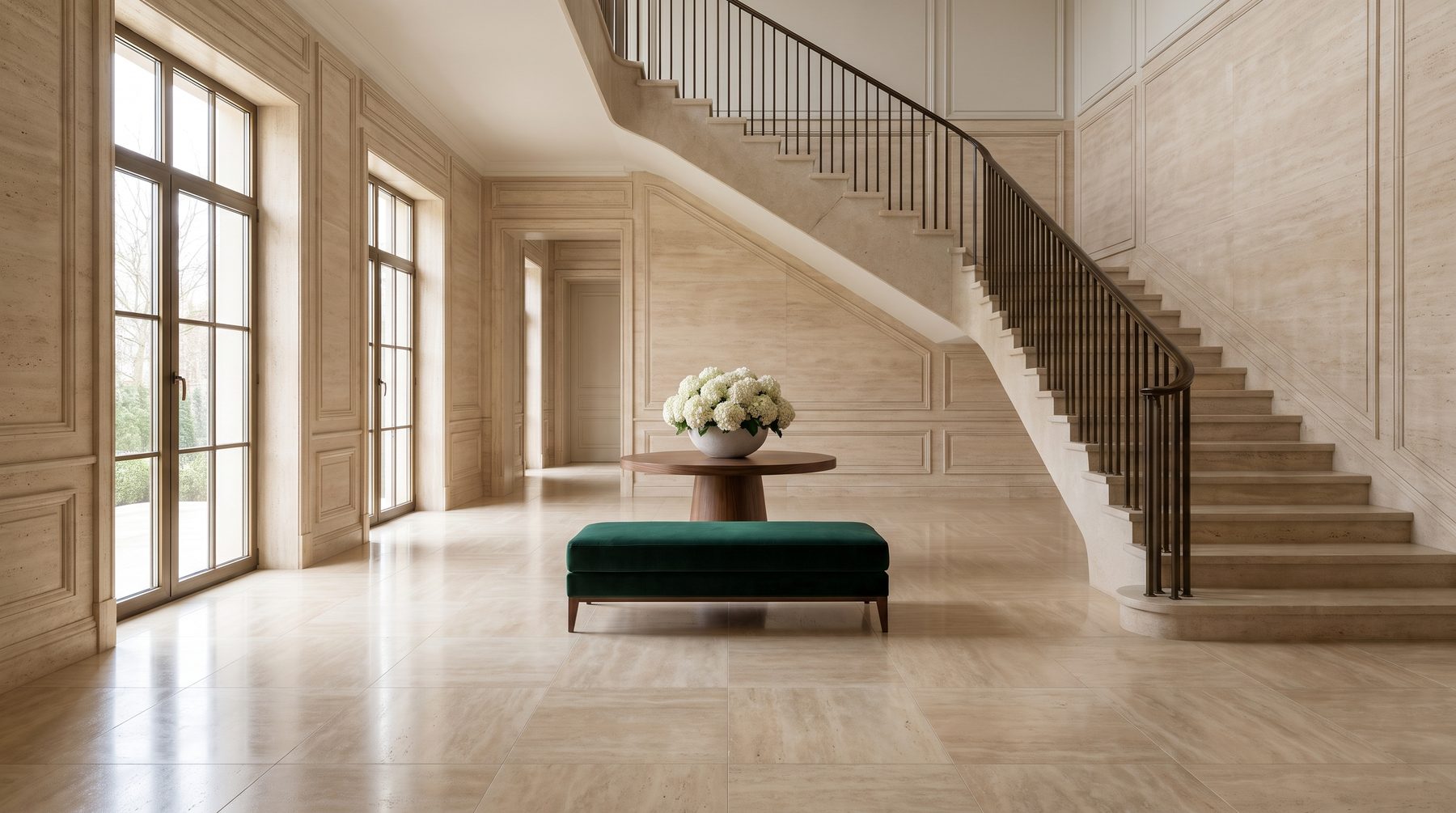
Travertine, but Different. Travertine 2005—beige, glossy, with “sealed” pores. Travertine now—unfilled, open cavities, cool grays, in large blocks. Already not an “Italian restaurant,” already architecture.
Oak, but Properly Treated. Not stained dark like wenge. Not lacquered glossy. Solid board with brushing, with oil, with calm grain. Radial or rustic—aesthetic choice, but never gloss. Oak that lives, breathes, darkens over years.
Uncoated Brass and Patinated Bronze. Metal that with time tarnishes, gets patina, changes color. In five years one texture. In fifteen—another. Called noble aging, and that’s what separates material from imitation.
Mineral-Based Plasters. Tadelakt, lime plasters, clay mixes. They have depth no paint can match, and patinate more beautifully than any coating.
Warm Marble in Calm Pattern. Not cold white Calacatta with dramatic veining, but Crema d’Orcia, Breccia Sarda, Travertino Navona. Stones that have worked in European architecture for five hundred years.
A Story from Practice: How We Talked a Client Out of Onyx
Couple, both around forty. Apartment in Khamovniki, 280 meters. Husband arrives with a reference—a bar in a Milan hotel where the back wall is white onyx with backlighting. “I want the same, the whole wall, in my living room.”
We sat down and asked: how often is he in that bar? Once a year, on weekends. And he’ll be in this living room every evening, in pajamas, with tea. Ready to sit in a Milan hotel bar every evening?
He thought and said no.
That wall now has large-format cool-toned travertine, no backlighting, matte surface. Fireplace integrated flush with no frame. Two years later the client sent a photo: “Starting to understand why you didn’t let me have onyx.” The wall became a background. And the hero became the life happening in front of it.
That’s the whole essence of working with rare materials in interiors: material should serve you, not you serving it.
Typical Mistakes Choosing “Status” Materials
Mistake 1. Confusing “Expensive” and “Rich”
Expensive material doesn’t have to look rich. Good limestone often looks simpler than cheap Chinese imitation Italian marble. And costs three times more. Understanding this difference is a sign of taste.
Mistake 2. Using Rare Material as Accent “Because It’s Expensive”
Classic: onyx mosaic on a 2 square-meter kitchen backsplash. Fragment ripped from context. Doesn’t work—it glows alien to the rest of the interior.
Mistake 3. Combining Several “Heroes” in One Room
Macassar wall + Calacatta floor + golden patina ceiling + emerald velvet sofa. Each detail separate is good. Together—migraine. Room should have max two heroes, better one.
Mistake 4. Blindly Following the Designer “Who Sees It This Way”
No less than 30% of our renovation requests—”the designer insisted.” Insisted on onyx. Insisted on mirrored ceiling. Insisted on macassar panels. Four years later the designer moved to another bureau and the client lives in a portfolio.
Designer works for portfolio—normal. Bad when it’s only for portfolio.
Mistake 5. Ignoring House Architecture
Onyx with backlighting in a Stalin-era building—crime against architecture. Palissandro Santos in a Scandinavian seaside house—same thing. Rare material needs context. Without it, it provincializes any space no matter where you put it.
How We Select Materials in Studio
Our internal filter—three questions we ask about every material in a project.
First. How will it look in fifteen years? Not in two years on a photo shoot. In fifteen, when cat walked across it thousand times, spilled coffee five hundred, moved sofa ten times. Does it patinate beautifully? Or does it show wear?
Second. What does it say? Every material has a statement. Glossy marble says “look how much I cost.” Limestone says “I’m here so you feel good.” Backlit onyx says… well, you understand. We prefer materials that speak about comfort and time, not price.
Third. Will it survive fashion? Fashion survives only things that weren’t fashion from the start. Oak. Limestone. Brushed bronze. Linen. Handmade ceramics. These were relevant hundred years ago and will be in hundred years. Because they’re outside time by nature.
If material passes these three filters—we use it. If not—we find a replacement, even if the client insists. Sometimes we argue. Sometimes we decline the project. Rarely, but happens.
What Replaced Onyx for People Who Understand
Brief list for convenience.
Instead of backlit onyx—large-format travertine, untreated limestone, matte mineral plasters with depth.
Instead of polished Calacatta across whole wall—same marble but matte-polished, smaller format, or switch to Crema d’Orcia, Pietra Serena, travertine.
Instead of macassar—radial-cut oak, calm-patterned American walnut, cherry, ash. Veneer quieter, wood you can work with longer.
Instead of glossy gold brass—uncoated brass without lacquer, patinated bronze, aged stainless, dark nickel.
Instead of shiny Venetian plaster—tadelakt, lime plasters (Calce Forte, Marmorino), clay mixes. Real depth, not depth imitation.
Instead of decorative patterned glass—just good glass. Or brick wall. Or plaster. None of this will age out.
What Stays in Thirty Years
We often tell clients: imagine you’re making an interior where your kids will live in thirty years. Not like the parent’s house you escaped from, but a house you want to return to.
That interior isn’t built from backlit onyx. It’s built from materials with history before you and history after you. Stone Romans quarried. Wood that grows a hundred years. Metal that patinates by itself. Plaster that’s been on walls five centuries in Italian palazzos.
Rare materials in interiors aren’t exotic species with foreign names. They’re rare ability to choose what won’t let you down in ten years. They’re ability to say no to onyx even when you really want it. That’s understanding that true luxury is silent.
If you’re at the start of a project and have a mood board—send it to us. We’ll honestly say what’s staying relevant and what in three years you’ll want to sledgehammer. Free and sometimes saves a whole apartment’s budget.
Leave onyx to hotels. That’s where it belongs.

Next step
Discuss your project
An hour at the studio with Oleg Reznikov: your site, your brief and relevant studio projects.