
Which Roof to Choose for a French-Style House: Flat or Low-Pitch?
Introduction
In French architecture, the roof is not just a technical element.
It is one of the key factors that shapes the house’s image, its status, and perception.
That’s why choosing between a flat and low-pitch roof is not a matter of taste.
It’s a strategic decision that affects the architecture, operation, and even the liquidity of the property.
In practice, we often see situations where the choice is made intuitively—”like / don’t like”.
In the premium segment, such an approach is unacceptable.
French Style and Roof: What’s Important to Understand
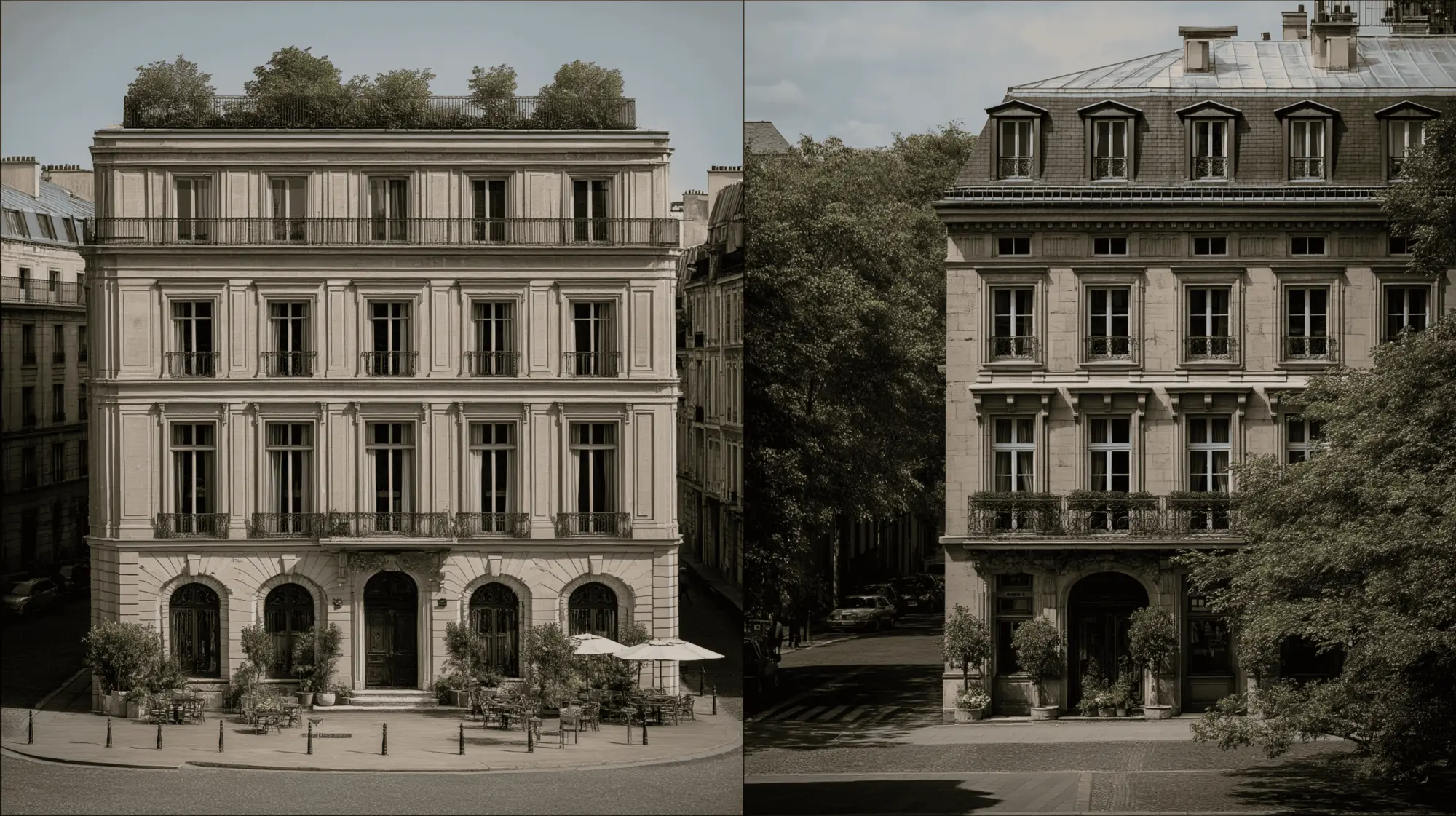
Classical French architecture historically tends toward pitched roofs:
- mansard
- hip
- complex compositions
However, in the modern interpretation of premium housing, more restrained solutions appear:
- low-pitch roofs
- hidden structures
- even flat roofs
But important:
not every roof suits every architecture.
The Key Solution
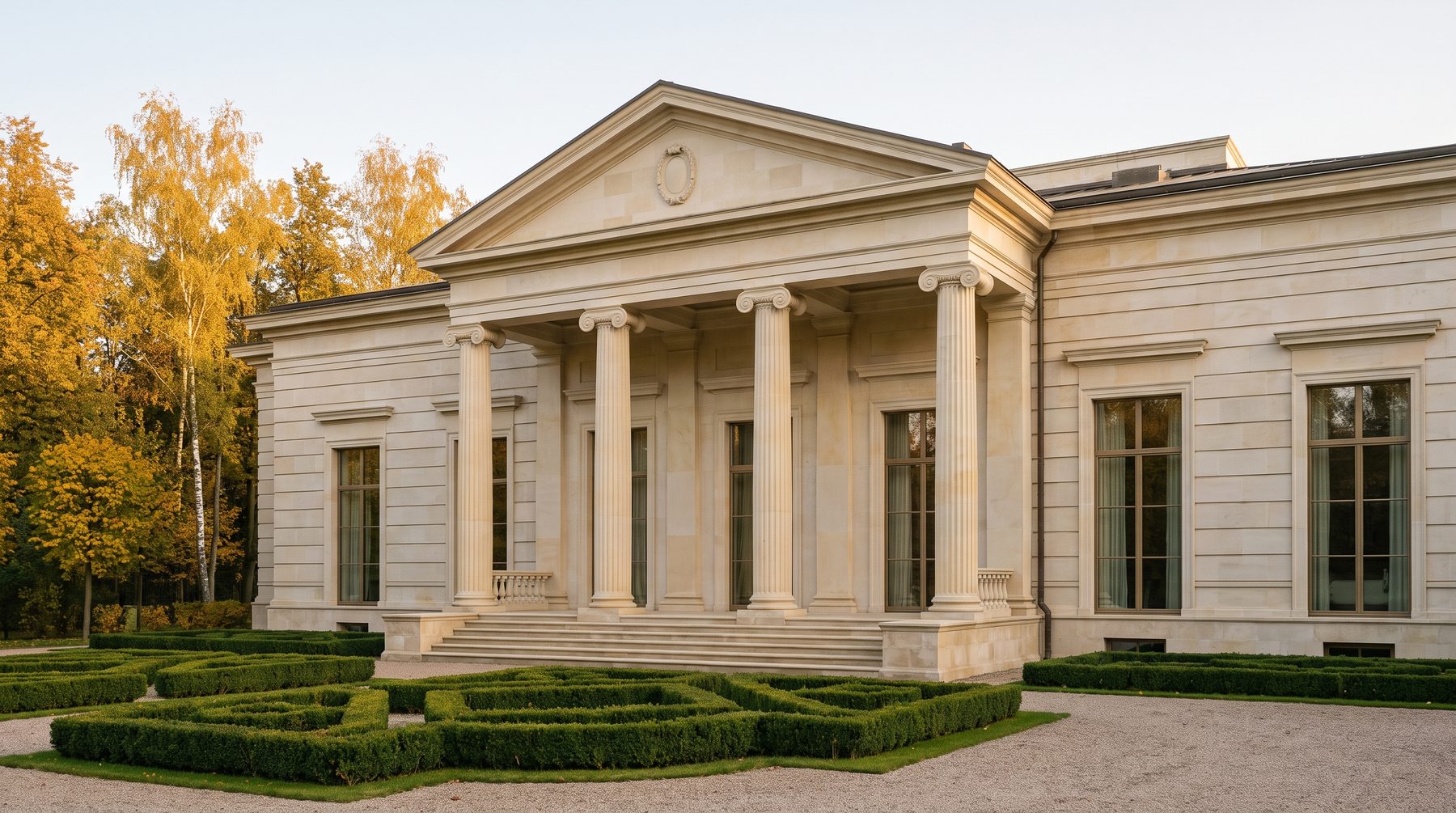
A low-pitch roof is a compromise between classicism and modernity.
It preserves the traditional silhouette but makes it more restrained and current.
Advantages
1. Architectural “Correctness”
For French style, this is the most organic solution.
The house:
- looks harmonious
- reads as “expensive classicism”
- doesn’t cause architectural conflicts
This is especially important for liquidity.
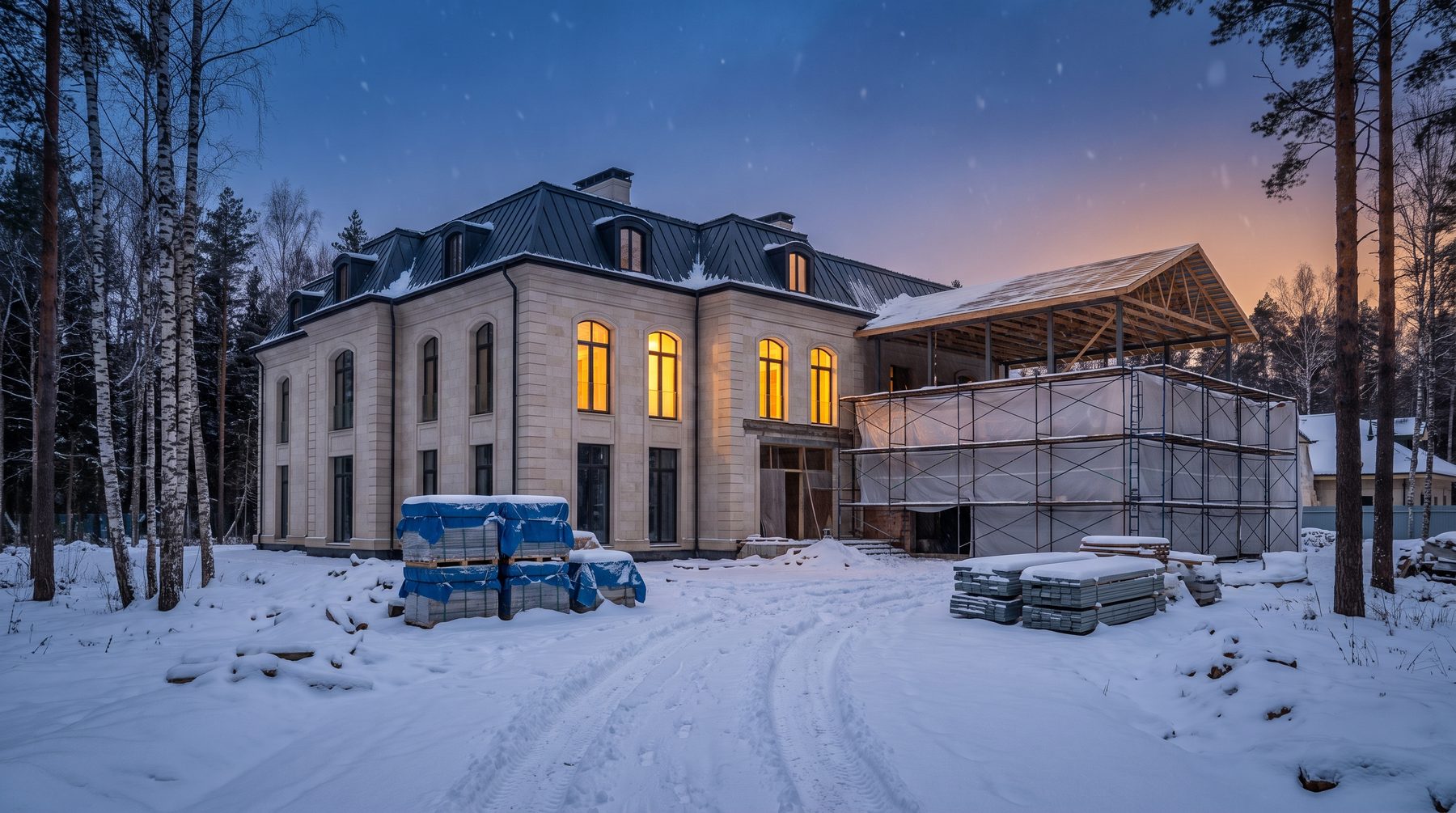
2. Protection of Facades and Structures
A pitched roof:
- effectively drains water
- protects walls
- reduces leak risks
In climate conditions (especially northern), this is critical.
3. Durability
Such roofs:
- are easier to maintain
- less sensitive to design errors
- better handle snow loads
4. Possibility of Architectural Plasticity
You can use:
- cornices
- overhangs
- decorative elements
This enhances premium quality.
Disadvantages
1. Limitations for Modern Architecture
If you want:
- minimalism
- “clean” forms
- modern look
a low-pitch roof may look outdated.
2. Increased Construction Volume
- more materials
- more complex joints
- higher implementation cost
When to Choose a Low-Pitch Roof
Classical architecture (French style in its pure form)
- Homes with emphasis on status and tradition
- Plots in premium communities with regulations
- Projects “for decades”
This is the safest and most correct choice for premium.
The Key Solution
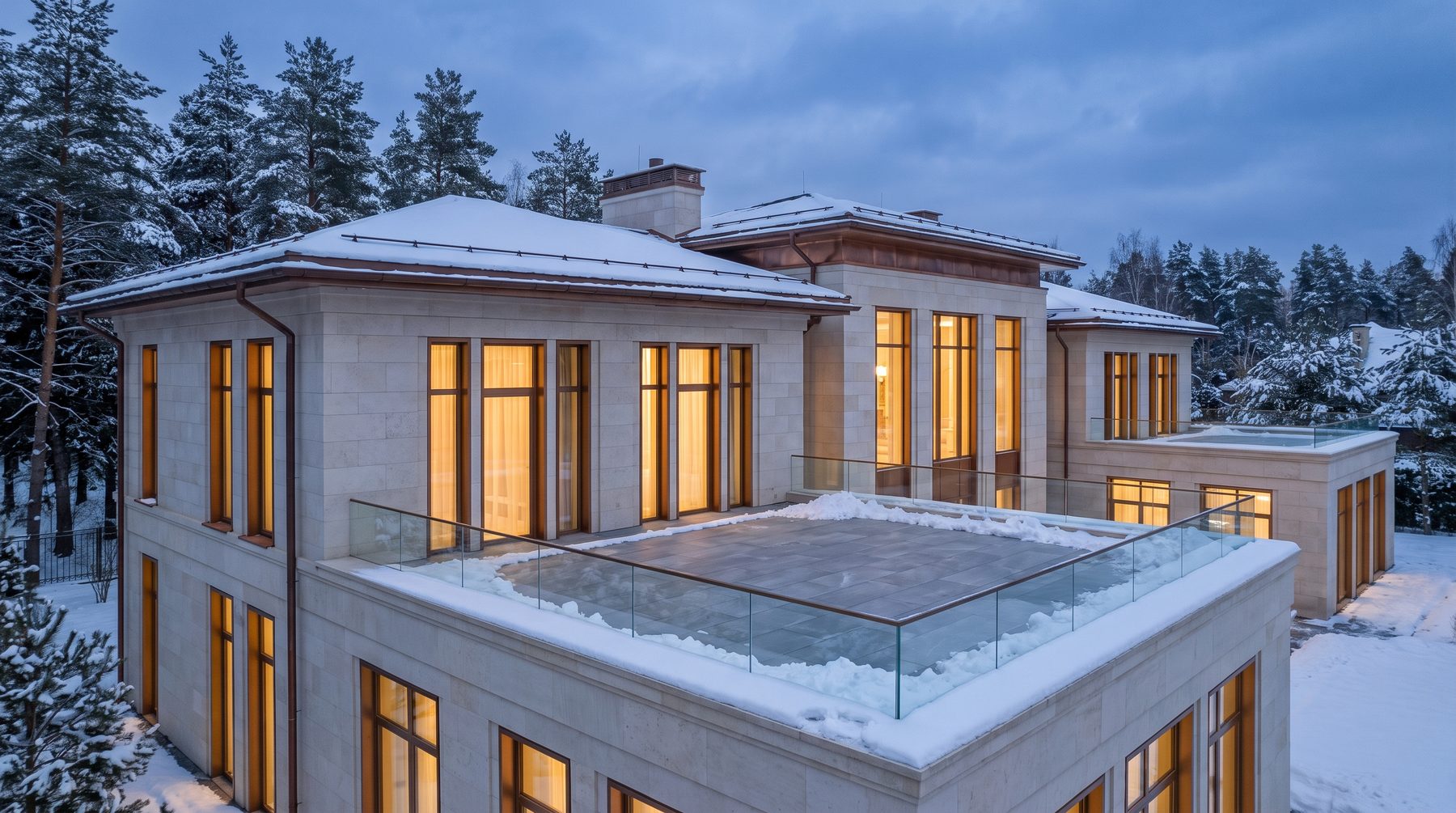
A flat roof is a modern interpretation.
It’s used when architecture moves away from classicism toward minimalism.
Advantages
1. Modern Look
The house looks:
- more minimalist
- “architecturally clean”
- closer to European contemporary villas
2. Additional Functionality
You can use the roof as:
- terrace
- relaxation area
- usable space
In premium, this is a strong plus.
3. Simplicity of Form
- less visual noise
- easier integration with panoramic glazing
- better suits modern facades
Disadvantages
1. Risk of Architectural Conflict
If the facade is classical and the roof is flat—
you get a “hybrid” that often looks strange.
This is a common mistake in expensive projects.
2. Increased Quality Requirements
A flat roof requires:
- perfect waterproofing
- proper drainage
- regular maintenance
Mistake = expensive problems.
3. Climatic Limitations
- snow
- ice
- water
In cold regions, these are increased risks.
When to Choose a Flat Roof
- Modern interpretation of classicism
- Minimalist architecture
- Projects with roof terraces
- Warm or temperate climate
- With a strong design team in place
This solution is for conscious design, not compromise.
Expert Opinion
In the premium segment, a mistake in roof choice is almost always visible.
It “breaks” the house visually, even if everything else is done perfectly.
From practice:
- 80% of French-style projects require a pitched roof
- a flat roof only works within a strong architectural concept
Conclusion
If you’re building a French-style house and want:
- status
- durability
- architectural purity
choose a low-pitch roof.
If the task is to create a modern interpretation:
- with minimalism
- with terraces
- with focus on architecture
then you can consider a flat roof, but only with proper design.
Next step
Discuss your project
An hour at the studio with Oleg Reznikov: your site, your brief and relevant studio projects.