
The Best Villages on Rublyovka: Where to Build Your House
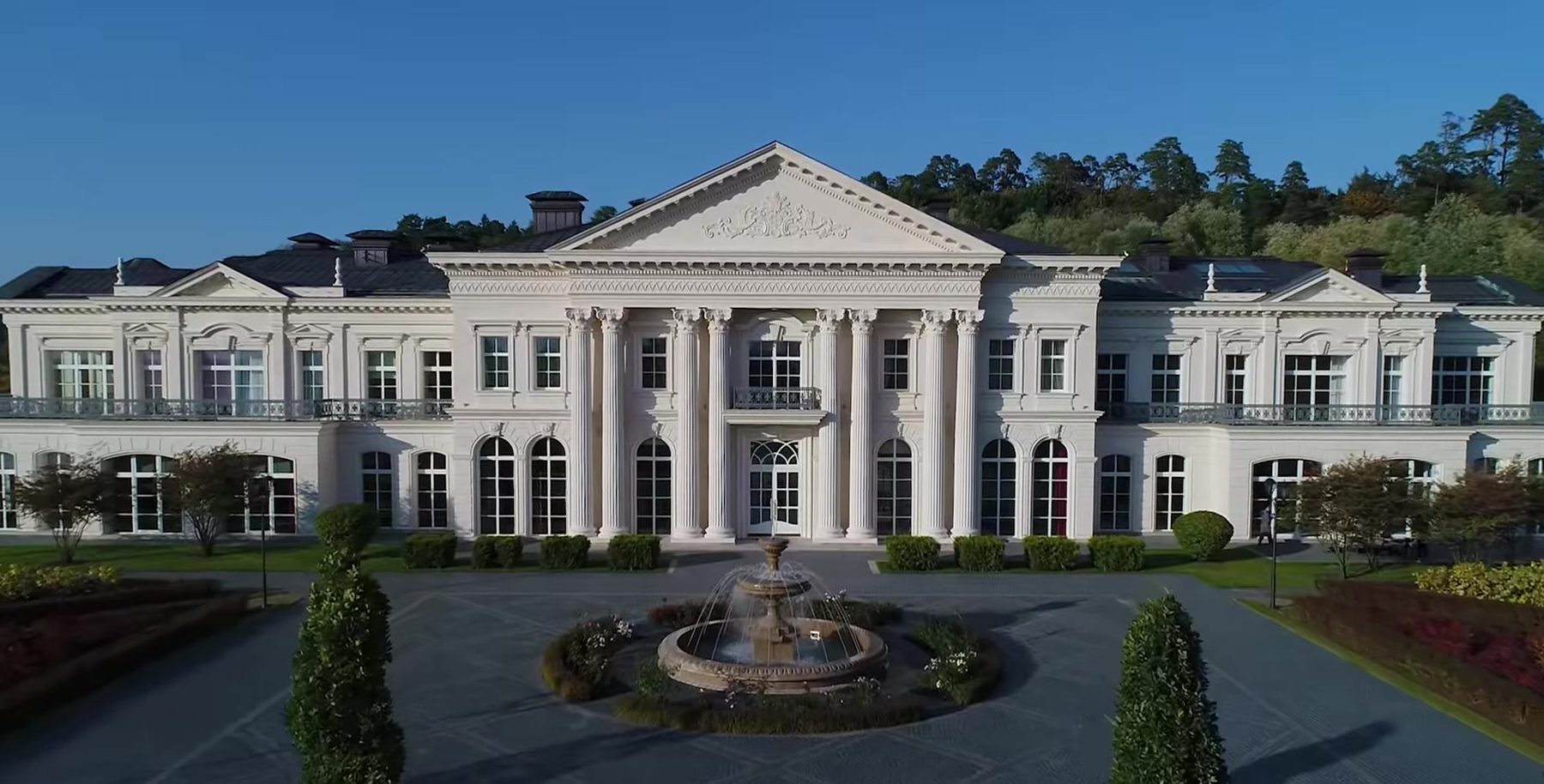
The best villages on Rublyovka are not a prestige ranking. They are a short list of places where the plot actually lets you build the house you have in mind. For an architect, the “best” village is the one where terrain, building regulations and protection zones don’t delete half the project before the first sketch. Barvikha, Zhukovka, Nikolina Gora, Razdory, Sady Mayendorf — each address prices that freedom differently.
Last autumn we went to look at a plot in Razdory with a client. Forty-something sotkas, mature pines, a view over the floodplain, and a price from the broker that makes any normal person hold their breath for a second. The client was delighted: the place of his dreams. I walked the site with a tape measure, looking not at the pines but at two things — where the river protection zone ends, and where the zone begins in which not a single tree may be touched.
Forty minutes later it turned out that the house he had pictured — 1,100 square metres, two wings, underground parking — would only fit here as a compromise. After all the setbacks, the buildable footprint came to roughly 22 by 18 metres. Everything else was beautiful, expensive, legally untouchable land.
Why the best villages on Rublyovka aren’t chosen by name
A broker sells an address. An architect buys possibilities. These are two different products sold under one sign, and the difference usually surfaces three or four months after the deal — when the client brings us the purchase contract and asks us to “just draw the house.”
The Rublyovo-Uspenskoye highway runs roughly 4 to 10 kilometres from the Moscow ring road to the main cluster of villages. Plots on offer range from 18 to 98 sotkas, and the entry ticket for land starts somewhere around 43 million roubles. Inside that corridor live completely different stories: old dacha settlements with chaotic parcelling and century-old trees, organised communities from the 2000s with a strict architectural code, and new compact schemes where a 400-square-metre house sits on three sotkas.
None of these formats is inherently better. They solve different problems. The only question is whether the village’s problem matches yours.
The old dacha villages: Zhukovka, Barvikha, Nikolina Gora
These are places with a history — and with history comes terrain, forest and the complete absence of a single set of rules. Your neighbour on the left may have lived for twenty years in a 1960s log dacha; the neighbour on the right may put up a French mansion with dormer windows. No one has the right to stop him.
For an architect there is an obvious upside: freedom. No village design review board, no approved facade palette, no mandated roof types. You can do contemporary classicism, you can do pure modernism, or you can do what Zaha Hadid did here.
Which brings us to her. The only private house Hadid built in her lifetime stands precisely in Barvikha — Capital Hill Residence, commissioned by Vladislav Doronin. Design began in 2006; the house was only completed in 2018, after the architect’s death. Its defining gesture is a master suite lifted on a slender concrete stalk 22 metres above the ground, above the crowns of the pines and birches that grow to about twenty metres on this north-facing slope. The client said he wanted to wake up and see nothing but sky. Hadid replied that in that case he would have to be above the trees.
Twelve years from idea to move-in is, of course, an extreme case. But it illustrates neatly that in the old dacha areas what constrains you is not a regulation — it is the site itself: the slope, the trees, the geology.
The downside of that freedom is equally honest. In an old village you do not control your neighbours. A year from now something may rise across the road that kills your view windows. So we always study not only your plot but the empty ones next door — and if they are empty, we plan the house as though they were already built on.
Land here remains the most expensive. Brokers work with a range of roughly 40,000–60,000 dollars per sotka in the open and 65,000–100,000 for a forested one, with comparable figures in both Zhukovka and Barvikha. One concrete example from a public listing: 46 sotkas in Razdory-2 offered at 446.7 million roubles — about 9.7 million per sotka.
Organised villages: the regulation as co-author
Here everything is reversed. There is a management company, an architectural code, and project approval before any work starts. Many clients wince: “I’m paying this kind of money and I still have to get my facade approved by someone?”
My answer usually irritates them: yes, and it is your insurance policy.
The rule that today won’t let you use the roof colour you wanted will tomorrow stop your neighbour from building a pink castle with turrets thirty metres from your terrace. In ten years the value of your house will depend on how the street looks, not only on how you look.
A good example of scale is Sady Mayendorf in Barvikha, about 7 kilometres from the ring road: 363 mansions from 500 square metres upwards, each an individual design, including work by well-known Russian and international practices. And yet the village reads as a coherent environment rather than a collection of ambitions. We have worked on this territory and know from the inside what such balance costs — the details are in our Sady Mayendorf project.
The practical consequence for your schedule: in an organised village one more approval loop is added — the management company’s design review board. That is one to three extra months in the project calendar. They need to be planned for, not discovered the week the crew is already on site. This is exactly why we read the village’s regulations during construction preparation, before the first line of the facade is drawn.
What really deletes half the project: water, air and forest
This is where most people get it wrong. On Rublyovka the constraints don’t come from local zoning — they come from three federal sources, and no broker normally shows them to you.
The water protection zone
The Moskva river is longer than 50 kilometres, which sets its water protection zone at 200 metres from the shoreline. Building inside it is not forbidden, but the property must be equipped with facilities protecting the water body from pollution: storm water collected and treated, a sealed sewage system, no direct discharge of drainage. Closer to the water lies the coastal protective strip, where restrictions tighten further. A “first line by the river” plot on Rublyovka almost always means an additional engineering budget — and that has to be counted before the deal, not after.
The airport-adjacent territory
A large part of the western direction falls inside the airport-adjacent territory of Moscow (Vnukovo), established by Federal Air Transport Agency order No. 394-P of 17 April 2020, amended on 15 May 2025. For the third sub-zone it sets a reference table of maximum heights: above them you may not build, and approval runs through the agency. For a two- or three-storey house this rarely bites. For a turret, a spire, a telecoms mast or a tall lighting pole it very well may.
Trees and the forest component
A 25-metre pine is exactly what the forest premium on your price per sotka bought. But every such tree has a root system an excavation must not cut, and a crown that casts shade. We had a site where the client wanted the pool precisely where three pines stood. We ran the numbers: remove the trees and you lose the very reason the plot was bought; keep them and the pool sits in shade and pine needles nine months a year. The pool moved to the opposite side of the house, and a terrace appeared where the pines were. The project came out better than it started.
The usual mistakes when choosing a village
One: buying on emotion in May. A plot in May and the same plot in November are different objects. In spring you cannot see where the water goes, where the meltwater stands, or what the access road looks like in the mud season. We ask clients to visit at least twice, in different seasons, and once in the rain.
Two: counting only the price of land. Three sotkas under a 400-square-metre house is not a saving, it is a different way of living: your neighbour’s windows twelve metres away, no room to lay out a garden, guests parking on the street. Compact club-format schemes in Barvikha — houses of 287 to 430 square metres on plots of 3 to 4 sotkas, entry from 85 million roubles — are an excellent product for one scenario and a disaster for another. If you want a residence with landscape, you need a different format: villages parcelled at 15 to 100 sotkas, where entry by house starts around 475 million.
Three: ignoring construction logistics. A narrow access road, a barrier, a weight limit for machinery and “quiet hours” from 1 to 3 p.m. genuinely add months. The mixer won’t pass under the branches, there is nowhere to stand the crane, the tipper ruins the neighbour’s lawn. In organised villages all of this is written down — and it should be read before you buy.
Four: choosing a plot to suit a finished design. The most expensive mistake of all. A house invented before the site always sits on it with strain: wrong orientation, wrong entrance, wrong views. A good house is born from its place; it does not arrive at it.
How we work: footprint first, address second
We ask the client to show us two or three candidate plots before the deal. Within a week we produce a short analysis of each: the urban planning certificate, protection zones, the real buildable footprint after setbacks, orientation, geology from neighbouring sites, the village’s regulations, construction logistics. The result is a table showing, address by address, what house is physically possible there.
The decision remains the client’s — but it is made with open eyes. In half the cases the winner is not the most prestigious address but the one where the house the whole thing was started for actually fits. In Petrovo-Dalneye that is exactly what happened: the client had been looking at a better-known direction, but on the combined score of terrain, orientation and free footprint the less obvious plot won.
Only then does architecture begin — the facade, the massing, the materials. Not the other way round.
If you are currently choosing between two or three plots on Rublyovka and are not sure what can actually be built on them, come to us with the addresses and cadastral numbers. We will go through each one point by point, with no obligation. Sometimes an architect’s most useful conclusion is simply: don’t buy this one.
Frequently asked questions
Which Rublyovka villages are best for building a large house?
For a house of 800 square metres and up you need plots from 30 sotkas and a permissive rule on built-up area — that means the old dacha districts of Zhukovka, Barvikha and Nikolina Gora, or large organised villages parcelled at 15 to 100 sotkas. Compact club formats with 3 to 6 sotka plots simply cannot host that programme.
How much does a sotka of land cost on Rublyovka?
The range brokers on this direction work with is roughly 40,000–60,000 dollars per sotka in the open and 65,000–100,000 for forested land. In actual deals that produces figures such as 446.7 million roubles for 46 sotkas in Razdory-2 — about 9.7 million roubles per sotka. Spread between villages is wide, so always confirm the current figure at the date of the transaction.
Does the house design need village approval?
In organised villages with a management company, almost always yes. The design review board checks the project against the code: height, facade materials and colour, roof type, fencing. Allow one to three months for this loop. Old dacha areas have no such body, and approval is limited to the notification procedure and federal restrictions.
What should you check in the plot documents before buying?
The urban planning certificate with the permitted building footprint, the land registry extract listing zones with special use conditions, whether the site falls inside the Moskva river water protection zone or the Vnukovo airport sub-zones, plus easements and utility protection corridors. Those five documents are enough to tell you which house is possible on the plot and which is not.

Author
Next step
Discuss your project
An hour at the studio with Oleg Reznikov: your site, your brief and relevant studio projects.