
The Smart Home That Needs No Cloud: Why KNX Is Back in Great Houses
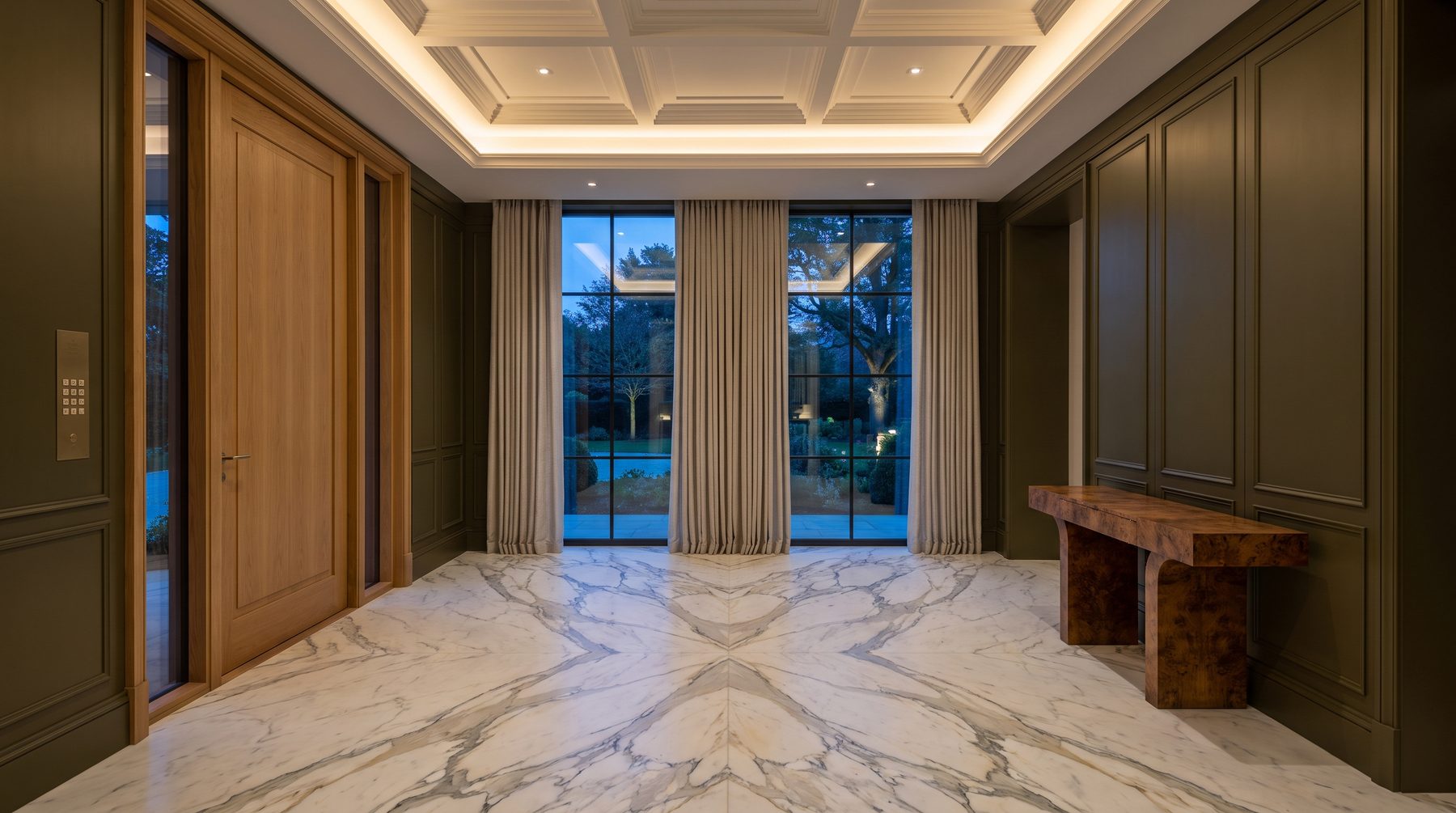
A KNX smart home keeps its intelligence inside the building rather than in a manufacturer’s cloud. Lighting, blinds, climate and scenes run over a twisted-pair bus in your own walls, and they keep running when the internet is down and the company that built the app no longer exists. That is why KNX is back in large houses.
On 31 January 2026, several million sockets, switches and heaters around the world quietly stopped being smart. Belkin had announced back in July 2025 that it was switching off the Wemo cloud: the app, remote access and voice assistant integrations would simply end. The hardware stayed in the walls, handsome and expensive and dead. Only a handful survived, the ones already running on Thread or configured locally through HomeKit.
It was not the first time. In April 2022 Insteon pulled its servers without telling anyone; customers found out when the lights refused to come on. IBM shut down its Watson IoT platform on 1 December 2023. Every one of these episodes makes the same uncomfortable point. If the mind of your house lives in somebody else’s data centre, the house is not really yours. You are renting it for as long as maintaining those servers remains profitable.
And here is where it gets interesting. While the mass market chased wireless sensors that cost less than dinner, clients building thousand-square-metre houses quietly turned back to a technology that is thirty years old and has never heard the word “cloud”.
Why a KNX smart home is built on a different principle
KNX is not a brand or a product. It is an international standard: ISO/IEC 14543-3, the European EN 50090 and EN ISO 22510, the Chinese GB/T 20965. According to the KNX Association in August 2025, more than 500 manufacturers support it, with over 8,000 certified product groups between them. A Gira switch, an ABB dimmer, a Zennio weather station and an MDT thermostat all speak the same language, not because somebody negotiated an integration, but because there is only one language.
The physics is almost embarrassingly simple. A twisted pair runs through the house. The devices are powered by that same cable at roughly 29 volts. Data moves at 9,600 bits per second. Yes, you read that correctly: nine and a half kilobits, in the age of gigabit networking. But that slowness is exactly what buys you free topology, kilometres of cable without signal loss and near-zero power draw. A telegram rarely exceeds 23 bytes and takes 20 to 40 milliseconds to arrive.
The real difference, though, is architectural. Classic KNX is decentralised: devices talk to each other directly, with no central controller acting as middleman. A switch does not ask a server for permission — it puts a telegram on the bus and the relay hears it. Which means there is no single point of failure. The touch panel in the hall dies and the bedroom lights still work. The internet drops and nothing changes at all, because the system never needed it. You needed it, and only when you wanted to check on the house from an airport.
Compare that with cloud logic. You tap a button in an app, the command travels to a server in another country, comes back to a gateway in your living room, and the gateway finally speaks to the lamp. Four links in the chain, any of which can disappear by board decision, by regulation, or because a provider had a bad night. The price of two-click setup is that your home becomes a subscriber.
Response time you can feel in your hand
There is one argument that cannot be made in a presentation. It has to be touched. On paper, the gap between 40 and 400 milliseconds looks trivial. In a real house it is the difference between a switch and a polite request that the system considers before acting.
We had a project outside Moscow where the client insisted on a wireless kit first, because it was “cheaper and faster”. A year later he called and said something I wrote down: “I stopped using the scenes. It is easier to get up and walk to the chandelier.” Reliability was not the issue — everything worked. The issue was that the house answered with a delay, and his brain stopped registering the press as control. We rebuilt the electrical layer, and afterwards he spent a week flicking switches for no reason at all.
Luxury in engineering means nothing is noticeable. The light comes on the instant a finger touches the plate, the curtain moves without a jolt, the underfloor heating does not hunt up and down. The moment a pause appears, you start thinking about technology. In a good house nobody thinks about technology.
What it costs, and why the multiple is real
I will not pretend the difference is cosmetic. Bus-based automation costs several times more than a wireless ecosystem, and that has to be understood before anyone starts cutting channels into walls.
Start with the design package. Moscow integrators price KNX engineering at roughly 430 roubles per square metre. For a thousand-square-metre house that is around 430,000 roubles for drawings alone, before a single device is bought and long before commissioning begins. Then comes the bus itself: every lighting circuit, every socket group, every curtain motor arrives at the panel on its own cable. A large house usually has several panels, one per floor or wing, and these are not consumer units — they are full cabinets with hundreds of terminals.
The most expensive ingredient is not hardware but discipline. KNX does not forgive improvisation on site. If an electrician decides to “combine two groups, they’re next to each other anyway”, the system will never know, but you will find out six months later when the “leaving home” scene switches off the wrong lights. That is why the electrical design and the automation design are produced simultaneously and by the same team — the way electrical design and the smart home design always run as a pair in our practice, never one after the other.
What you get in return is lifespan. KNX equipment is engineered around buildings, not gadget cycles. Devices installed in the late nineties still share a bus with current models, because the standard stays backward compatible. A house at this level takes five years to build and lasts generations. Electronics that must be replaced wholesale in seven years, app included, simply do not fit that arithmetic.
The myths, and the mistakes we keep meeting
Myth one: KNX is only for palaces. Not quite. It makes little sense in 120 square metres with four lighting groups. But somewhere past 400 to 500 metres, where circuits are counted in the hundreds and lighting is joined by curtains, zoned climate, ventilation, a pool and a boiler room, wireless solutions start breaking against their own scale: the radio band gets crowded, sensor batteries need a replacement schedule, and the logic spreads itself across three separate apps.
Myth two: local means no phone. The opposite. KNX lives happily with a smartphone; the brain simply stays in the building, and visualisation and remote access are added through a separate gateway. The difference is that switching that gateway off does not turn the house into a pumpkin. It only makes it unreachable from outside.
The first and costliest mistake: automation enters the project too late. We regularly inherit houses where the plaster is already finished and the conversation about scenes is only beginning. From there you have two options: cut channels into completed surfaces, or blanket everything in radio modules and end up with precisely the compromise you were trying to avoid. Automation belongs to the engineering systems, not to the finishing list somewhere near the choice of taps.
The second mistake: the integrator writes the scenes. A technically excellent engineer will hand you logic in which everything works and nothing is usable. We once saw a house where the owner could not turn on the kitchen ceiling light for seven months, because it had been bundled into a “cooking” scene together with the extractor and the splashback strip. A scene should describe the habits of one particular family, not the capabilities of the equipment.
The third mistake: no spare capacity. A panel should always keep 20 to 30 per cent of its channels and terminals free. In three years the owners will want garden lighting, a second gate or a guest house, and that reserve will cost less than any rework.
Security: why privacy became the leading argument
Five years ago clients asked about convenience. Now the first question is different: who can see my house?
A cloud system knows everything about you by definition — when you wake, how many people are home, which weeks you are away. That data sits on someone else’s servers under a jurisdiction you did not choose, protected by the policies of a company you never met. For a client whose address should not appear in a data leak, this is not an abstract risk.
KNX communication travels along physical cable inside the perimeter. KNX Secure adds telegram encryption and device authentication for the segments that leave the building or run over IP. No external node participates in the control chain at all. The house stays silent.
Our approach: automation as architecture, not as a gadget
We work from a simple premise: technology in a house should be invisible and stubbornly reliable. A few things follow from that, and we do them every time.
Scenes are written before the drawings. Not an equipment list — a script of daily life: how the family enters, what happens in the evening, what the house should do when everyone leaves for a month. Only then does a specification appear. In the large residences in our portfolio, the conversation about control logic begins at the planning stage, because the morning scene directly determines where a switch sits and which way a door opens.
Manual control stays everywhere. Every automated function must have a physical key. This is not distrust of the technology; it is respect for guests, for staff, and for yourself at three in the morning.
The circuits are separated. Critical engineering — heating, ventilation, leak protection — runs autonomously and depends on neither tablet nor network. Comfort scenes live a storey above and are allowed to fail without consequence.
And the bus is tested before finishes go on. Commissioning against bare walls costs a day of work; commissioning after the parquet and paintwork costs money and nerves. That is a price we prefer not to pay, which is why construction management in our practice includes a separate handover of the cable routes.
When KNX is the wrong answer
Honestly: not always. For an apartment, a house under 300 metres, or a property you intend to sell within five years, KNX is an excessive investment. Modern local systems built on Matter and Thread cover the basics without sending data to a cloud, and they cost a fraction of the price.
Hybrids are legitimate too. Lighting, blinds and climate on the bus, because they are the skeleton of the house. Media, cameras and appliances in their own ecosystems, because they will be replaced every few years anyway. One rule holds: whatever is buried in a wall must be standardised and local. Whatever sits on a shelf can be anything you like.
The return of KNX to large houses is not nostalgia. It is a turn away from the house-as-subscription and back to the house-as-property. In thirty years we travelled from “let everything live in the phone” to “let the phone be optional”, and that may be the most grown-up thing that has happened to home automation.
If you are at the design stage and unsure which level of automation your house actually needs, write to us. An hour of conversation is usually enough to see where sensible engineering ends and an expensive toy begins.
Frequently asked questions
Does a KNX smart home work without internet?
Yes, completely. KNX devices exchange commands directly over a wired bus inside the building, with no external servers involved. Lighting, blinds, heating, ventilation and scenes all function with the internet fully disconnected. A connection is only required for remote access from a phone and for updates; without it you lose nothing but the ability to control the house from outside.
How much does a KNX system cost for a 1,000 m² house?
Design alone runs at roughly 430 roubles per square metre by Moscow integrator pricing, so around 430,000 roubles for a thousand-metre house. Equipment, panels, cable routes and commissioning are separate and depend on how many control groups the house has. The total budget is several times higher than a wireless system with comparable functions.
How is KNX different from Matter and Thread?
KNX is a wired industrial standard with decentralised logic: devices work directly over twisted pair and need no coordinator. Matter and Thread are wireless consumer protocols, cheaper and far easier to install, but dependent on radio conditions, sensor batteries and hubs. For large houses KNX is more reliable; for apartments it is overkill.
What happens if a manufacturer leaves the market?
Nothing. KNX is an open international standard, ISO/IEC 14543-3, supported by more than 500 manufacturers. Devices from different brands are interoperable and configured in the same ETS environment. A failed switch from one brand is replaced by an equivalent from another without redesigning anything, and the configured system keeps running regardless of what happens to the vendor.

Author

Next step
Discuss your project
An hour at the studio with Oleg Reznikov: your site, your brief and relevant studio projects.