
Light at 3 AM: Lighting Scenarios Nobody Thinks About While Designing
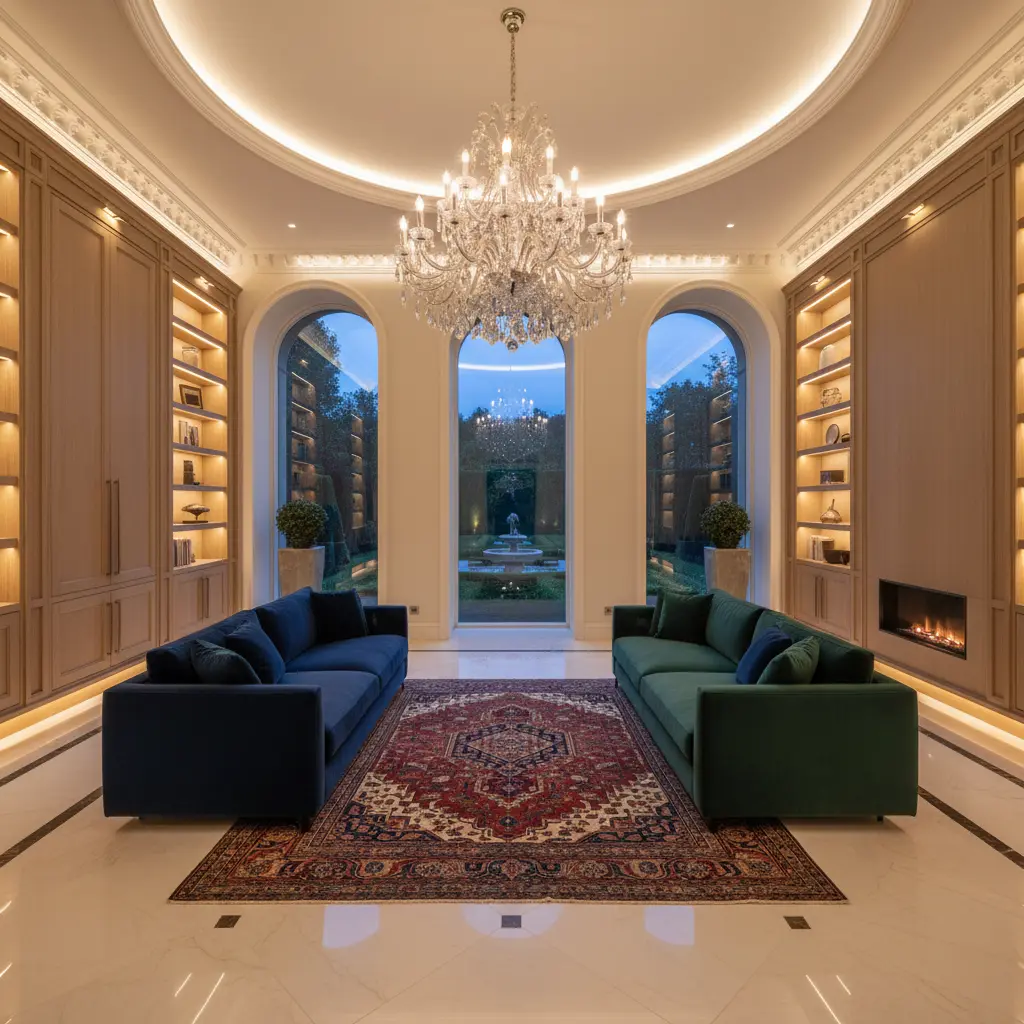
We had a project — a 1,400-square-meter mansion near Moscow. Delivered two years ago, client satisfied, magazine photo shoot, all as it should be. Then half a year later a call: “Oleg, there’s something wrong with the light.” I drive out. The house is beautiful, in the evening it’s like a page from Architectural Digest. But the owner says: “I wake up at three at night to get water and I flip on a chandelier with 12 bulbs. Because there’s nothing else.” That’s when I realized we, architects, design lighting scenarios for grand dinners while people live — at 3 AM, at 7 AM, on a rainy Tuesday.
And that’s where it gets interesting. The most expensive houses in the country live in uncomfortable light. Not because the budget is small — because nobody asked the right questions at the design stage.
In this article I’ll break down how we now approach light at the studio: seven daily scenarios, why architectural light matters more than any Italian chandelier, and what mistakes even very expensive designers make.
Why a Chandelier Is a Monument, Not Lighting
Let’s be honest. A chandelier in a modern house is ceiling decoration. An object. Sometimes — art worth 800,000 rubles. But as a light source it works poorly: gives flat fill, shines from above, makes faces tired and interiors cheap.
I remember one client who brought a Bocci chandelier from Canada, paid for it like for a decent car. We hung it. Turned it on. He said a phrase I remember: “It’s prettier turned off.”
So it is. In a luxury interior light works in layers. Decorative (chandeliers, sconces) — top layer, emotion. Below — functional (work zones, area accent). Below that — architectural (cornice backlight, contour light, material accents). And at the very base — navigational, what everyone forgets.
If there’s only the top layer, the house lives in “formal dinner or darkness.”
The Scenario “Tuesday at 2 AM”: What Isn’t Designed
Take a real situation. The owner wakes at night. He needs to get to the kitchen or bathroom. What happens in a typical project?
Option A: he feels along the wall, finds the switch, flips on overhead light — 400 lux in the face. Eyes hurt, sleep’s ruined, the kid in the next room woke from the click.
Option B: he doesn’t turn on anything and walks in darkness. Bangs his knee on the walnut console table worth 280,000.
Option C (ours): a motion sensor triggers warm baseboard backlighting, 2200K, 8% brightness. Light travels along the floor, guides through the corridor, in the bathroom it auto-switches to night mode — backlighting under the sink, no overhead. No switches. No decisions half-asleep.
It costs almost nothing in the budget. But 90% of projects don’t have it.
Seven Scenarios We Prescribe for a 1,200 m² Home
When we start a project, I sit with the client and we map out the day. Literally by hours. These seven modes are the foundation.
1. Dawn (6:00–8:00)
Soft fill, 2700K, rises smoothly over 20 minutes — imitates sunrise. In the bedroom light comes from bottom to top through the cornice. In the kitchen the work zone and coffee machine backlight. No overhead fixtures.
2. Day (9:00–17:00)
Here the key is: don’t interfere with daylight. Architectural backlighting is off, only accents work in areas without windows (closet, wine cellar, technical spaces). Many turn everything on — then the interior reads cheaper than it is.
3. Transition (17:00–19:00)
The hardest mode. Sun’s leaving but it’s early to flip to “evening.” Gradually we add warm light on walls, then on ceiling. At our places it’s automatic, tied to outside light sensors.
4. Family Evening (19:00–22:00)
This is where most people live. Warm light, 2700K, medium brightness, accents — on materials: stone wall, wood texture, books. Chandelier — yes, but at 30% power. It works as decor, not a searchlight.
5. Evening Reception (on event)
This is what usually the whole house is designed for. All chandeliers full power, decorative backlighting, striking accents. Used 5–10 times a year.
6. Cinema / Relaxation
Light nearly gone, only 5% cornice backlighting so eyes don’t strain from screen contrast. In our last project — separate scene for football: backlighting only behind the TV plus bar zone accent.
7. Night and Navigation (23:00–6:00)
That same “Tuesday at 2 AM.” Motion sensors, warm low-level backlighting, routes from bedroom to bathroom, bedroom to kitchen, children’s room to parents. Light in baseboards, under furniture, in niches. Never — from above.
Architectural Light: Where It Hides and Why It Costs More Than Chandeliers
When I say “architectural light,” I mean sources built into the architecture itself and not visible as objects. These are:
— Cornice backlighting around ceiling perimeter (makes ceiling “float”)
— Linear light in niches and behind bed headboards
— Step lighting
— Light in baseboards and under furniture
— Mirror and wall panel contour backlighting
— Accent spots on materials — stone, wood, textiles
This light doesn’t illuminate the room; it changes how you perceive space. It makes ceilings higher, walls deeper, materials more expensive. A good linear profile with proper diffuser costs 12–18,000 rubles per linear meter installed. On a 1,200 m² house that’s serious — around 1.5 million for profiles alone. But this is the budget you can’t cut.
Why? Because bad linear light is obvious. Spots, unevenness, cold patches, reflections in gloss surfaces. I’ve seen 300-million houses where cornice backlighting shines like a 2008 office lamp.
Typical Mistakes I See Constantly
Error one — one switch per room. Death. Living room needs minimum 4–5 scenes switchable from one button or panel.
Error two — cold light in living spaces. 4000K in a bedroom is torture. Standard — 2700K, for romantics — 2400K. 3000K acceptable in bathroom and closet, with caveats.
Error three — economize on drivers and dimmers. Cheap driver causes flicker the eye doesn’t detect but the brain fatigues from. Good dimmer should take light down to 1%, not to 20%. Difference — between “cozy” and “like a store.”
Error four — no night scenario. That same “Tuesday at 2 AM.” I mentioned it, repeating: this is first I now discuss with clients.
Error five — forgot about CRI. Color rendering index. Must be 90 minimum, preferably 95+. Otherwise skin in the mirror looks gray, food on the table blue, wood on walls plastic. Cheap strips with CRI 70 ruin any interior.
Error six — control via app. Sounds trendy, practically — disaster. Light should turn on from a wall button or alone. Nobody wants to hunt for their phone to turn off a hallway sconce.
How We Do This at the Studio
We don’t start with selecting fixtures. We start with interview. Questions: when do you wake? Who first? Do you read in bed? How often do you host? Do you drink tea at night? Are there elderly parents who’ll visit?
From these answers a light map of the house is born. Not a ceiling plan with dots — but scenarios. Seven, sometimes ten. Each scenario — its own groups, its scenes, its temperatures.
Then — calculation. We count lux at each point, model in DIALux, check uniformity. Not marketing, real work without which architectural light becomes a lottery.
Only then — equipment selection. Profiles, drivers, control system (we usually work with KNX or Crestron on large projects, Loxone on medium). Decorative light — last. It’s the icing, not the cake.
This approach costs more at design. But it saves huge money at “we’re redoing after move-in.” Almost everyone redo it who took the short path.
Light Isn’t About Beauty. It’s About Life
I often tell clients: a house isn’t a magazine photo. It’s where you’ll live ten, twenty, thirty years. And most of that time — not in “formal dinner for twenty” mode, but in “Monday morning” and “two AM Tuesday.”
Good light is when you don’t notice how it’s set up. It just works. Morning softly wakes, day doesn’t interfere, evening hugs, night guides.
If you read this and realize your house doesn’t have at least half the described scenarios — it’s not a sentence. Much can be worked in after finishing, especially navigational and night light. Sometimes just adding two motion sensors and a baseboard line changes overnight life completely.
And if you’re starting design now — ask the designer one question: “What happens with our light on Tuesday at 2 AM?” By the answer you’ll immediately understand who you’re dealing with.
If you want to discuss your scenario — write. We love these conversations. They always start with light and end with much bigger things.

Next step
Discuss your project
An hour at the studio with Oleg Reznikov: your site, your brief and relevant studio projects.