
Terracotta vs Travertine: Which Material Survives the Next Renovation
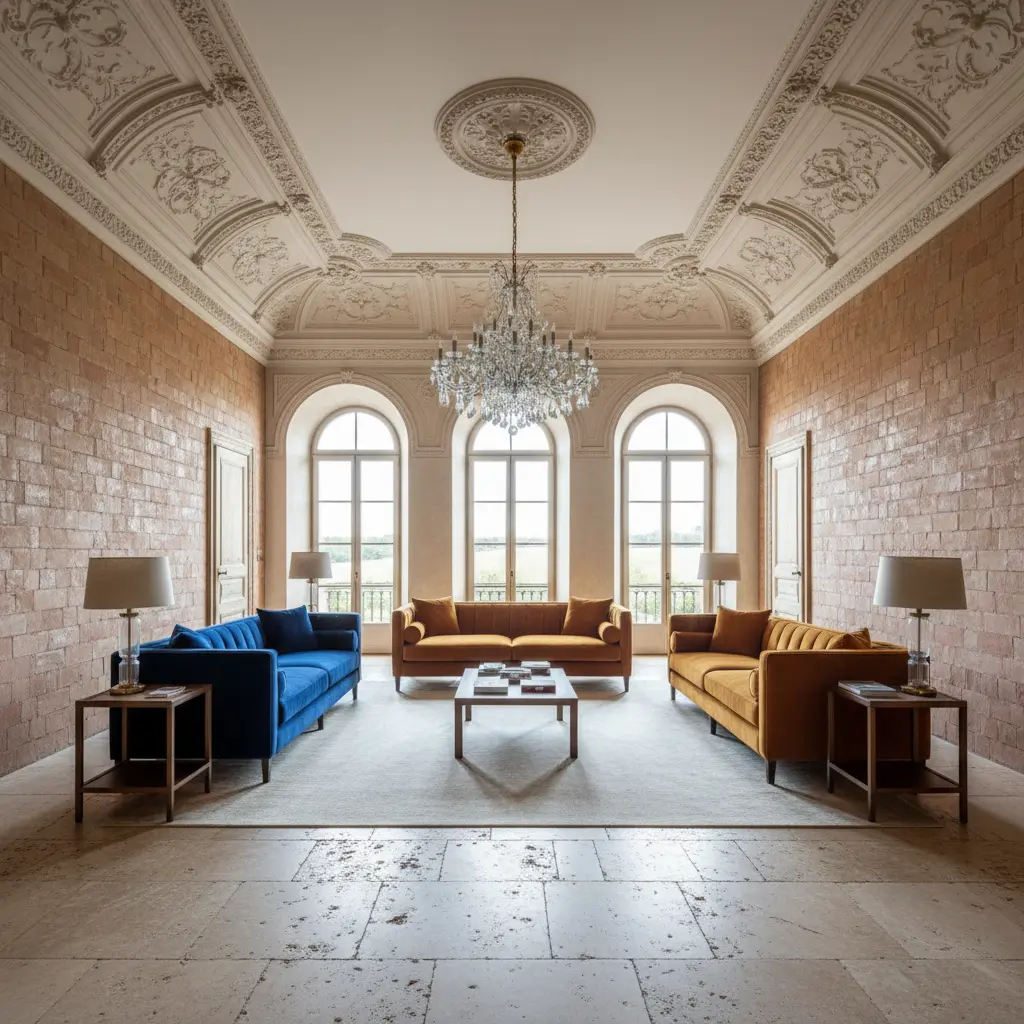
We had a Rublyovka project — big house, owner flew in from Milan with palazzo photos and said: “I want just like that.” In the photos — travertine floor to ceiling, warm, creamy, with those characteristic pore-craters. Two years later she called and asked if we could take it all down. Not because she fell out of love. Because she was tired. And that’s when I realized again that travertine versus terracotta interior finishing — this isn’t just picking texture for a render, it’s choosing life scenario for the next fifteen years.
These two materials are at peak now. They’re laid everywhere — from bathrooms to kitchen islands, from fireplace portals to entry floors. And almost nobody asks the main thing: they age completely differently. One gets more beautiful. The other demands you maintain it, or it gets worse.
Telling it straight, no catalog poetry.
Why Compare Terracotta and Travertine at All
On surface they’re from different worlds. Terracotta — fired clay, craft material, seven thousand years of history. Travertine — limestone formed in hot springs, stone of Roman baths and Colosseum. But in modern interiors they compete for the same role: warm, natural, “not-tile” surface with character.
Client comes in and says: I want something alive, not sterile, not glossy. Designer shows moodboard. Both options there — one next to other. Beige, warm, textured. Look similar.
But that similarity is a trick.
Logic of Aging: The Main Thing Renderings Keep Silent About
Terracotta acquires patina. That’s its nature. More foot traffic, more spills, more time lived — the deeper its color, the more interesting the microrelief. Old Florentine terracotta in monasteries — not “tired floor,” it’s a work of time. It gets more valuable visually with years.
Travertine behaves exactly opposite. It’s sensitive to everything: wine, coffee, lemon juice, acidic cleaners. Pores absorb. Wine stain on untreated travertine — that’s forever if you don’t respond in minutes. Without regular sealing (once yearly-and-a-half, honestly) the stone dulls, darkens unevenly, loses the creamy depth you chose it for.
So the choice stands thus: you want material that gets beautiful unassisted — or are you ready to be its caretaker?
Where Terracotta Works Best
In our practice terracotta wins outright in three scenarios.
Kitchen and dining zone. Here life is dirty by definition. Oil splatters, water drips, sauce falls. Terracotta floor after five years in such a kitchen doesn’t look “dirty,” it looks lived-in. Especially if it’s classic hand-made tile 15×15 or 20×20, laid with slight irregularity. We did a kitchen in a country house near Moscow — terracotta from Cotto Manetti, unglazed, wax-sealed. Owner sent photo after three years: floor darkened half a tone, barely visible paths worn between stove and island. That’s beauty.
Entry and transition zones. Same logic. Mud, sand, wet winter boots. Terracotta forgives everything.
Fireplaces and warm accents. Terracotta elements near fire sit naturally — the material is fire-born anyway.
Where Travertine Is Worth the Maintenance
Travertine is material for contemplation, not exploitation. In the right context it’s incredible.
SPA zones and hammams. Here travertine is king. We at studio almost always suggest it for wet zones in premium projects. Polished or with open pores depending on concept. One project on Novaya Riga — full hammam in Roman travertine — walls, loungers, floor. Two years later it looks better than at handover because the owner understood the game: professional sealing yearly, no household chemistry, only pH-neutral cleansers.
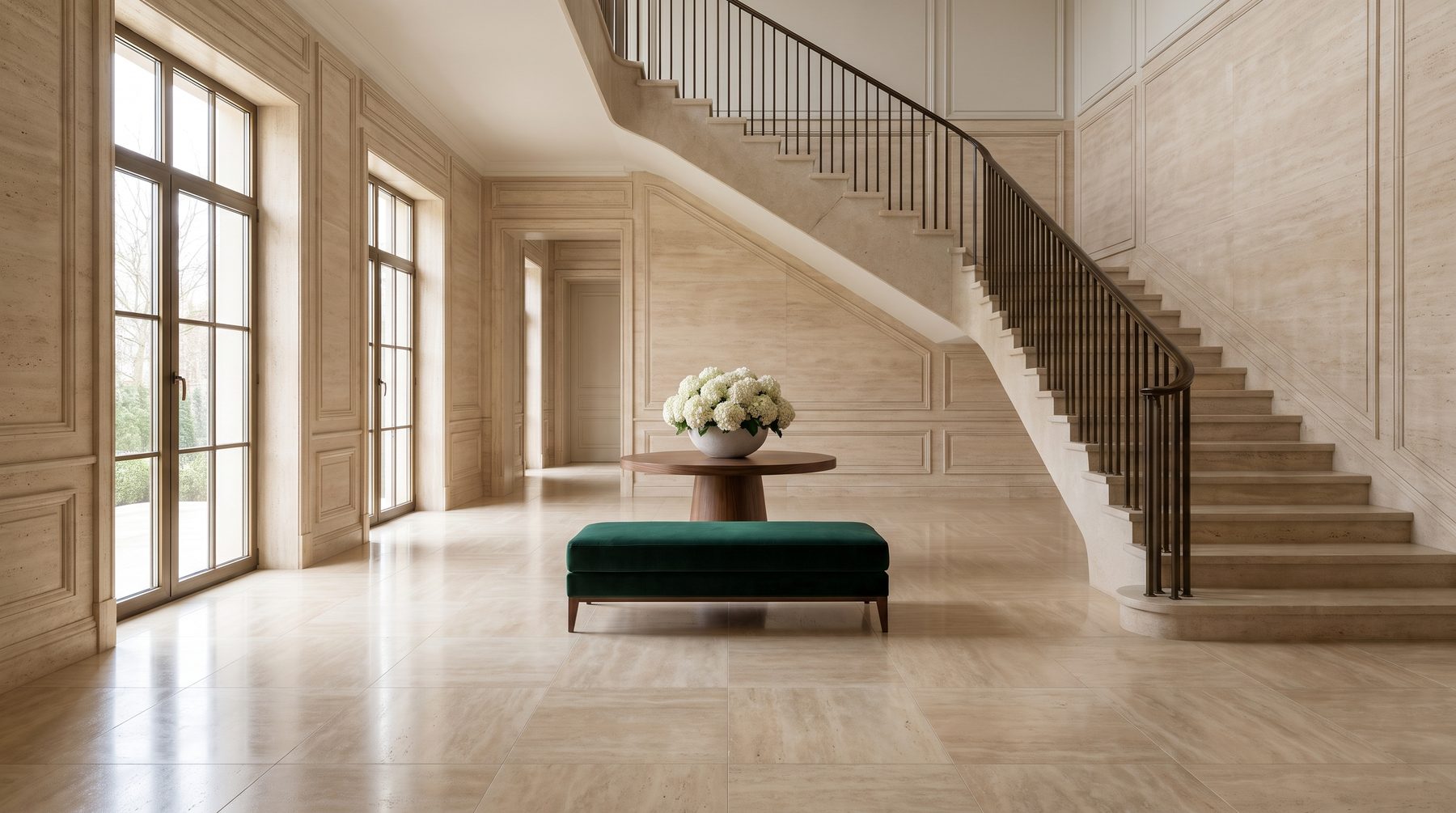
Entry halls and formal spaces. Where people don’t eat, don’t wash floors daily, where material works for entrance effect. A travertine wall in double-height entry — powerful architectural statement. There it’s justified.
Master bathrooms. Provided you understand: perfume, hair spray, acidic tonics — travertine enemies. I usually tell clients straight: if bathroom planning includes 50 beauty bottles — take terracotta or ceramicized granite travertine-look. Don’t torture yourself.
Travertine and Terracotta in Kitchen: The Main Fight
Most frequent question: what to put in kitchen — travertine or terracotta? My answer almost always the same.
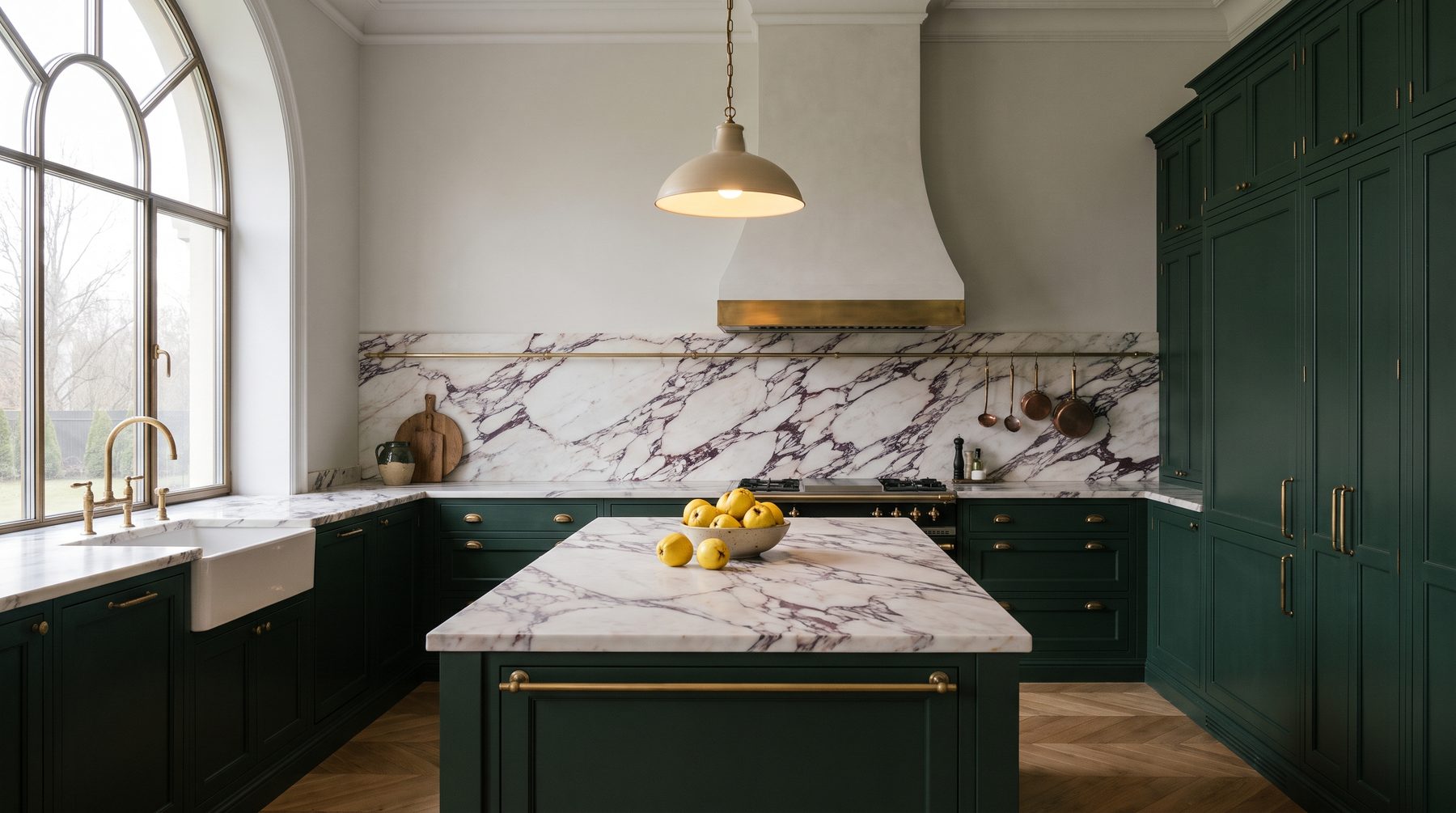
Floor — terracotta. Backsplash — travertine’s possible if you’re neat and understand risks. Countertop — never travertine. I know trendy travertine islands are everywhere now. Seen dozens of such renderings. Seen reality a year later: ring marks from glasses, dark halos near stove, dulled zone by sink. If you really want travertine visually on countertop — there are quartz agglomerates imitating it honestly, and not turning into a map of your dinners.
Typical Client Mistakes
Over twenty years I’ve accumulated a collection of same missteps. Five main:
Error one: choice by showroom photo. In showroom travertine lay fresh, processed two days ago. At home in a year it’s different. Always ask for sample and leave it in the kitchen a month — coffee and lemon stains will be more honest than any catalog.
Error two: uniform material throughout. Client falls in love with material and wants it everywhere. Terracotta in bathroom — questionable (porous, needs competent sealants). Travertine in children’s room — disaster after six months. Each space needs its own material.
Error three: economize on laying. Natural stone and quality terracotta demand masons who know these materials. Generic tile guy who laid 60×60 ceramics yesterday won’t lay your travertine-sheet with open edges. Seams will scream.
Error four: refuse sealing “because natural.” Natural — aesthetically. Not defenseless. Without sealing travertine lives a year until first catastrophe. Terracotta needs wax or special oil — or it’ll absorb everything.
Error five: ignore seams. Narrow seam on terracotta — against its nature. Wide seam on polished travertine — against its. Seams are half the final impression.
Our Approach at the Studio
We approach such material choice like picking a dog. Seriously. I tell the client: let’s first figure out your lifestyle. How much are you willing to invest in upkeep. Who lives in house — kids, dogs, party-lovers with red wine. How often’s cleaning happen. What you’ll accept as “patina” and what you’ll see as “destroyed floor.”
After that conversation half our clients themselves refuse travertine in work zones. Not that I talked them out — they first time thought about buying not picture but fifteen years living with surface.
Sometimes we mix: travertine in entry and spa, terracotta in kitchen and transitions, ceramics-look in kids’ and guest baths. Not compromise — mature choice.
Which to Pick: Travertine or Terracotta — Short Answer
Want material that gets beautiful without your help — terracotta. Ready to be its co-author in upkeep and understand beauty needs discipline — travertine. Want gorgeous photo for magazine month after handover and don’t care about year five — take both and budget for re-laying in seven years.
I don’t try talking anyone out of travertine. I live with travertine bath eight years, it’s beautiful. But I know everything about it — and it’s fine.
Most finishing mistakes happen not from bad taste. From missing conversation at the beginning. When nobody asked the client: do you understand how this house will look not at photo shoot but year fifteen?
If you’re now at that stage — choosing between two look-alike materials on moodboard — write us. Half hour conversation sometimes saves millions and years of disappointment. And, actually, often ends with unexpected solution. Not what the client came with.

Author

Next step
Discuss your project
An hour at the studio with Oleg Reznikov: your site, your brief and relevant studio projects.