
Traditional Dining Room Design: Proportions That Work
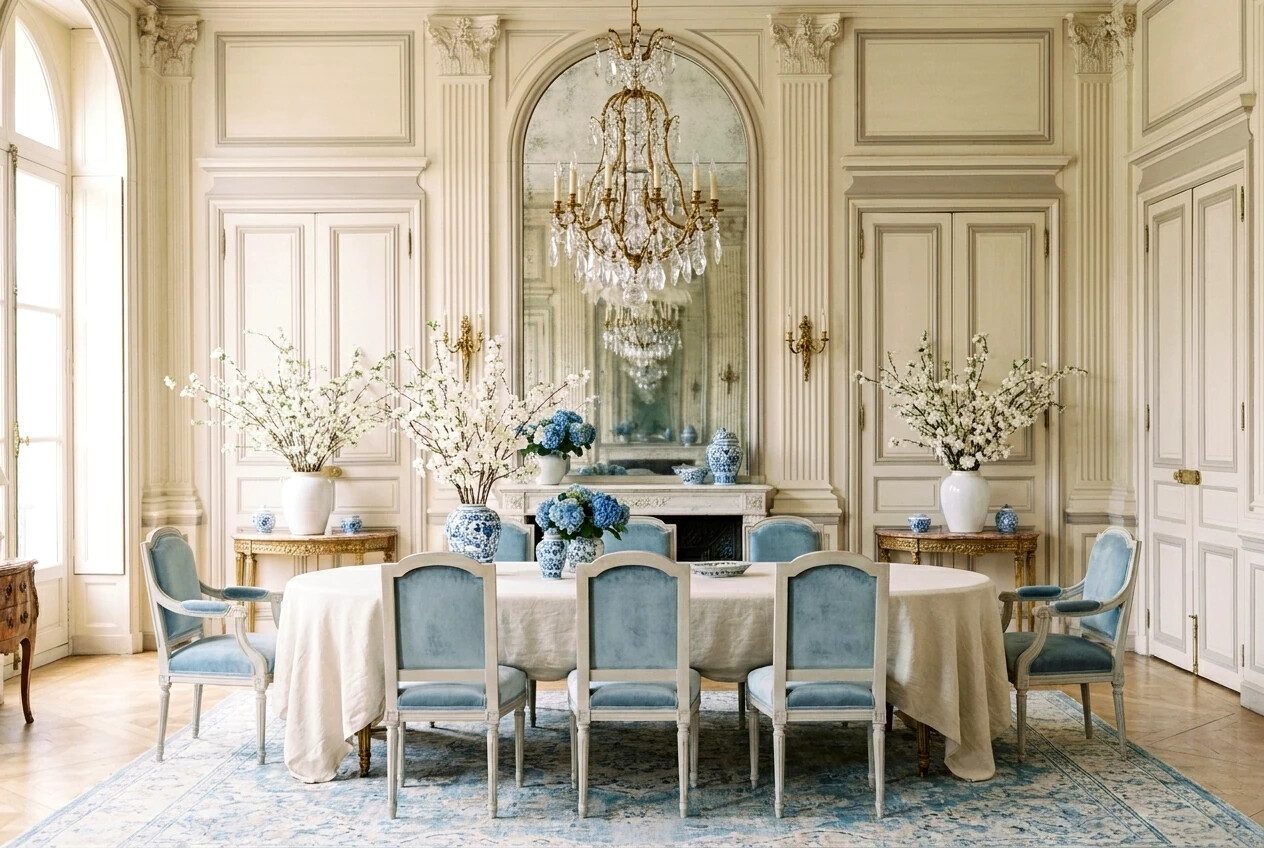
A client once showed me her dining room and admitted nobody had eaten in it for six years. Twelve-seat table, crystal chandelier, not a single plate. “We eat in the kitchen. It feels like a museum in there.” The walls were flat, the chandelier hung at a height where it dazzled instead of lighting, and there was just enough space behind the chairs to squeeze through sideways. A traditional dining room is not built on gold and crystal. It is built on a handful of decisions made before any furniture is bought.
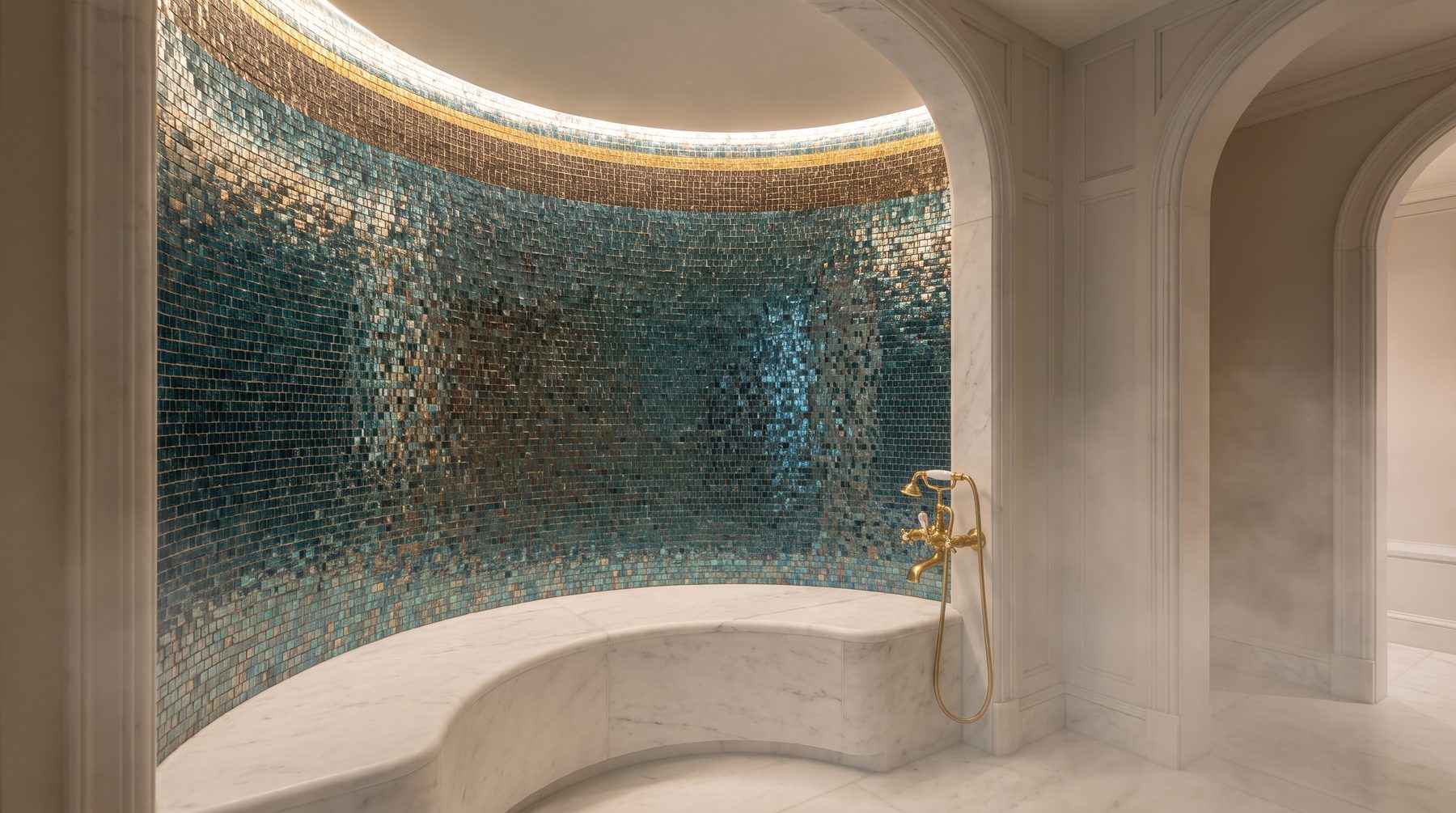
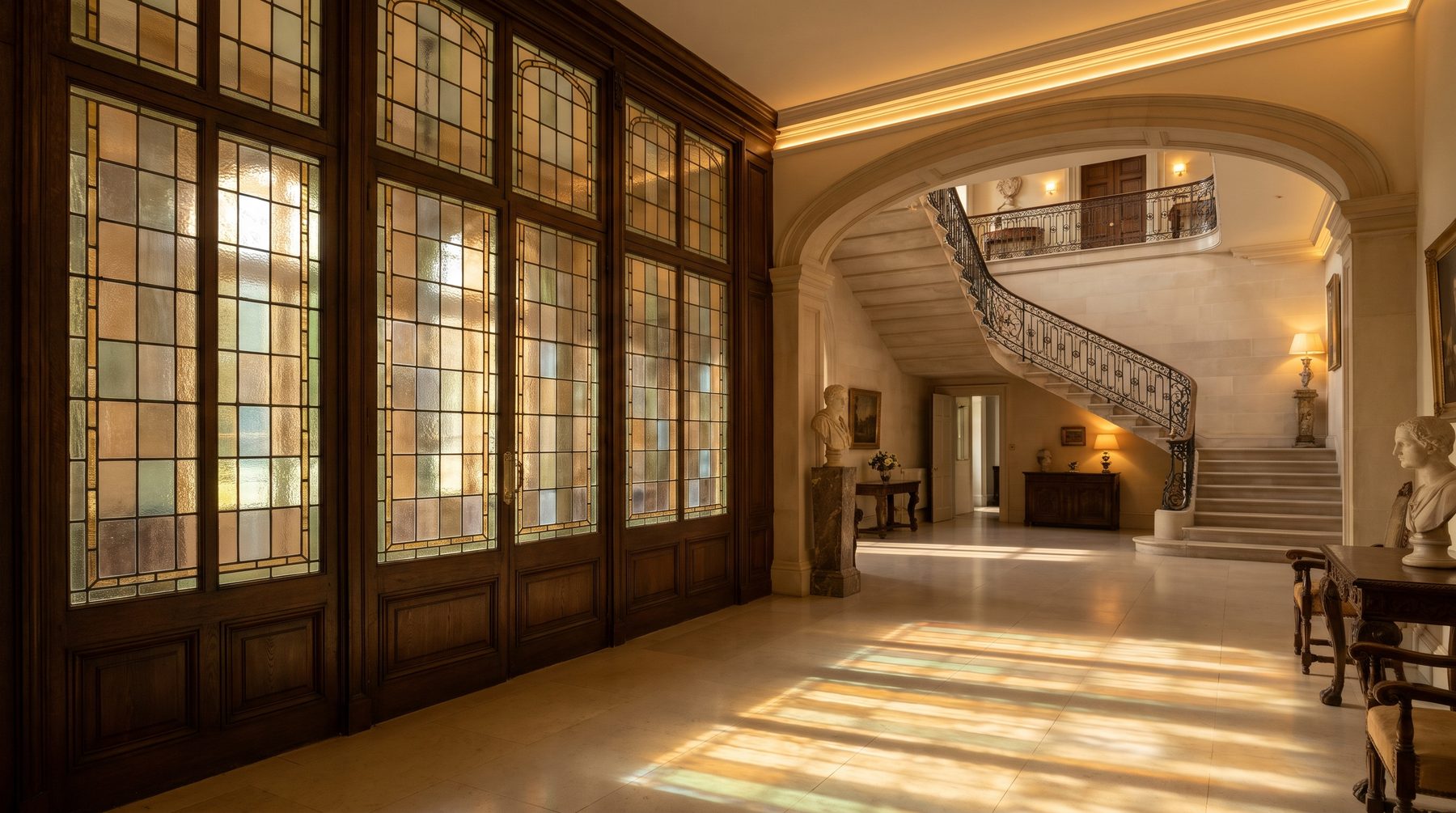
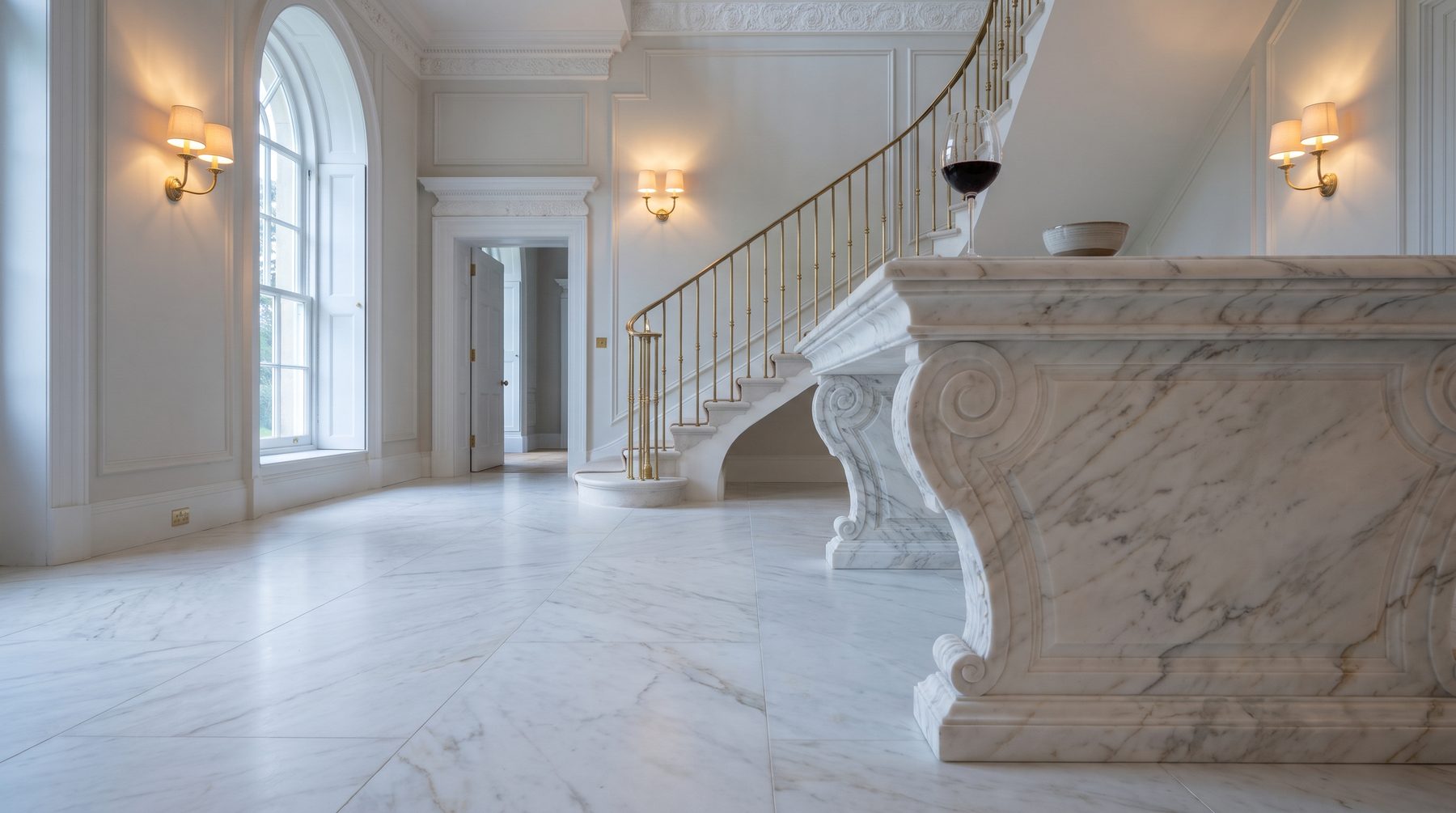
Below are the moves we see working in completed interiors by our studio: Parisian classicism in Celeste, gilded French neoclassicism in Dorato, a light formal dining room in Porcellana, and mirrored glamour in Specchio.
Start with the wall, not the table
A classic dining room begins with wall architecture. In Celeste the room is built like a Paris salon: cream-and-grey boiserie, fluted pilasters with capitals, double doors set into panels, and an arched mirror with antiqued silvering above the mantel. Take the table away and it still reads as a dining room, because the wall sets the axis.
We draw wall elevations before choosing a table. Panels are laid out on the axis of the windows and the fireplace, and the sideboard or console is chosen to fit them. In Dorato the same idea is quieter: pale panels with a thin gold line at the cornice act as a frame, and framed engravings sit comfortably against them.
Chandelier size and height
Rule of thumb: the bottom of the fixture hangs 30 to 36 inches (75 to 90 cm) above the tabletop on a standard ceiling, with roughly 3 inches added for each extra foot of ceiling height. The diameter should be between half and two thirds of the table width. For a 43-inch (110 cm) wide table that means a chandelier of about 22 to 29 inches.
In Porcellana the crystal chandelier hangs under a coffered ceiling. The ceiling is white on white, so the chandelier stays the hero. When both are loud they fight. In Specchio the ceiling is silvered with an oval mirrored dome, and a tall, narrow chandelier is multiplied in the mirrors. It works because the table is long and the room is high and narrow.
One fixture is never enough. Wall sconces beside the mirror and table lamps on the console, as in Dorato, add a second layer of light. We put the chandelier and sconces on separate circuits with a dimmer: this room needs different light at seven and at eleven.
Sideboard, console and mirror
A traditional dining room almost always has a second focal point besides the table: a sideboard, buffet or console under a mirror. In Porcellana a mahogany buffet carries blue-and-white porcelain below a gilt-framed mirror. In Dorato the console is pale with carved legs and the mirror rises almost to the cornice, so it picks up the window and doubles the daylight.
Size the mirror at two thirds to three quarters of the width of the piece beneath it. Smaller looks lost, larger crushes the furniture. And check what the mirror will reflect: a window or chandelier is good, the kitchen door is not.
How much space do you really need
Allow about 24 inches (60 cm) of table edge per person, 28 to 30 inches (70 to 75 cm) for formal dinners. A table for eight is roughly 95 to 100 inches long. Leave 36 to 42 inches (90 to 110 cm) between the table edge and the wall or sideboard. Add it up and a room for an eight-seat table with a buffet along one wall comes to at least 16 by 20 feet. Smaller than that, choose an oval or round table: no corners to catch in the walkway, and no head of the table.
Round tables are back in the 2026 trend reports, with designers saying they flatten hierarchy and encourage conversation. We see the same in practice.
How to care for a classic dining room
Velvet on dining chairs looks expensive but needs a protective treatment from day one; if the family eats here daily, keep the formal fabric on the chair back and use a tougher, patterned or darker fabric on the seat. Gilded frames should be dusted with a soft dry brush, never wiped with a wet cloth. Polished mahogany tops need coasters and a felt underlay; wax them once or twice a year. Crystal chandeliers are cleaned by lowering the fixture, not by climbing a ladder: ask your lighting installer for a winch or an adjustable suspension.
Common mistakes
The table is bought “for growth” and eats the walkway. The chandelier is hung by ceiling height instead of table height and hides the faces across the table. The walls are flat, “we’ll hang pictures later”: art does not replace panelling, it only highlights the emptiness. Everything is gilded, so gold stops being an accent. In Dorato there is just enough of it to read in the chair frames, mirror and sconces, and everything else stays light.
Our approach
We design a dining room from the scenario: how many sit down on an ordinary evening, how many for a feast, where dishes come from, where the china lives. Then wall and ceiling elevations, then light, and only at the end furniture and fabrics. Browse our completed interiors and compare the four dining rooms side by side: each has its own temperature, but the same discipline of proportion.
FAQ
How big should a traditional dining room be?
For an eight-seat table, plan at least 16 by 20 feet: a table about 95 to 100 inches long plus 36 to 42 inches of clear space on every side. In a smaller room choose an oval or round table.
How high should a chandelier hang above a dining table?
Place the bottom of the fixture 30 to 36 inches above the tabletop. Its diameter should be one half to two thirds of the table width. For ceilings above 8 feet, add about 3 inches per extra foot.
Do I need wall panelling in a small dining room?
Yes, but keep the pattern calm and the colour light. Panels give the wall rhythm and make the room feel finished. Dense, dark panelling can make a small room feel cramped.
What size mirror goes over a sideboard?
Two thirds to three quarters of the sideboard width. Check what it will reflect before installing, and avoid pointing it at the kitchen door.
How do I care for velvet dining chairs?
Have the fabric treated with a protective finish, vacuum gently with a soft brush attachment, and blot spills straight away instead of rubbing. For daily use choose a more durable fabric for the seat.

Author
Next step
Discuss your project
An hour at the studio with Oleg Reznikov: your site, your brief and relevant studio projects.