
How to Care for Marble: Etching, Stains and Sealing
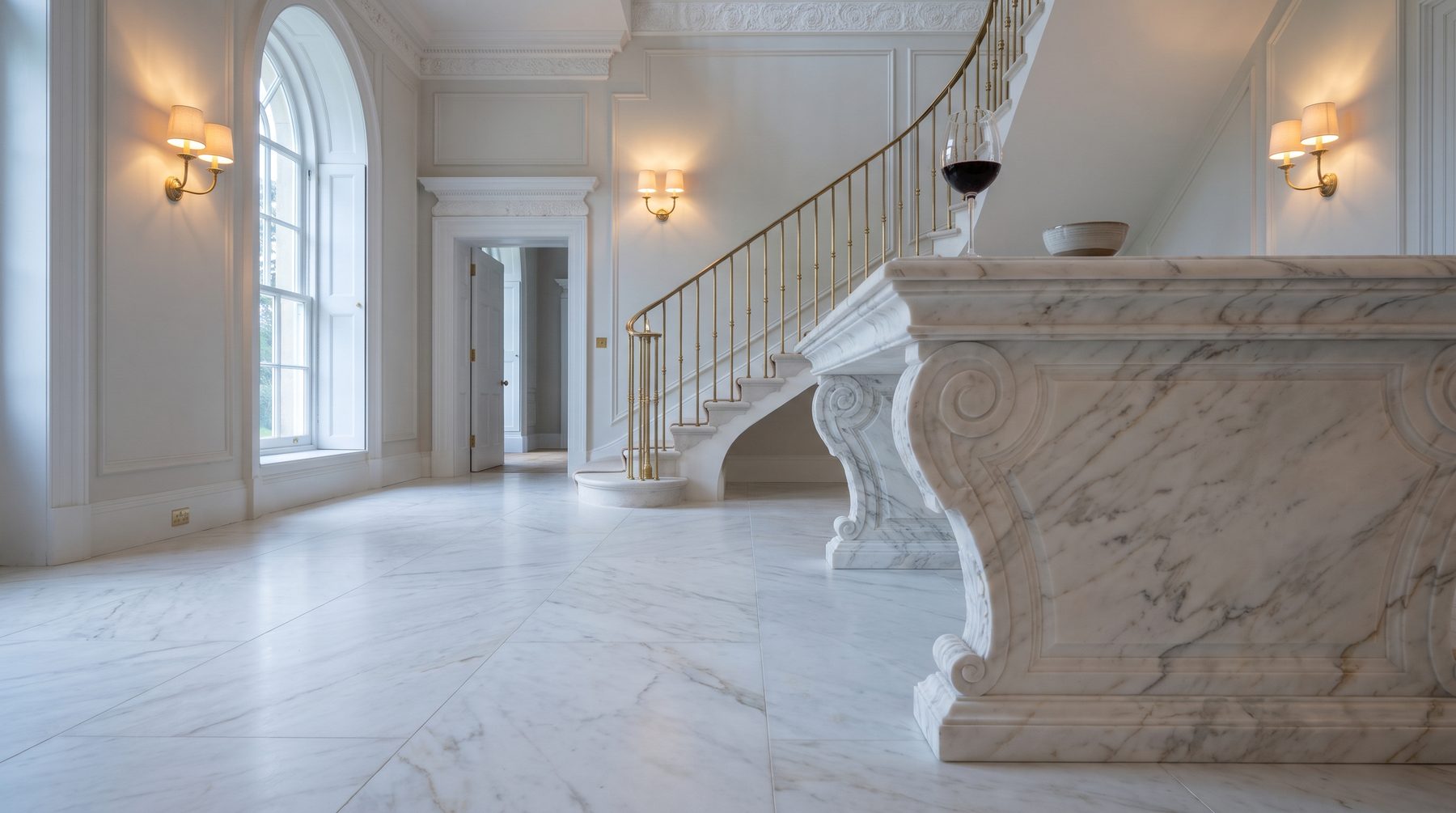
Caring for marble starts with one admission: the stone is not ruined when a wine glass leaves a mark. Marble is mostly calcium carbonate, and calcium carbonate reacts with acid. Lemon, wine, vinegar, cola and limescale remover dissolve a hair-thin layer of polish, leaving a dull patch on a glossy surface. That is not a stain. It is a chemical burn, and it is fixed in a completely different way.
Most homeowners confuse the two, so they treat the wrong problem. They scrub with baking soda a stone that needs honing. They seal a stone that no sealer can help. Here is how to tell them apart.
Etching vs. staining: two different enemies
A stain is pigment that has soaked into the pores: red wine, coffee, oil, rust from an iron foot. The surface is intact, the colour sits inside. Etching works the other way round: acid eats the top layer, nothing is added, the shine disappears. On polished marble it looks like a pale, cloudy mark, sometimes with the outline of a droplet.
You can tell them apart in a minute. Run a fingernail across the mark: a stain is smooth, an etch feels slightly rough. Look at the stone in raking light from a window: an etch is a dull patch, a stain is a darker patch with the gloss still intact around it.
Red wine can do both at once, because it is acidic and pigmented. So the order is always the same: draw out the colour first, restore the shine second. Polishing first would lock the pigment in.
How to care for marble every day
Daily marble care is dull on purpose. Sweep or dust-mop floors first, because grit underfoot acts like sandpaper and wears a path of dullness from the door to the stairs. Mop with a damp, not wet, mop. Use warm water with a few drops of pH-neutral soap or a cleaner made for natural stone, then dry the surface with a soft cloth.
Never use vinegar, lemon-based sprays, bleach, ammonia or abrasive pastes, even products sold as natural. Citric acid etches marble as surely as industrial limescale remover. Put felt under metal vases and chair legs, and a proper entrance mat at the door costs far less than a re-honing.
What you can fix yourself and what to leave to a pro
Our position, and not everyone agrees: fresh stains you can and should treat yourself, etching you should not. A stain has a gentle remedy that takes nothing from the stone. For an etch, a home fix either does nothing or polishes one patch unevenly, leaving a spot of shine that looks worse than the original mark.
For a fresh spill, blot (do not rub) with a paper towel, wipe with a damp cloth and neutral soap, and dry. If colour remains, make a poultice: mix an absorbent powder with water to the consistency of sour cream, spread it about a centimetre thick, cover with plastic, tape the edges and leave for a day. As it dries it pulls the pigment out of the pores. Oil and rust need dedicated stone-safe products. Test anything on a hidden spot first.
A light etch on a honed finish sometimes responds to hand-polishing with marble polishing powder. On a glossy finish the result is unpredictable. Deep etching, dullness over a large area and grit scratches are for a stone restorer, who grinds the damaged layer with diamond pads of increasing grit. It removes a thin layer of stone, so the work should cover the whole slab, not just the spot.
Sealing marble: what it does and what it does not
The most common misconception: “We sealed it, so nothing can hurt it.” A sealer closes the pores, so liquid sits on the surface longer instead of soaking in. That buys you time to wipe up a glass of wine. But acid does not care about a sealer: it reacts with the calcium carbonate itself. Sealing does nothing against etching.
Two practical conclusions. First, seal, especially honed surfaces, which are more porous than polished ones. Second, do not let a sealer talk you out of caution with lemon.
To test whether protection still works, drop water on the stone. If the bead holds its shape for several minutes, you are fine. If the stone darkens and the water sinks in, it is time to reseal. Follow the manufacturer’s interval and expect a kitchen counter to need it sooner than a wall. Apply to clean, dry stone, remove the excess, and only then put things back on the surface.
Honed or polished: which one lets you live in peace
Polished marble is stunning at once and unforgiving: every etch is a smudge on a white shirt. Honed marble looks softer and hides etching almost completely, but it is more porous and takes pigment more readily. In the interiors we design, we usually suggest honed or brushed marble for kitchens and bathrooms and keep polished stone for places where food and acid rarely go: a feature wall, a fireplace, a hall console.
If you love cooking with wine and lemon but want the pattern of marble, quartzite is an honest alternative: similar drama, no fear of acid. It is not a substitute in spirit, just a solution to one specific problem.
Typical mistakes we see on site
Choosing marble from a showroom sample without asking how it will behave in the real room. Handing floor cleaning to a cleaning crew without a list of approved products. Sealing dirty stone and locking the dirt in. Trying to restore shine with a household sander. Leaving wine glasses, vases without coasters and perfume on marble and calling it ordinary life, when the stone has rules of its own.
Our approach: care is part of the design
We do not think marble should be feared. We think every surface needs its own instruction before it is laid: the finish, what it was treated with, what to clean it with, how often to renew protection, and whom to call. That document stays with the house, so any owner, housekeeper or cleaning crew knows what is allowed. It is the same logic as in our guide to caring for travertine: each stone has a character, and it is wiser to agree with it than to fight it.
If marble already lies in your house and you are not sure what to wash it with or when it was last protected, message us. One photo in raking light usually shows whether you are looking at a stain or an etch, and what to do about it.
FAQ
What should I use to clean marble every day?
Warm water with a drop of pH-neutral soap, or a cleaner made for natural stone, followed by drying with a soft cloth. Avoid vinegar, lemon, citric-acid sprays, bleach and abrasive pastes, which etch the polish.
What is the difference between etching and a stain on marble?
A stain is pigment inside the pores and the surface is intact. An etch is an acid burn: no colour, but the shine is gone. A poultice draws out a stain, while an etch needs honing and polishing. Red wine can cause both.
Does sealer protect marble from lemon and wine?
Only partly. Sealer slows absorption and gives you time to wipe up, so it helps against stains. It does not stop etching, because acid reacts with the stone itself. Wipe acidic spills immediately even on sealed marble.
Can I remove marble etching myself?
A faint etch on honed stone can sometimes be hand-polished with marble powder. On a glossy surface or with deep damage, call a restorer who can re-hone the whole surface evenly. Uneven DIY polishing often looks worse than the etch.
How often should marble be resealed?
There is no single interval, so follow the product and the wear. Use the water-drop test: if the drop holds its shape for minutes, protection is working; if it darkens the stone and soaks in, reseal. Check kitchens and bathrooms more often than walls or halls.

Author


Next step
Discuss your project
An hour at the studio with Oleg Reznikov: your site, your brief and relevant studio projects.