
Limestone vs Marble Fireplace Surround: Which Stone Ages Better
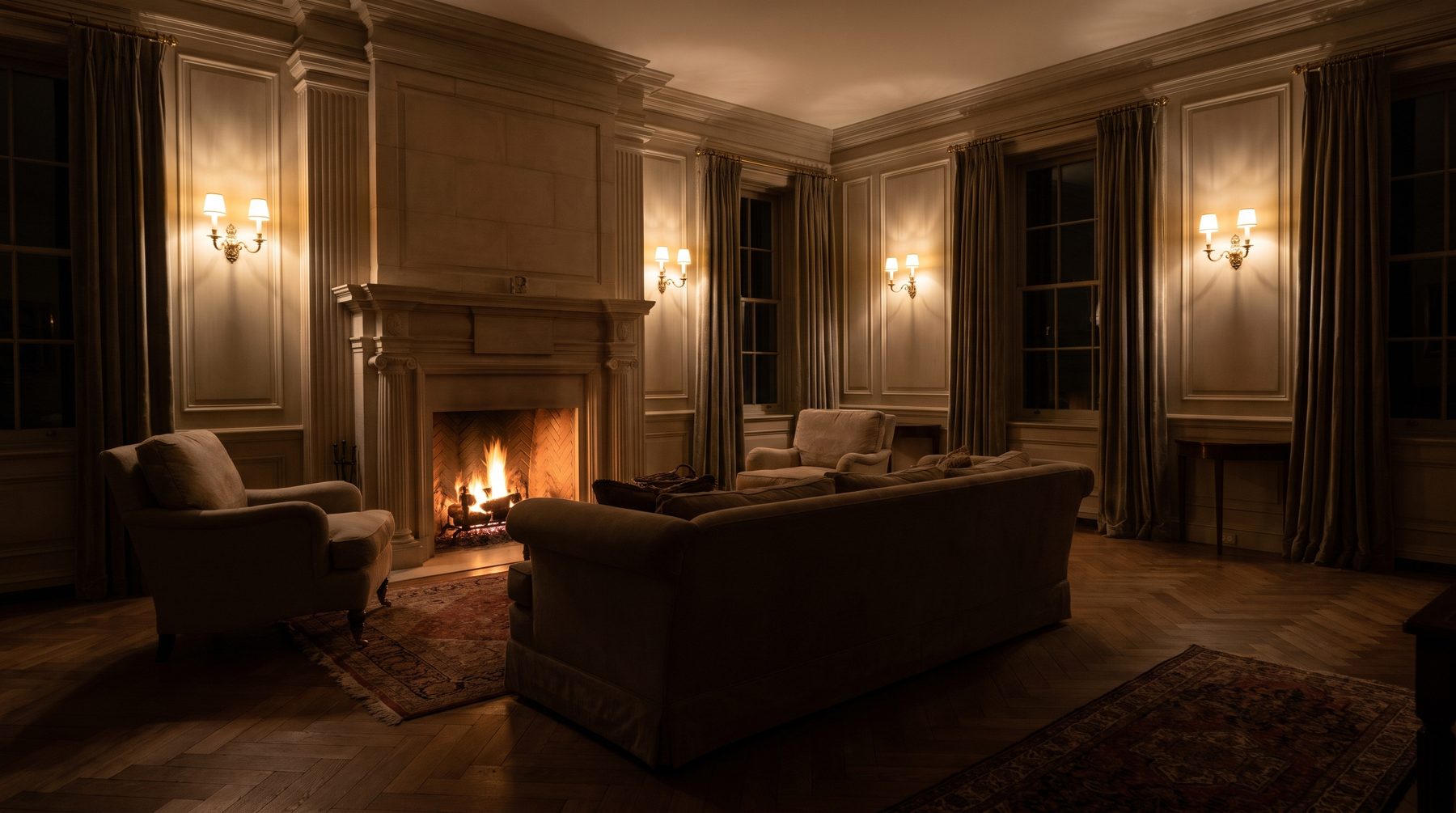
The question of a limestone vs marble fireplace surround is usually settled at the showroom, by eye. It should be settled twice: once by eye, and once by asking how each stone behaves next to a fire, a wine glass and a cleaning cloth five years from now. This is how we think about it when we design the fireplace as part of a living room, not as an accessory.
A fireplace is one of the few things a house cannot replace with anything else. It sets the axis of the room and gathers furniture and light around it. In a classical interior the surround reads as architecture: it has a plinth, pilasters, an architrave and a cornice. So the material decides character, not just price.
Marble: dense, polished, sensitive to acid
Marble is denser and harder than limestone, so it takes a high polish and reflects light. It is the classic choice when the fireplace should be the focal point. Its weak spot is not heat but acid: lemon juice, wine and many household cleaners leave dull marks on a polished surface, known as etching. Suppliers often suggest testing a sample with a drop of lemon juice on a hidden edge, and it is worth doing.
Limestone: warm, carved, more porous
Limestone is softer and more porous, which is exactly why carved detail reads so well in it: a cornice profile or fluting looks deeper and warmer than on polished marble. The price is that porous stone absorbs spills and its edges chip more easily. Over time limestone develops a patina. Some owners love that; some count it as damage. Decide before you order, not after.
Plaster: the lightweight option
A cast plaster surround does not need sealing the way stone does and can reproduce almost any profile from an architect’s drawing. It is also much lighter than stone, which matters when a heavy surround needs a reinforced floor. Two conditions apply: it must sit on a non-combustible base, never directly on metal or combustible material, and thermal cycling can cause hairline cracks. They rarely affect performance, but they are visible, so we plan joints and a finishing layer to absorb them.
Heat: what the stone really fears
Heat itself is rarely the issue. Both marble and limestone handle the ambient warmth around a fireplace and even hold it after the fire dies down. The issue is the zone in direct contact with the firebox. Because both stones are calcite-based, some suppliers advise keeping them out of direct high-heat contact, while others consider marble perfectly suitable even around a wood stove. Opinions differ, which is an honest signal: the right answer depends on construction, not on the stone.
Our working rule is a ventilated gap between firebox and surround, with the zone nearest the flame handled by a heat-resistant insert, often granite or quartzite, which suppliers rate higher for direct heat. The surround itself stays in the stone you like. This is decided at the design stage; five centimetres of depth cannot be added later.
How to care for a stone fireplace surround
Sealing is not a one-off job at handover. Limestone, being more porous, needs attention more often; marble, being denser, less often, but not never. Published intervals vary widely, from every two to three years to every six months for marble, because products and finishes differ. Follow the instructions of the specific sealer. A simple test works for any stone: if a drop of water no longer beads and soaks in, it is time to reseal.
- Clean with a pH-neutral stone cleaner. No vinegar or acidic products on marble.
- Wipe spills straight away, especially on limestone.
- For a stain on limestone, a poultice of flour and hydrogen peroxide is the usual first step; test on a hidden spot first.
- For deep or old stains, call a stone restorer rather than experimenting.
- Dry the surface fully after cleaning to avoid water marks.
Common mistakes
Choosing from a daylight sample when the fireplace burns in the evening: firelight changes the colour of limestone and the contrast of marble. Ordering the surround before the firebox is chosen: the firebox, its depth and flue define the surround, not the other way round. Sealing once and forgetting. And saving on joints, where the difference between a workshop and an assembler shows.
Our approach
When a surround is ordered from an architect’s drawing, it is drawn as part of the living room: its height follows the cornice line, its proportions echo the order of the facade, its material connects to floor and walls. We ask questions no catalogue asks. Do you light it every week or only on holidays? Are there children and pets? Is the room light warm or cool? The answers decide between dense marble that forgives mistakes and limestone that remembers them but makes the room alive.
FAQ
Is limestone or marble better for a fireplace surround?
There is no universal winner. Marble is denser and polishes beautifully but is sensitive to acid. Limestone is softer and shows carved detail better, but it absorbs stains and chips more easily. For a fireplace used often, we lean to marble; for a carved, decorative one, limestone.
Can a stone fireplace surround handle the heat?
Near the firebox, where heat is ambient, both marble and limestone cope well. Protect the zone of direct contact with a heat-resistant insert and leave a ventilated gap. Exact clearances depend on the firebox model and the manufacturer’s instructions.
How often should a stone surround be sealed?
Sources give intervals from a few years to every six months, depending on the stone and the sealer. Follow the product instructions and use the water-drop test: if water soaks in instead of beading, reseal.
Can I use a plaster surround instead of stone?
Yes, provided it sits on a non-combustible base. Plaster is lighter, can reproduce complex profiles and needs no sealing, but hairline cracks may appear with temperature changes, so they are planned for in the detailing.
How do I remove a stain from a limestone surround?
Try a poultice of flour and hydrogen peroxide or a stone-specific stain remover, after testing on a hidden area. Avoid acidic cleaners, and call a professional for deep stains.

Author

Next step
Discuss your project
An hour at the studio with Oleg Reznikov: your site, your brief and relevant studio projects.