
Smart Home for 15 Million: Why the Rich Overpay for What Doesn’t Work
Recently we visited an object we handed over three years ago. The owner — tech-savvy guy, once insisted on automation “maximum”. System budget — about 14 million rubles. Scenarios, sensors, multiroom, climate, shutters, light, security — all integrated into one platform. European. Reliable. Until 2022.
We found the owner manually raising shutters in the living room. Not because motors broke. Because logic broke: the provider’s cloud stopped working in Russia, and firmware update was impossible without server access that no longer exists. House worth 420 million. Shutters go up by hand. This is smart home in elite mansion 2026 in its current, honest form — if you don’t approach it cold-headedly.
In this article we’ll break down why automation in premium mansions fails before plaster dries, which technologies truly add capitalization, which become dead weight in three years. And most importantly — what to write in the brief before signing with integrator.
What changed on the automation market after 2022
Short answer: almost everything.
Before 2022 the market was clear. Control4, Crestron, Lutron, KNX, Savant — four or five names held all premium automation in Russia. Integrators went to training in Europe and US, spare parts arrived in ten days, cloud services worked like clockwork. You paid a lot — got stable returns.
Now the landscape flipped. Some vendors officially left. Some formally stayed but updates don’t come, warranties annulled, support says “due to company policy we cannot work with your region”. Equipment arrives via parallel import, and here it gets interesting: hardware comes, but licenses and cloud bindings — no. You bought a controller for 800 thousand, but can’t fully activate it.
On this background Russian and Asian players appeared. Some — worthy. Some — frankly raw, but sold aggressively with pretty presentations. Without experience it’s impossible to figure out who’s who.
That’s exactly why smart home in elite mansion 2026 — it’s not about “put the most expensive”. It’s about putting what will work in five, ten, fifteen years. And today — it’s a separate engineering discipline.
Why 70% of systems become obsolete before finishing touch
In our practice there’s simple observation: average construction of 1500–2500 m² mansion — 2.5 to 4 years. Average software actuality cycle in smart home system — 5–7 years. Seems like there’s a margin. But details matter.
Automation in most projects gets laid at architectural design stage — three to four years before moving in. By the time owner first runs “evening” scenario in the living room, the controller firmware is already three years old. Vendor’s cloud architecture changed. Protocols updated. And the integrator lost half its engineers in that time.
Add the specifics of premium finishing. Conduit closed with onyx, ceiling — natural leather with hand tooling, wires laid in copper pipes under Marmorino plaster. Change a cable — you undo the interior. So any infrastructure design mistake — not “we’ll redo”, but “we lose three million on dismantling and repainting”.
And this is why it matters: when we talk about smart home in elite mansion 2026, we’re talking first not about gadgets. We’re talking about cable infrastructure and logic that outlive three-four generations of equipment. Hardware will change. Networks — no.
What truly raises capitalization
Systems that work years and add comfort — and importantly on resale — are perceived by buyer as asset, not problem. Then there are systems that in three years become a reason to bargain down.
Engineering automation — always works
Climate, ventilation, radiant floors, supply-exhaust units, heat exchangers, pool, boiler room. Everything related to building physics. These systems run on hardwired protocols (Modbus, BACnet, KNX TP), don’t depend on clouds, serviced locally. In our practice such solutions work 15 years without serious intervention.
Capitalization goes up directly: buyer coming to secondary look at the house, sees neat automation cabinet, service log, understands — everything’s under control.
Lighting via DALI or hardwired KNX
We almost always insist on hardwired solution. Yes, more expensive at install stage. Yes, needs more design attention. But in ten years, when first-gen wireless Zigbee bulbs stop getting support, hardwired light will work same as handover day.
Security — but not integrated into overall “smart home”
Important nuance: we almost always isolate security system in separate circuit. Physical. Separate power, separate controller, separate network. Why: when main automation server falls (and it will sometime), you shouldn’t lose alarms and video surveillance.
What becomes dead weight in 3 years
Now — honest talk about what’s not worth paying for despite shiny presentations.
Voice assistants as part of house architecture. All these “Alexa, turn on movie mode” look cool in integrator Instagram videos. Real life — 80% owners stop using them in half a year. Either because it doesn’t trigger first try, or guests feel awkward saying it aloud, or in bedroom at night it’s easier to reach the switch.
Multiroom via proprietary cloud platforms. Sonos, Bose Music, analogs — we’ve seen dozens of systems that after 2022 partially or fully lost functionality. Owner of 500-million mansion listens to music via Bluetooth speaker. Telling.
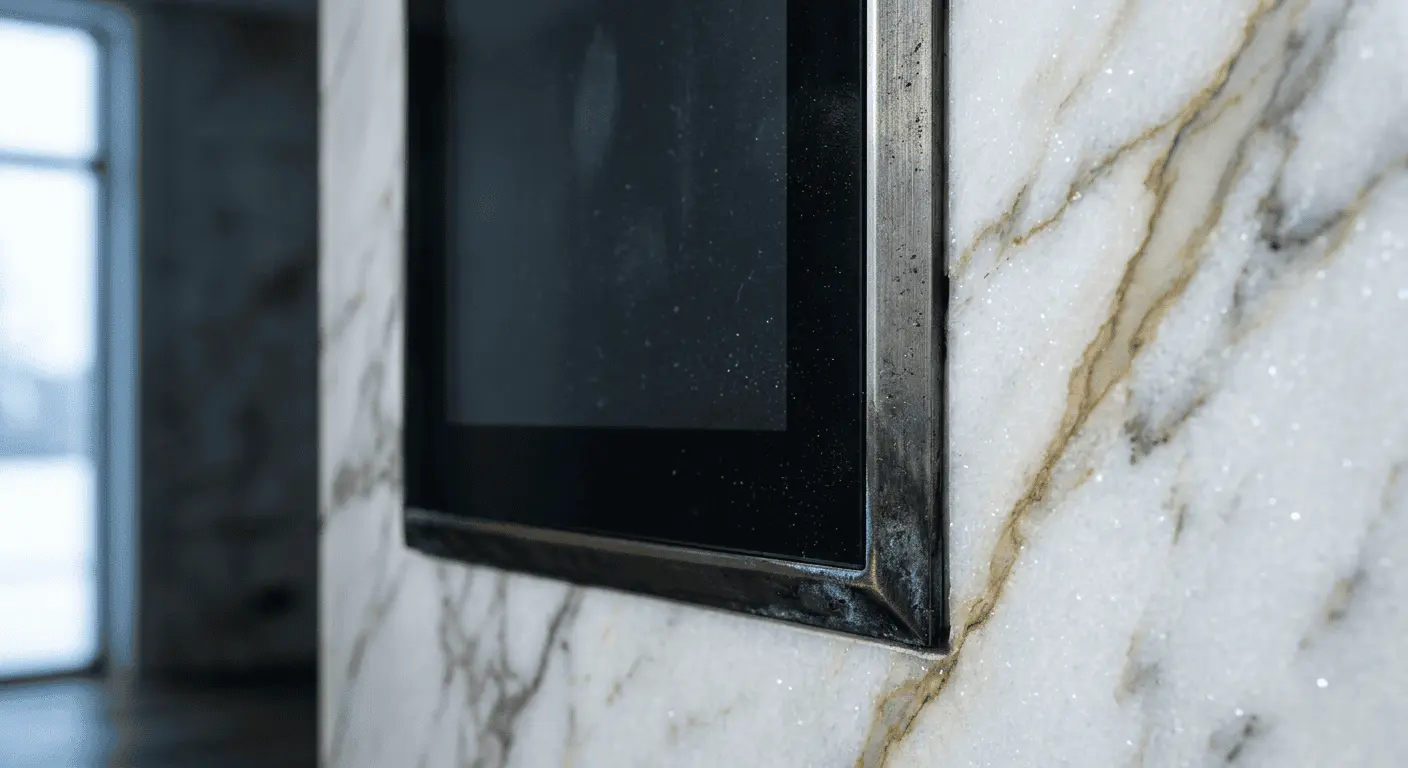
Touchpanels on walls as main control interface. In 5 years morally obsolete, in 7 — physically broken, and replacing with new generation hard: mounting recess changed, protocol changed, design changed. And in living room — Italian marble with veins, cut specifically for this panel.
Integration of everything into one platform. Pretty idea — one screen controls all. Bad execution — when that platform breaks, everything breaks at once. We always separate critical loops: security, engineering, comfort (light, shutters, media) — minimum three independent systems that can work autonomously.
Typical mistakes we see in smart home in elite mansion 2026 projects
Over years we collected a collection of repeating mistakes. Below — most expensive.
Mistake one: choosing integrator by price. In premium segment difference between cheap and expensive integrator — not equipment (it’s roughly same for everyone), but in design and documentation. Cheap contractor cuts corners on schematics and reports. In five years when you need to change something, nobody will understand which cable goes where. And that will cost millions.
Mistake two: no backup control channels. Shutters should open not just from scenario, but from switch too. Light should turn on by physical switch. Climate — regulated by wall thermostat. Always. Automation — it’s overlay on working house, not replacement of manual control.
Mistake three: faith in “seamless updates”. No system updates seamlessly. There’s always a window when something doesn’t work. Professional updates always need a specialist. Budget for maintenance — 3–5% from system cost yearly. This is normal.
Mistake four: economizing on network. We saw mansions where master-bedroom closets have cabinets for 4 million rubles, and network infrastructure is on household router for 15 thousand. Guess what will work in three years. Hint: not the router.
Mistake five: refusing technical room. Chasing useful square, owners shrink server room to corridor closet. Then into that closet you jam network equipment, NVR, automation controllers, media system rack, UPS, switches. Everything heats, dusty, breaks. Normal server room for 2000 m² house — 6–8 m² minimum, with ventilation and AC.
Our approach to automation in smart home in elite mansion 2026
We work by principle formulated before 2022, but after it became especially relevant.
First: maximum wired solutions, minimum cloud dependence. Everything critical for house life — light, climate, security, engineering — should work locally. Without internet. Without foreign servers. Without binding to specific mobile app.
Second: three-circuit principle. Security, engineering, comfort — three independent systems with own logic and power. They can exchange data, but shouldn’t depend on each other. If main smart home fails — security keeps working. If internet dies — lighting doesn’t lose function.
Third: documentation as project part. We deliver not just working system but full package: as-built schematics, each device passport, user instructions and tech manuals, video on basic admin. In five years any engineer can log in and sort in an hour instead of a week.
Fourth: brief with vendor-failure scenario. Yes, exactly like that. In contract with integrator we write: if equipment maker leaves market or stops support, contractor must provide migration plan. This disciplines everyone and makes equipment choice conscious.
Fifth: lay infrastructure with surplus. Cable runs — minimum 1.5× today’s needs. Fiber to every room, even if not needed today. Spare conduit between floors. In 10 years when tech nobody knows about appears, you can deploy it without wall excavation.
What to write in brief before signing contract
Short practical list — what really protects your money.
— Use hardwired protocols as base (KNX TP, DALI, Modbus, BACnet). Wireless — only where wired technically impossible.
— Local management server without mandatory cloud binding. Cloud — option, not base.
— Separation of security and comfort systems on physically different controllers and networks.
— As-built documentation in electronic and paper form, updated after each change.
— Work warranty — minimum 3 years, equipment — per manufacturer spec, but with contractor responsibility for replacement if vendor abandons.
— User training and customer tech staff training — separate line item, with report.
— Maintenance plan for 5 years ahead, with fixed visit cost.
— Procedure for source code, password, master key transfer. Without it any system becomes hostage of one integrator in 2–3 years.
Sounds like legal hairsplitting? That’s because it is. But it saves tens of millions over ten-year horizon.
Instead of conclusion
When we started working with automation 10 years ago, main question was “how to make bigger and flashier”. Now it’s different: “how to make it work in 15 years and so the owner doesn’t curse the day he signed”.
Smart home in elite mansion 2026 — it’s not a set of expensive toys. It’s engineering discipline at the intersection of architecture, IT, and operations. And most expensive solution here — isn’t most reliable. Most reliable — is thoughtful.
If you’re at design stage and unsure what automation volume to lay — don’t follow integrator presentations. Follow how you live. What you really need to automate, and where you prefer to flip switch yourself.
We’re always ready to discuss this in detail — come with questions, even if no project yet. Sometimes one conversation at idea stage saves years and millions at renovation stage.

Next step
Discuss your project
An hour at the studio with Oleg Reznikov: your site, your brief and relevant studio projects.