
The Pool Visible From the Road: Architectural Error or Manifesto
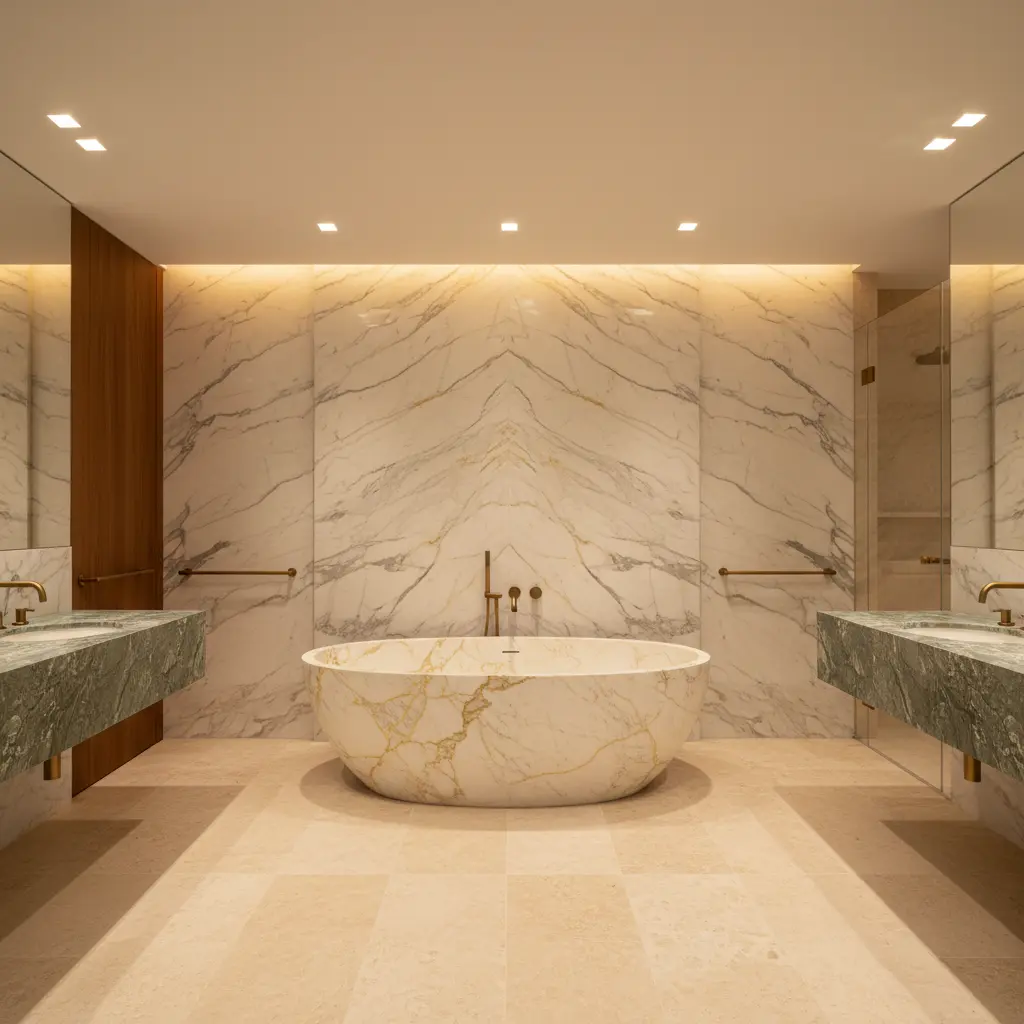
When I drive through Moscow region villages and see a rectangle of turquoise water displayed at the fence like a shop window, two people inside me fight. The architect wants to stay silent. Sergey — no. Because a pool as an architectural element of an estate — this isn’t a question of taste, it’s a question of the owner’s worldview. And, strangely enough, a question of the object’s future value.
Architecture changes faster than we think. What ten years ago read as a status declaration today reads as naiveté. What seemed discreet and boring turns out to be the main capital of the lot. And what’s crucial to understand before you pour the first cubic meter of concrete: pool placement affects estate value far more than its shape, finish, or engineering.
This article is about two schools. About French and about Floridian. About why one builds toward capitalization and the other — toward ego. And how to choose yours without turning the lot into a monument to someone else’s culture.
Two Philosophies: Bosquet Versus Storefront
At Versailles and Loire châteaux the pool was never a façade. It was a reward. To reach the water you had to walk across the parterre, descend an avenue, pass through trimmed bosquets — and only then, in a green room under open sky, would the calm surface open. This is the logic of an introvert with dignity. Water — for those who are admitted.
Palm Beach flipped the scheme. In the 1920s Addison Mizner and his followers moved the pool closer to the façade, to the ocean, to the guest’s gaze upon arrival. This was a declaration: look, I have leisure, sun, and freedom. Young America, showing America.
Both traditions are legitimate. But they work for different people and in different contexts. The French approach is about the long view of ownership. The estate is inherited; it must age beautifully. The Floridian is about here and now, about the scene, about the house as performance.
Here’s where most Russian clients make a mistake: they take Floridian openness and plant it on a 30-hectare lot behind a solid three-meter fence. You get neither one nor the other. A storefront without an audience. A manifesto in a closet.
Pool as Architectural Element of Estate: What the Market Says
I love emotion in architecture, but the market doesn’t. When we assess lots before resale or refinancing, we find a stable pattern: two identical homes with identical pools can differ in price by 15–25% simply because of where that pool sits relative to the house, the cardinal directions, and the neighbor’s line of sight.
The premium-segment buyer — increasingly a 40–55-year-old who’s past the conspicuous consumption phase — pays for privacy. Not for size. Not for Bisazza mosaics. For the ability to step out in the morning in a bathrobe and not wonder who sees him.
And here’s where it gets interesting. A pool exposed to the road psychologically subtracts from the value even of what’s objectively there. The buyer looks and thinks: “Can I actually relax here?” If the answer is “no” — he leaves. Or he negotiates down by that same quarter of the price.
French Logic: Water as Reward
Let’s break down the scheme of a classic château. The house is on the main axis. From the house runs a formal garden. The pool hides behind a beech or yew hedge 2.2–2.5 meters tall. Often it’s offset from the central axis — not for symmetry but for intimacy. The approach to water — through an arch in the greenery, through a change of scenario.
What does this accomplish practically:
– wind protection (and wind is the main enemy of water temperature and leaf debris in the basin)
– acoustic isolation from road and neighbors
– view framing: from the pool you see sky and tree crowns, not someone’s mansard story
– extends the season by 3–4 weeks due to the bosquet microclimate
We at the studio almost always use this logic when the lot is under 50 hectares. Paradox: the smaller the land, the more important to hide the pool. Open water doesn’t visually expand the lot — it shrinks it because the eye has nothing to catch, no plan and counterplan.
Floridian Logic: Water as Statement
But I won’t be dishonest. There are situations where an open pool is the only right solution. This happens when:
— The lot has a real view. Not “a view of the neighbor’s fence through a birch,” but a view. A lake, river, terrain drop, forest you own. Then the pool becomes a transition from architecture to landscape, an infinity edge dissolving into the horizon.
— The house is conceived as a pavilion. Glass façades, minimal privacy baked into the concept from the start. Hiding the pool in such a house is hypocrisy.
— Climate and lifestyle assume water as daily backdrop. Rare in our latitude, but it happens — with clients who live in the house year-round and swim 200 days a year.
In Palm Beach this works because there’s ocean a hundred meters away and a culture of outdoor life. Near Moscow it works in one case out of ten. The other nine are self-delusion.
Typical Mistakes I See Every Month
Pool on the setback line. The owner wanted “like in the magazine,” put the basin 8 meters from the road. A year later he hung cameras, two years — planted yews in pots, three years — asked us to design a wall. Cost of redoing — 3.2 million rubles. Cost of the right solution initially — zero.
Pool facing north. The architect listened to the client who wanted “to see water from the living room.” The living room faced north. Water in the basin warms to 19 degrees in July. Impossible to swim, lovely to look at.
Pool with no background. Behind the basin — nothing. Grass, fence, neighbor’s house. A pool in premium architecture needs a background: a retaining wall in travertine, a trimmed wall of greenery, a pavilion, a sculpture. Without it the water looks like a puddle, not an object.
Attraction-pool. A bob shape, a guitar shape, a heart shape. Five years later the owner quietly asks to “redo it as a rectangle.” It’s always more expensive than building a rectangle from the start.
Size mismatched to the house. A 4×8 pool at a 1,200-square-meter house. Or a 6×15 at a 350-square-meter. The proportion of house volume to water surface is a ratio you can’t fake.
How We Solve This: Studio Approach
When a client comes with “I want a pool on the lot,” I ask three questions before picking up a pencil.
First: who will look at this pool when no one’s in it? Nine months a year the basin is empty or covered. If its main function is a frame from the dining-room window, we design one way. If it’s for competitive swimming, quite another.
Second: what borders the lot? I personally go out and see what’s visible from neighboring vantage points. Sometimes we raise the terrace level by 80 cm — and the pool vanishes from the neighbors’ view without adding a single meter of fence.
Third: how will this pool look in December? A question nobody asks, and they should. A good pool in a premium estate is beautiful in winter — like a black mirror under snow, a geometric pause in the garden. A bad pool in winter is a blue tarp and a rusty ladder.
Then we work with axes. Every estate has a main axis — it runs from the gates to the house. And secondary axes — private, everyday, scenic. The pool almost never sits on the main axis. It sits at the intersection of private and scenic — where it’s visible from the master bedroom and invisible from the road, the gates, or the guest wing.
Water and Capitalization: Counterintuitive Math
Back to where I started. A correctly placed pool isn’t an expense. It’s an investment that returns at sale with a multiplier of 1.3–1.7 times construction cost. An incorrectly placed one is a deduction from the house price that appraisers don’t state but buyers feel.
Over the last five years we’ve handled eight estate sales that we designed or renovated. In seven of the eight cases, the landscape composition around the water was the argument that closed the deal. Not the kitchen. Not the boiler. Not the marble in the hall. The view from the window onto water that nobody sees but the owner.
That’s quiet luxury — much talked about, nearly nobody knows how to design it. It’s not in removing logos. It’s in removing other people’s eyes.
So Manifesto or Error?
A pool visible from the road isn’t always an error. It’s an error for 90% of lots and 90% of clients in our geography and culture. For the remaining 10% — it’s a bold and conscious choice, backed by the house’s architecture, the view, the climate, and the lifestyle.
In ten years, I’m certain, open pools in the premium segment will be rare. Not from fashion — from fatigue with showing. The generation building their main houses now has already played with publicity. They need silence and water that only they see.
If you’re now at the planning stage and unsure where the basin should be — write. Sometimes moving a pool seven meters changes the feeling of the house more than a change in architectural style.

Author
Next step
Discuss your project
An hour at the studio with Oleg Reznikov: your site, your brief and relevant studio projects.