
Residence as Dynastic Asset: What Those Who Think 100 Years Ahead Build
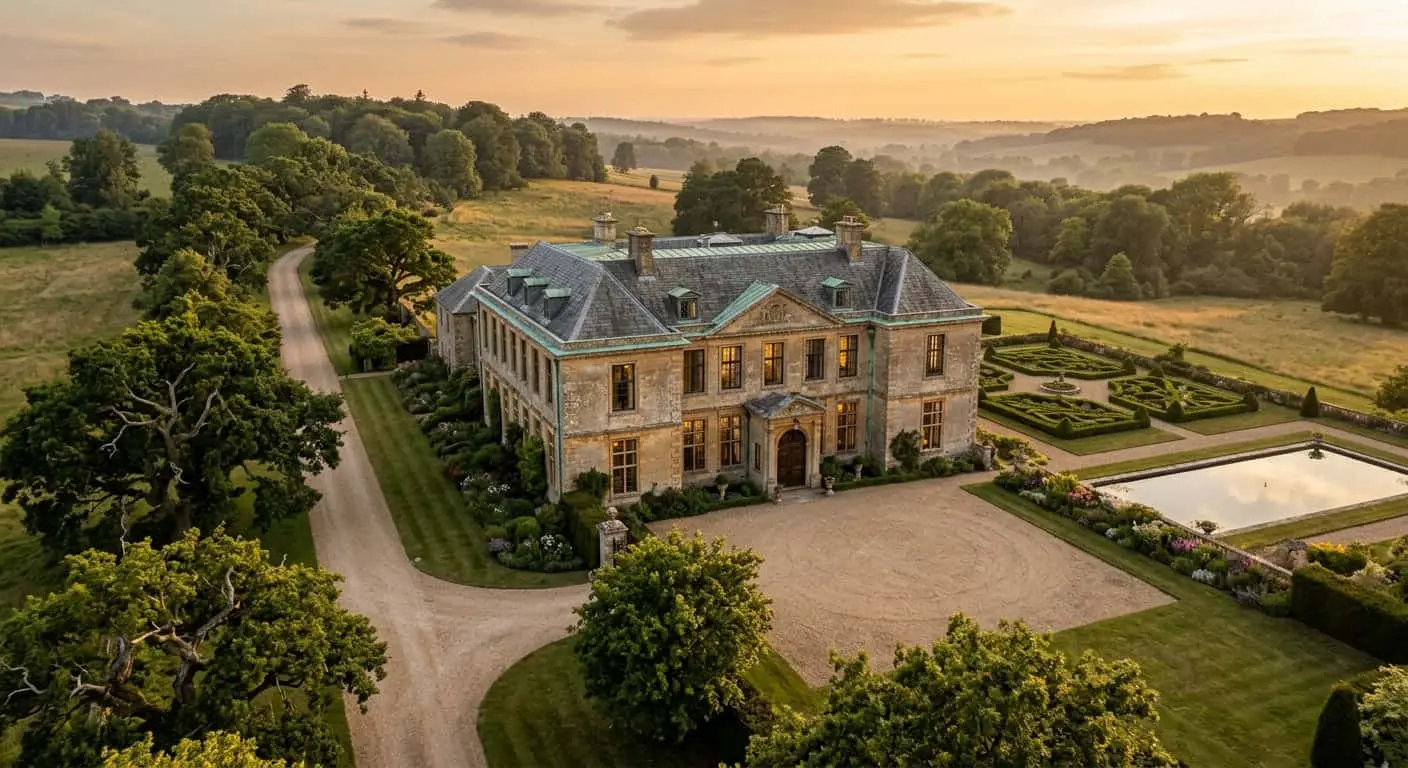
Recently a client came to us — 48, industrialist. Sat at the negotiation table, pulled out a notebook — not a tablet, actually a notebook — and said a phrase we now cite to colleagues: “I don’t want to build a house, I want to build a family name”. When asked what he meant, he answered simply: “So my grandson shows this house to his grandson”. That’s how conversation about a premium family estate begins — not about square meters and not about status materials, but about time horizon, which suddenly became very long for a new generation of clients.
Ten years ago, 80% of requests to our studio sounded different: “I want what Peter Ivanovich has, only better”. That was the era of demonstrative architecture — build, show off, sell in five years, build new. A house worked like a premium-class car: while fresh — drive, then trade in, get new one.
Now everything is different. And we believe this isn’t just fashion change. It’s a shift in property ownership philosophy itself. Below — what exactly changed, why classicism suddenly became the only rational choice, and what specific solutions those thinking not five years but hundred years ahead put into their projects.
Why “house for yourself” is egotism of a passing era
Let’s be frank, risking hurting feelings. Building a house “entirely for yourself” is the logic of someone who doesn’t believe anything survives after him.
There’s nothing shameful in this logic — it was appropriate in the 90s and 2000s, when planning horizon in the country rarely exceeded seven years. But it doesn’t work well when dealing with capital that by definition should outlive its owner.
“House for yourself” is a house with narrow doorways scaled for specific paintings collection. Wine cellar calculated for 2018 tastes. Home theater morally obsolete in four seasons. Master bedroom 90 meters because that’s what you wanted at design moment.
What to do with this in twenty years? Right — demolish and redo. Or sell at discount because next owner doesn’t need any of it.
Our clients of last three years think differently. They design not “dream house” but a framework where three generations will change. And this is fundamentally different architectural task.
What premium family estate actually means
Let’s clarify terms because market has spammed “family estate” to meaninglessness — people call 180-meter townhouses and foam-plastic-columned cottages by this name.
Premium family estate in our understanding is an object meeting four criteria simultaneously:
First — structural resource of minimum 100–150 years without major repair of load-bearing elements. This means solid concrete of elevated class, natural slate or copper roofing, facade stone with proven operational history. Not ceramic tile on adhesive that will fall off in 25 years.
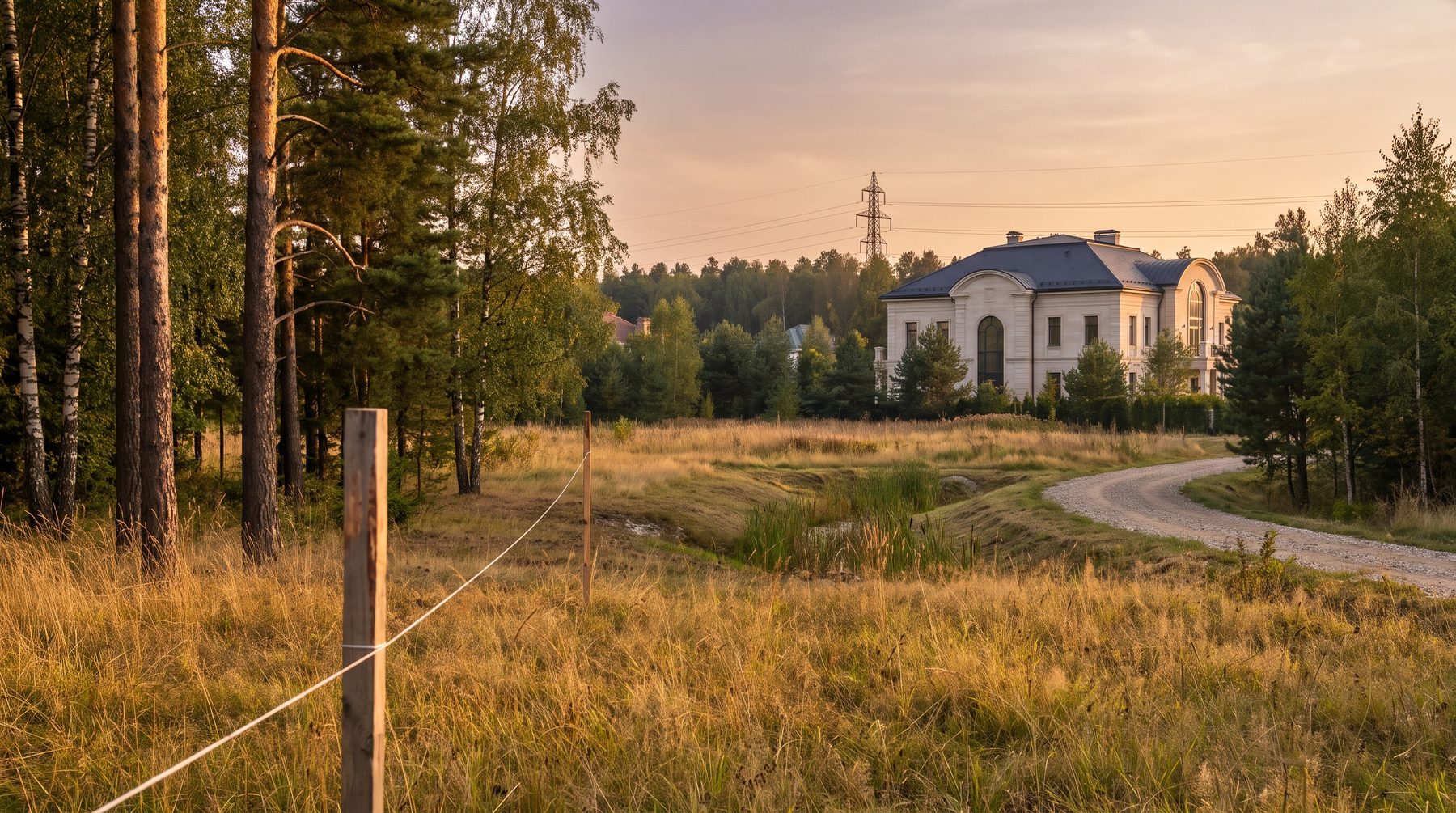
Second — land that won’t depreciate. Premium family estate isn’t built in cottage community with shared fence and barrier. Built on 50+ acre plots with own water, own access and ideally landscape created over decades.
Third — architecture not subject to fashion. Separate discussion below.
Fourth — legal and infrastructure autonomy. Own generator, own well, own industrial-grade septic solution. Not because it’s trendy but because house must work independently of what happens outside its gates over next hundred years.
Everything else is just big expensive house. Good, perhaps beautiful. But expense, not asset.
Why classicism returned — and it’s not about taste
This is where most err. They think classical architecture is choice of conservative taste, a matter of owner’s aesthetic preference. Some like modernism, others like columns.
Actually, choosing classicism in dynastic projects is cold calculation.
Classicism is the only architectural language that has proven ability not to age. Palladian villa built in 1560 looks no worse today than then. Russian Empire-style estate from 1820s — asset worth more each decade. Try selling 2005 high-tech house — surprise awaits in 40% discount.
Modernist architecture — brilliant, we love it and build it. But it tends to bind to decade. 60s house looks like 60s house. 2015 house in twenty years will read as obsolete moment — with all those floor-to-ceiling panoramic windows and flat leaking roofs.
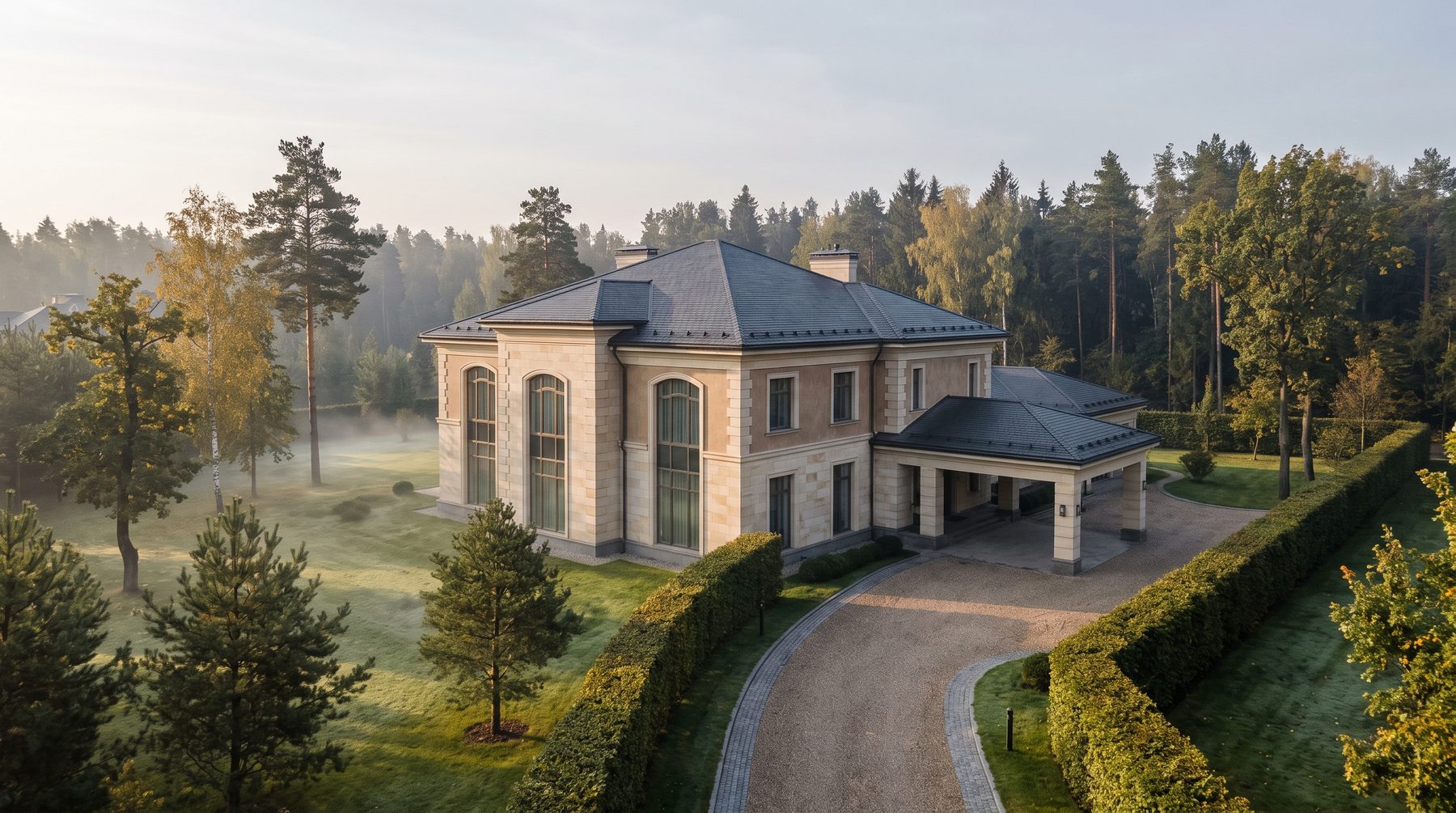
Classicism lacks this binding. Portico, symmetry, correct proportions, stone, cornices — this visual language works in any decade. House built by classical canons in 2025 will be perceived in 2125 as “late-XXI century house” — calmly, without shame, without feeling like outdated trophy.
That’s why premium family estate almost always builds in classical or neoclassical forms. It’s not aesthetics. It’s investment logic.
What new-generation clients specify in projects
Now to specifics. In our practice last two years, a set of solutions almost no one ordered five years ago has appeared. Now requested consistently.
Collection storage capsules
Not wine cellar. Not wardrobe. Exactly archive space with climate control ±1°C and 50–55% humidity designed for storing heritage items: watches, books, documents, artworks, sometimes — arms.
In one of our projects, this is 40 square meters at minus-two level, with separate argon fire suppression system (water and powder damage contents), stacks of stabilized oak and — importantly — separate entrance so future heirs don’t need to let strangers appraisers into the house.
Double structure
Sounds odd but explain. Facade walls designed so they can be demolished and rebuilt without affecting load-bearing frame. That is, grandson in 70 years can change windows, redo entry, even rework first-floor layout — and house core remains.
Costs significantly more. But that’s the difference between house and heritage.
Infrastructure independent of external networks
Own well 80+ meters deep, drinking water reserve 15 cubic meters, industrial-grade diesel generator (not household 10 kW but 60–100 kW with automatic reserve switching), fuel supply for 3–4 weeks autonomous operation. Industrial-grade septic with additional treatment.
We call this “hundred-year scenario” — house must work even if outside world goes wrong.
House archive
Sounds grandiose but we insist on this in every dynasty project. It’s a physical folder (plus duplicated cloud storage) containing all execution drawings, equipment manuals, contractor contacts, maintenance schedules, all architectural decisions with “why we did it this way” explanations.
In 30 years when owner wants to change something — his son or grandson will understand house logic. This solves the most common heir problem: expensive house where no one knows how anything works.
Typical errors even smart wealthy clients make
Where even intelligent people with big budgets stumble.
Mistake one: saving on land for house budget. Person takes 25-acre plot in nice community and builds 400-million house on it. Fifteen years later, community built up completely, views ruined, neighbors barbecuing three meters from windows. Half-billion asset depreciated a third because of plot. Land always matters more than house. Always.
Mistake two: obsession with technology. “Smart house” with 600 scenarios, embedded electronics everywhere, complex engineering. In 10 years manufacturer closes, firmware doesn’t update, parts unavailable. Heritage must be serviceable with simple means. We prefer high-class basic electricity and minimal “smart” — only where justified.
Mistake three: decoration as foundation. Client spends 30% budget on decorative elements — plaster, carving, unique door handles. And takes metal roof for actual roof. Twenty years later roof falls apart, plaster indoors saves no one. Premium family estate builds outside-in: first monolith, roofing, facade stone, then everything else.
Mistake four: “I’ll figure out landscaping later”. Landscaping is longest thing in an estate. Oak planted today gives proper crown in 40 years. Don’t coordinate landscape plan with architecture — you’re building house with lawn, not estate.
Mistake five: ignoring ownership legal structure. House built to individual, no family foundation, no inheritance mechanics. One generation later heirs argue and house sells. Dynastic asset needs dynastic legal wrapper — consult specialists but think about this at design stage, not after delivery.
Our approach: how we design premium family estate
We start not with sketches. We start with four-hour conversation asking uncomfortable questions.
How many children? More planned? Where will they live in 20 years? Who presumably inherits house? What should happen if heir refuses — sale, lease, family foundation?
These questions often force client to think seriously about things he’d postponed. But without answers, designing dynastic object becomes expensive guessing game.
Further — we always establish 70/30 principle: 70% of house decisions should be “eternal” — monolith, stone, planning logic, engineering frame. 30% — replaceable. Finishes, furniture, electronics, decor. Heir can change 30% without touching 70%.
We also insist on house passport — 200–400 page document recording everything: from foundation concrete grade to parquet wood type, noting where ordered and who did it. This document — part of the asset, important as ownership certificate.
And finally — we deliberately discourage trends. If client arrives with reference “blew up Pinterest in 2024”, we say directly: in ten years this will look like iPhone 2014 case — unmistakably dated. Premium family estate can’t afford trendy. Must be correct.
Numbers not talked about
Brief note on budgets because conversation incomplete without.
Honest dynastic object budget starts from 600–700 million for building of 1200–1800 meters — not including land, landscaping, interiors and collections. Below this figure, discussing “century estate” is pointless — either saving on structure, or stone, or engineering.
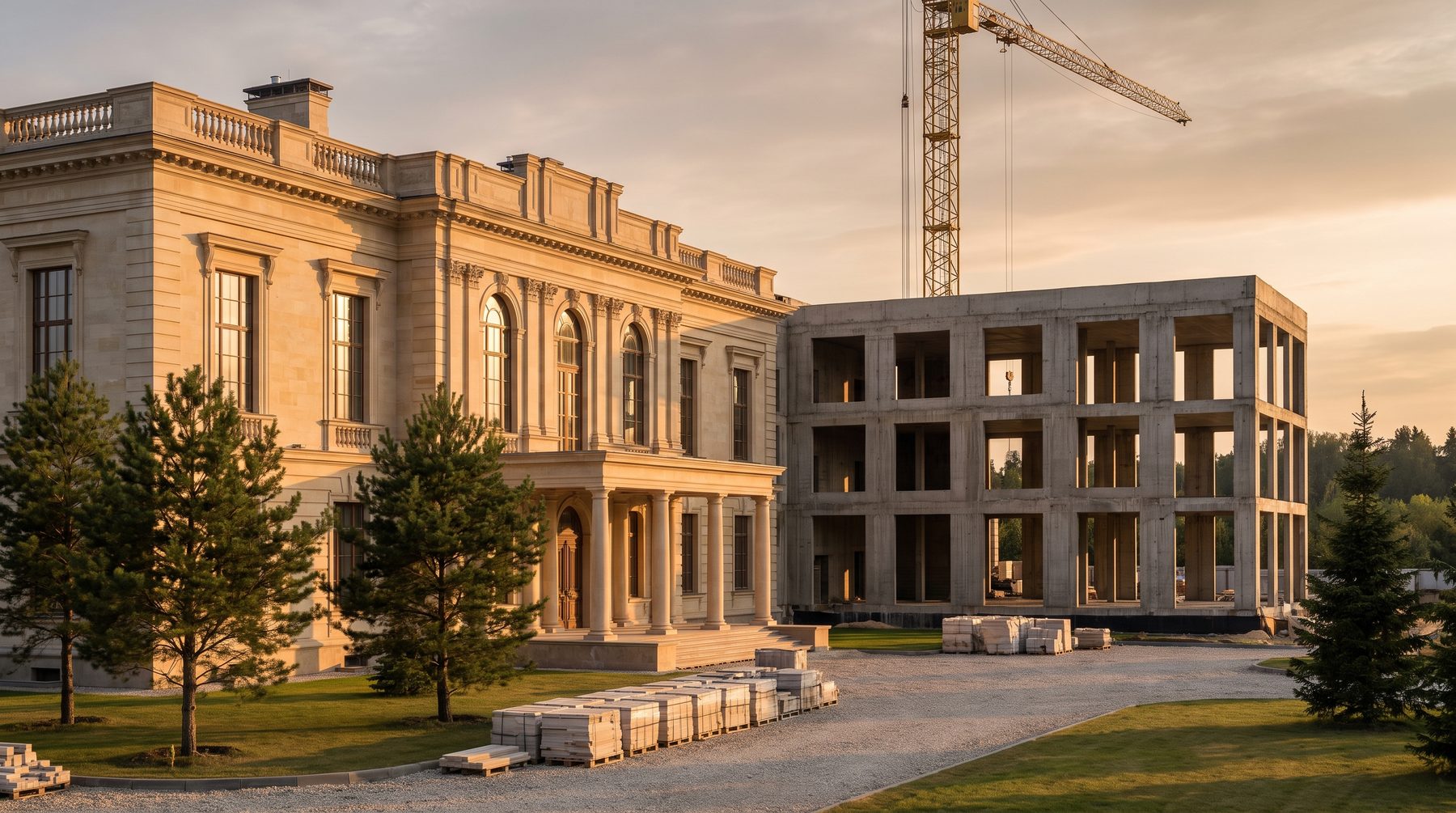
Full project cycle — 3.5–5 years from first conversation to move-in moment. Not 18 months like ads claim. Serious monolith gains project strength over months. Facade stone comes from quarry 8–10 months after order. Landscaping planted in specific seasons.
If promised premium family estate built in 18 months — not estate you’re getting. Expensive cottage.
Instead of conclusion
We in the studio often say among ourselves that we’re working for people we’ll never meet. For clients’ grandchildren. Great-grandchildren. Strange and sobering feeling — designing for human not yet born.
But that’s real architect’s work. Not build pretty picture for magazine shoot. But leave object in earth that in hundred years someone will call “our ancestral home” — and in these words be gratitude, not burden.
If you think about project in this logic — come talk. We don’t sell construction. We discuss what remains after you. Different conversation, slower, and we love it.
Next step
Discuss your project
An hour at the studio with Oleg Reznikov: your site, your brief and relevant studio projects.