
A House for 800 Million That’s Worth 400 in Five Years: How Technology Kills Residences
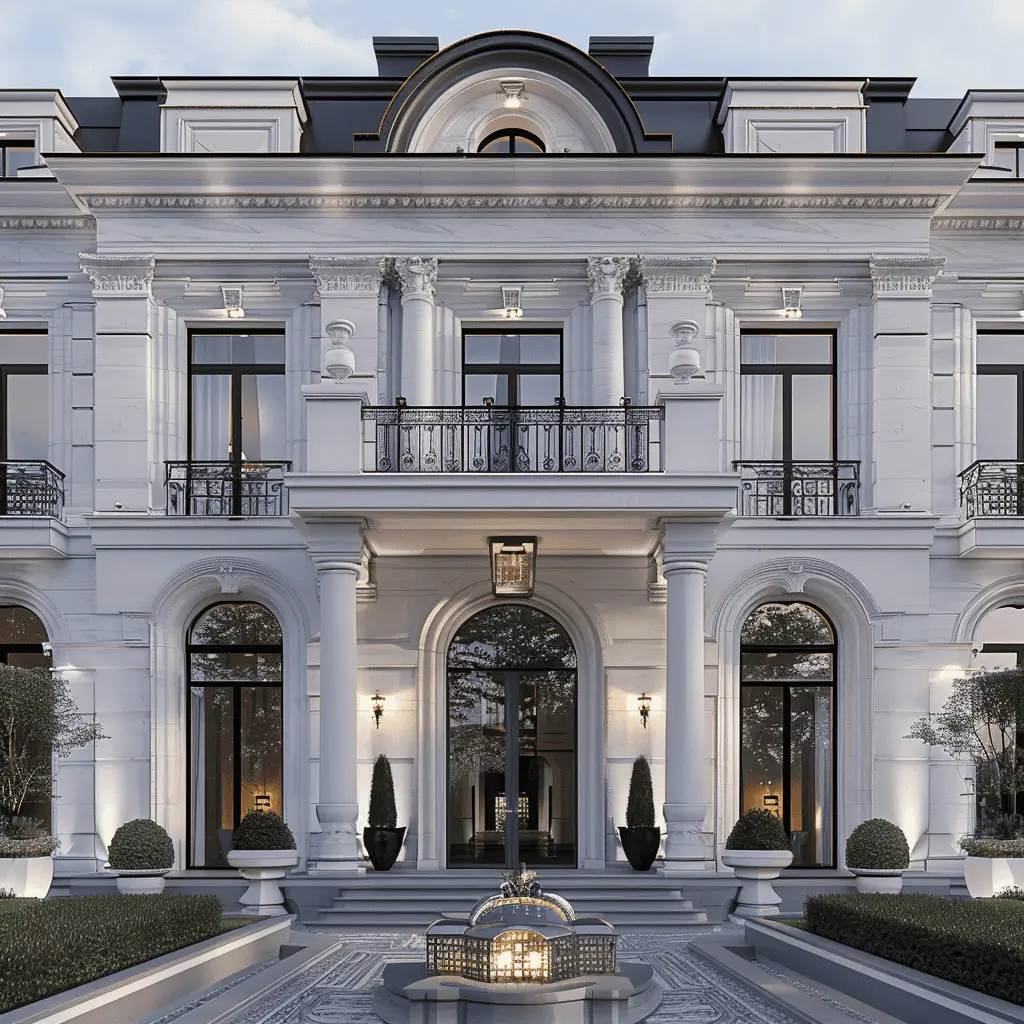
We recently got a call from a Rublyovka mansion owner. Built in 2020, invested around 800 million, now trying to sell — the best offer he got in six months was 420. House in perfect condition, excellent plot, location from those that never cheapen. Yet the liquidity of elite real estate for this object has halved in five years. Why?
Because the house is too smart. Or rather, was too smart in 2020.
We want to discuss a paradox that in our practice became so obvious we stopped recommending to clients half of what integrators pitch. The more technology you embed in a residence at handover, the faster it ages morally. And an aging-tech house loses value harder than a home with classical, understandable, serviceable engineering.
Why a 2020 smart home is today a burden
Let’s look at numbers. Typical automation of a premium mansion circa 2019–2022: KNX protocol, centralized multiroom system on Crestron or AMX, proprietary control panels on walls, scene lighting via DALI, climate via BMS, Sonos first-gen integration, Lutron smart shades, biometric entry.
At handover time this cost from 60 to 120 million rubles — depending on area.
Five years later, this happens. Control panels on the walls look like an iPhone 2017 — thick frames and matte plastic. Protocols partially stop being supported by manufacturer. The integrator who assembled it either left or switched to different brands and doesn’t want to go back to old code. The phone app doesn’t update for new iOS. Half the scenarios work intermittently.
And now a new buyer walks in, sees these panels, learns the whole system is tied to one core that isn’t made anymore — and realizes he either lives with this or tears down suspended ceilings and re-runs low-voltage wiring for a sum comparable to buying a new business-class car.
He won’t pay full price for this. He’ll make a discount. A big one.
Classical engineering ages differently
Now watch what happens with a home built without automation fanaticism. Good intake-exhaust ventilation with heat recovery. Hydronic floor heating with manual manifolds. Radiators under windows — yes, regular radiators. Lighting on dimmers but no centralized core. Good electrical with oversized cable sections.
In five years this house hasn’t aged. Not at all. Its engineering works exactly as on handover day and will work twenty more years. If the new owner wants a smart home on top — he adds it. On current protocol, current panels, current habits. Takes two months and reasonable money.
The logic is fundamentally different. Engineering should be reliable and serviceable. Automation should be easily replaceable. When these two fuse into one — you get a time bomb that goes off exactly at sale time.
Liquidity of elite real estate: what actually appreciates
We collected statistics on 40+ secondary market transactions in the 300-million+ segment that went through our network — appraisers, brokers, architect colleagues. The pattern came out harsh.
Liquidity of elite real estate on 10–20 year horizons is held by three things. Not five, not ten — three.
First: natural materials that age beautifully
Limestone. Real, dense, solid mass — not 20 mm tile on adhesive. Oak flooring — 22+ mm board, not engineered. Copper and brass in fixtures — those that patinate, not lacquered ones that stain in three years. Lime plaster, not decorative compounds with plasticizers.
These materials look better in 15 years than on handover day. It’s the only finish category about which you can say that. Everything else — from painted MDF to trendy microcement — ages poorly and needs replacing.
Second: proper geometry and light
Ceiling heights from 3.2 meters. Windows arranged on axes, proportioned correctly — not panoramic “floor-to-ceiling entire wall” but thoughtful, with mullions, with reveal depth. Enfilades. Considered sun exposure — morning light in the living room, evening in the bedroom, even northern in the office.
This is something you can’t fix later. Ever. If a house is designed with squashed 2.7-meter ceilings and ribbon glazing in the spirit of an Instagram villa from 2021 — it stays that way. And in ten years, when fashion moves on, its liquidity of elite real estate tanks dramatically.
Third: plot and its connection to the house
Mature trees. Properly planted 15 years ago, the lindens are worth more than all fresh landscaping. View openings from main rooms. Terraces actually used, not just rendered. Smart vertical planning so the house isn’t in a depression and doesn’t look at the neighbor’s fence.
All of this never ages. Ever.
Liquidity of elite real estate and three major automation myths
Now about myths we have to debunk almost every first meeting with clients starting a project.
Myth one: “smart home increases property value”. No. In mass market — maybe. In premium segment, automation is perceived as expected, but any outdated version works against you. A buyer of a 500-million residence won’t overpay for a “cinema” scenario. But will discount if he sees five-year-old panels.
Myth two: “better do maximum from the start”. Dangerous logic. We’ve seen homes with everything automated — including curtain rods in guest bathroom. Three years later, half the features never used. Five years in — part of this “everything” breaks and isn’t fixable. Liquidity of elite real estate suffers double: from aging and from needing demolition.
Myth three: “KNX is forever, it’s the standard”. KNX has existed since the 90s and truly is stable protocol. But protocol stability doesn’t mean ecosystem stability: panels, visualizations, mobile apps, voice assistant integration — all that changes every three-four years. And that’s exactly what a buyer sees when he walks in.
Typical errors that kill liquidity
In our practice we see the same errors that systematically crash residence value on secondary market. Here are the main ones.
Technology built into architecture. Ceiling-mounted projectors with motorized screens. Subwoofers hidden in walls of specific model. EV chargers of specific brand integrated into garage finish. All this becomes a problem exactly when that specific model stops production.
Closed proprietary systems. When the whole house is tied to one vendor and one integrator, you become hostage. Integrator raises service prices — you pay. Leaves the market — you panic finding who understands his code.
Design bound to the moment. Black window frames across entire facade. Microcement everywhere. Brass accents 2019-style. Fireplace travertine “parakeet-style”. These are all recognizable era markers that in seven years will read as “2020 renovation” — same way euro-renovation with arches reads as 2005 now.
Overestimating panoramic glazing. Floor-to-ceiling windows around perimeter — not just proportions question but operational one. Heat loss, glare, impossible to place furniture, need to cover everything with curtains daytime. We designed a house where client insisted on 180 square meters of glazing in the living room. Two years later he ordered reconstruction from us — with half those windows blocked in.
How we approach this in the studio
When a new residence project comes to us, we discuss the horizon immediately. If client is building for himself and kids 30 years ahead — one logic. If there’s chance of sale in 7–10 years — another. In both cases, liquidity of elite real estate remains important parameter because even heirs may need to exit the asset at some point.
Our principle is simple: architecture and engineering are capital, automation is replaceable.
In practice this means:
We run low-voltage networks redundantly and in accessible conduits — so in seven years you can pull new cable without wall demolition. We don’t embed control panels flush into decorative surfaces — only where they’re replaceable without finish restoration. We choose protocols and manufacturers by “openness” criteria: no closed ecosystems, everything must have gateways and APIs.
We select materials by aging criteria. Sounds obvious but most architects simply don’t think about it. We visit homes we designed 10 years ago — to see how every surface behaves. That’s our main quality control.
We design geometry so the house is beautiful with no furniture and no lighting. If bare walls and windows don’t work — no decor will save it.
What if the house is already built
If you’re reading this and recognize your residence — don’t panic. Liquidity of elite real estate can be partially recovered even in complex cases.
First — audit your automation honestly. What works, what doesn’t, what can be disabled with no loss, what needs urgent replacement. Often just changing control panels and the app gives 80% of the visual effect for 20% of full rebuild cost.
Second — remove era markers from interiors. Brass can become steel or aged bronze. Microcement becomes lime plaster. Black frames can’t be repainted, but you can work with framing — cornices, casings, curtains.
Third — invest in appreciating assets. Trees on the plot, expensive stone in key zones, window restoration or upgrading to better quality. Not cosmetics — long-term assets.
What this means for elite real estate liquidity in the future
The market matures. Buyers in the 300+ million segment get more educated — they’ve been in several homes, they see how automation ages, they ask about materials and engineering before design.
Liquidity of elite real estate in the next 10 years will be increasingly determined by fundamentals: material authenticity, architectural quality, landscape maturity. Not the number of smart home scenarios.
Good news for those building thoughtfully. Bad news for those chasing trends.
—
We often tell clients one phrase at project start: imagine you’re selling this house in 12 years. What of what we’re discussing now will work in your favor, and what will work against? This simple test cuts out 80% of questionable decisions before they hit the budget.
If you’re thinking about a new residence or how to update an existing one without losing capital — write to us. We love these conversations. And they usually start not with style discussion, but with what the house should look like in 20 years. Everything else follows.

Author
Next step
Discuss your project
An hour at the studio with Oleg Reznikov: your site, your brief and relevant studio projects.